
SOCIAL
CONTACT
LOCATION
via Boscovich 14, Milan
20145
Italy
Travels
© 2020 C.FISC. 97871390155 - VAT 13672380964


LAGUNA DI GALLOCANTA
by Orietta Pioli and Silvio Pirovano
Spain: The Gallocanta Lagoon Nature Reserve
GALLOCANTA - the lagoon of the cranes
by Silvio Pirovano and Orietta Pioli
In 2 hours of low-cost flight from Milan we arrive in Zaragoza in north-central Spain, and then reach in about an hour by car the pueblo of Gallocanta.
With the sounds of the metropolis still in our ears, we suddenly find ourselves on a vast plateau where the only “noises” are those of nature: the gaze finds no obstacles up to the horizon and the twinkling of the stars is not dimmed by light pollution.
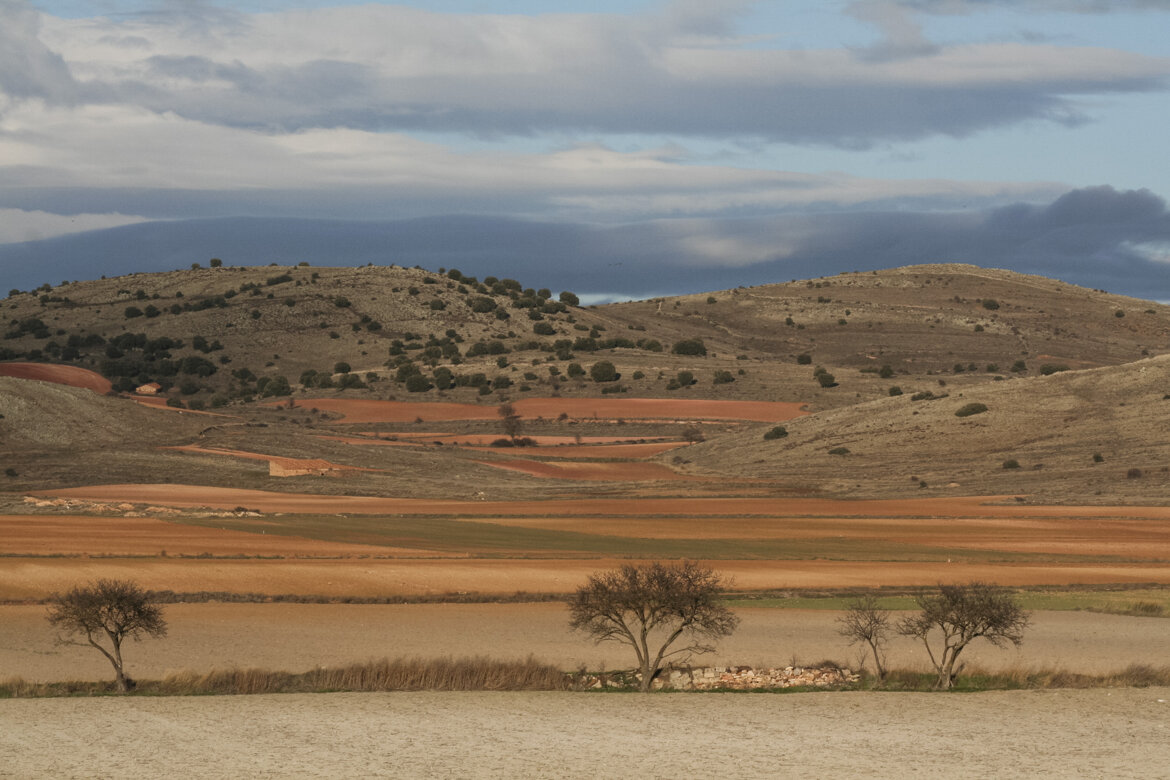
the Gallocanta Nature Reserve
Introduction
The Gallocanta Nature Reserve covers about 1,500 hectares within a large plateau at about 1,000 meters above sea level, surrounded by a still traditional agricultural landscape that harmoniously integrates with patches of woodland, steppes, grasslands, and wetlands.
The heart of the Reserve is a large brackish lagoon created by several streams that continuously bring mineral salts from the hills framing the plateau.
The salinity of the water favors the development of hygrophilous vegetation and particular macrofauna, which allow the presence of higher species adapted to these environments.
Another factor that affects the presence of fauna is the strong fluctuations in water levels, which according to the seasons favor some species to the detriment of others.
However, in any season there is always some rare surprise, especially during migratory periods, as the Reserve is a strategic point for birdlife that—from the breeding grounds of northern Europe—crosses the Pyrenees to reach the wintering sites in the Iberian Peninsula.
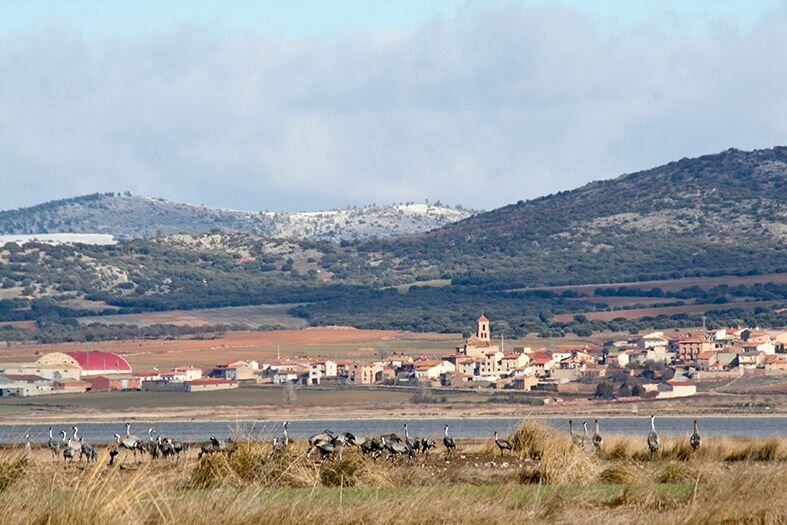
The village of Gallocanta from the opposite side of the lagoon
The village of Gallocanta from the opposite side of the lagoon
the Gallocanta Nature Reserve
the environment
The western migratory route is mainly used by cranes that, from the breeding areas of Scandinavian, Baltic, and generally northern countries, have found the ideal wintering place on the Iberian Peninsula.
In particular, Gallocanta and the “savannas” (dehesas) of Estemadura host a good part of the European population of common cranes in winter.
From October, hundreds of thousands of cranes in their characteristic “V” formations descend from the Pyrenees to spread out in their favorite places in Spain. While a large part of the cranes, once they reach Spain, disperse mainly in the large wooded plains of Extremadura and other suitable agricultural areas, in Gallocanta the cranes find an ideal combination to meet the species' feeding needs: large open spaces, limited human activity, suitable agricultural areas for feeding, and quiet sites for resting and overnight stays.
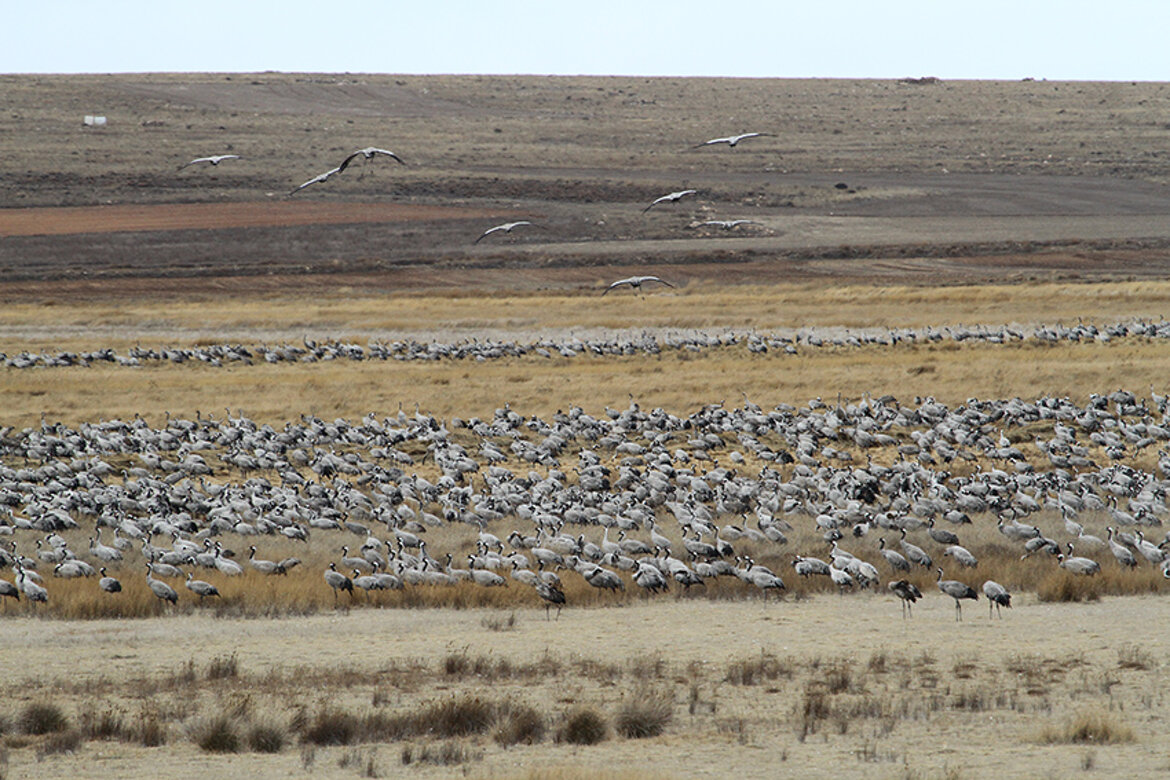
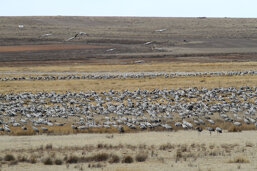
Thousands of cranes rest in the steppes at the edge of the lagoon
Thousands of cranes rest in the steppes on the edge of the lagoon
the Gallocanta Nature Reserve
Management
Moreover, the efficient management of the Nature Reserve has further encouraged the stopover of cranes: a total ban on the construction of wind farms, a ban on overflights, agreements with farmers to direct the most compatible crops, restoration of natural habitats, and regulation of tourist and recreational activities.
Gallocanta, Bello and Tornos are the three main pueblos found within the Reserve.
The gradual depopulation of the area, with the consequent abandonment of the countryside due to emigration in the last century, has favored the gradual repopulation of wildlife.
The establishment of the protected area, preventing possible tampering and encouraging the presence of wildlife, has nevertheless allowed the start of economic activities linked to tourism that is compatible and respectful of environmental balances.
Inns, small hotels, and restaurants, created from the restoration of old agricultural buildings, host an ever-increasing number of enthusiastic birdwatchers from all over Europe, attracted by a unique and unrepeatable ornithological spectacle.
The spectacle of the cranes returning from the fields at sunset, where they have fed, to rest in the lagoon is priceless.
Their arrival is heralded by the unmistakable calls that announce seemingly endless flocks descending into the reeds and steppes surrounding the lagoon. It is normal to count fifty thousand, although more than one hundred thousand have been recorded on particularly favorable winter days.
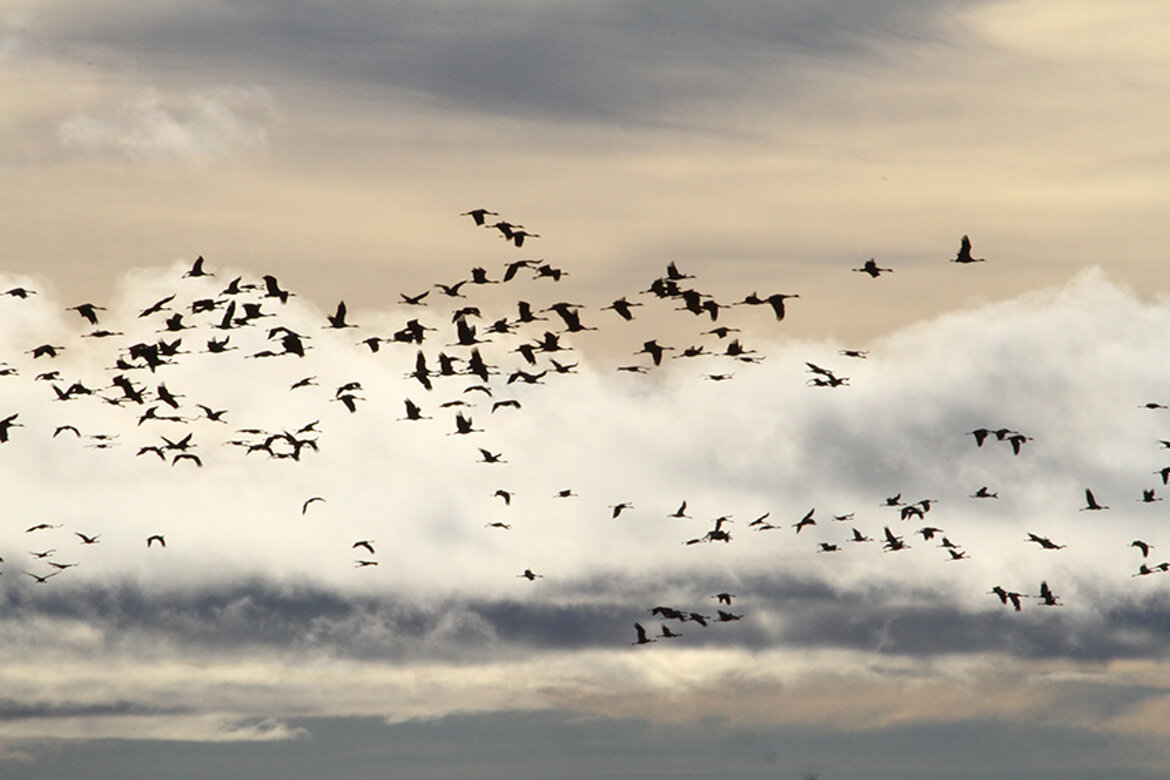
The cranes return in the evening after their foraging excursions
The cranes return in the evening after their foraging excursions
the Gallocanta Nature Reserve
the visit to the Reserve
To visit the Reserve, the managing body has set up an itinerary accessible by car that touches the most interesting and significant points.
Some observation hides also allow you to take good photographs and quietly observe the aquatic fauna. Fines are steep for those who leave the path and try to approach the cranes outside the permitted tracks.
For the most demanding photographers, it is advisable to go to the Reserve's Interpretation Center, where it is possible to book photographic hides for 2 people and, of course, receive all useful information. Given the low daily cost of using the hides, it is highly recommended to book their use a few months before your trip through the dedicated website: hidesgallocanta@aragon.es
In the village of Gallocanta there is also a very interesting ornithological museum where you can acquire further information about the natural environment and all the species that frequent the protected area at various times of the year. Also in Gallocanta, there is a characteristic and welcoming inn where you can stay and eat at a reasonable price. The Allucant hotel (info@allucant.com) is also equipped with an excellent nature library, the managers are passionate naturalists and are an additional source of information.
It is truly priceless to wake up in the morning and have breakfast with the sound of cranes in the background, then cross the road and start the visit itinerary just a few meters away.
As already mentioned, the best time to visit is from October to March.
In winter, as temperatures drop, several species of wintering birds arrive with the cranes. In particular, there are many dabbling ducks, shelducks, various species of herons and waders, which take advantage of the salinity of the lagoon, which prevents the water from freezing.
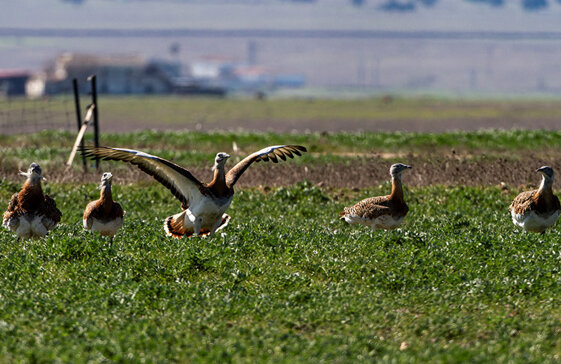
Otarde
Otarde
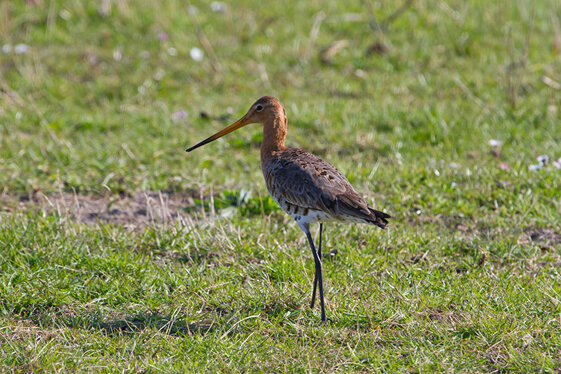
Black-tailed Godwit
Black-tailed Godwit
The two migratory periods are also interesting, especially for spotting birds of prey such as the short-toed snake eagle, the black-winged kite, the imperial eagle, the lesser spotted eagle, Bonelli's eagle, the griffon vulture, etc.
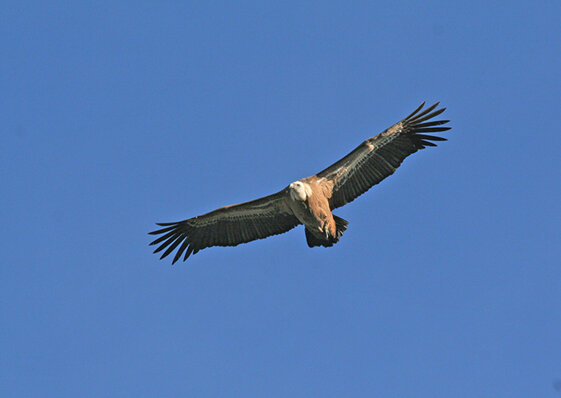
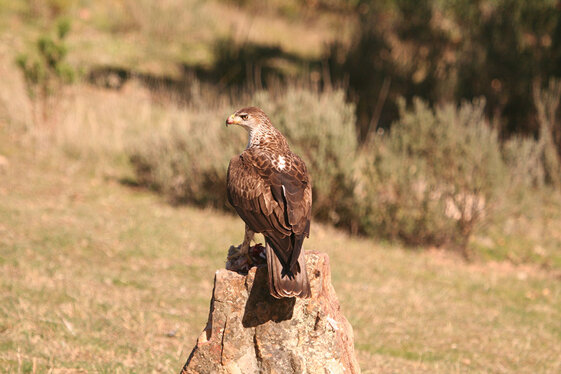
Bonelli's Eagle
Bonelli's Eagle
Griffon
Griffon
At the end of winter, cranes put on a show with their courtship dances before leaving for their breeding sites, and the great bustards—which can usually only be seen from afar at other times—begin their astonishing courtship displays in the agricultural fields around the lagoon, becoming less elusive and thus more within reach of camera lenses.
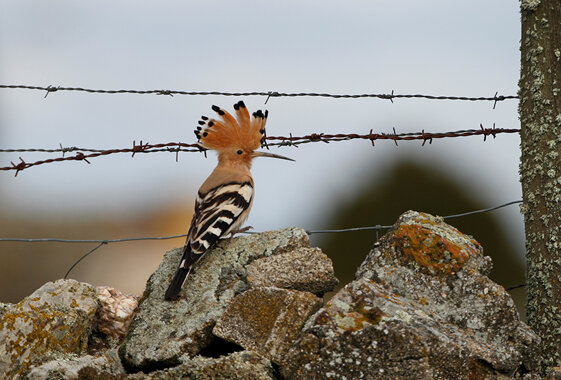
It is also the time when the first orchids and wild flora begin to color the meadows and cultivated areas: red-legged partridges, little bustards, sandgrouse, hoopoes, corn buntings, and various species of larks enliven these environments, rich in succulent insects and tasty grasses.
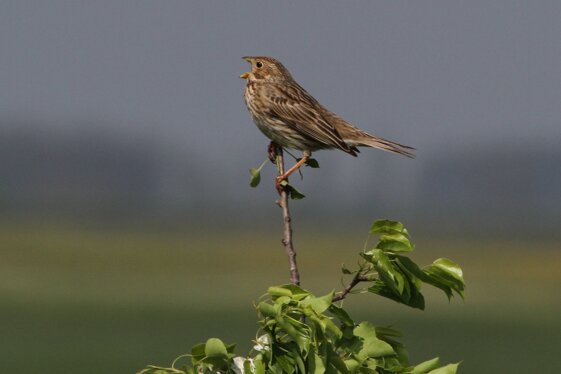
Strillozzo
Strillozzo
Hoopoe
Hoopoe
SOCIAL
CONTACT
LOCATION
via Boscovich 14, Milan
20145
Italy
© 2020 C.FISC. 97871390155 - VAT 13672380964