
SOCIAL
CONTACT
LOCATION
via Boscovich 14, Milan
20145
Italy
Travels
© 2020 C.FISC. 97871390155 - VAT 13672380964

MOROLO - LEPINI MOUNTAINS
by Armando Pezzarossa
Monti Lepini Text and photos by Armando Pezzarossa
Morolo - Eastern Lepini Mountains: 41°38’ 06.26’ N – 13°12’ 13.40’ about 430 m above sea level.
These are the coordinates to locate Morolo on the geographical map. Some might think that providing this information is a whim, but I can assure you that few people know this small and pleasant village. Well, even I, when I first heard it mentioned, turned to Google Earth to locate it and thus discovered the existence of a small mountain range called the Lepini Mountains, at the foot of which this ancient hamlet developed. With a bit of rhetoric, one could say that it is indeed true that Italy never ceases to amaze. And central Italy in particular is especially rich in places that have marked history, whose traces could today be a source of extraordinary uniqueness. An Italy that is little known and unexpected. I find it hard to believe that there is no comprehensive project to create networks to enhance such places, considering that there are famous spots like Fiuggi, Anagni, Alatri, etc. in the immediate vicinity.
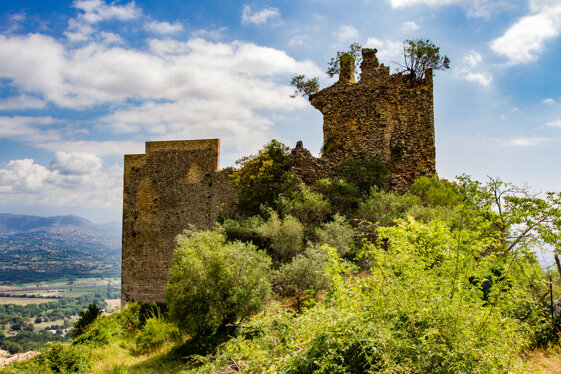
Morolo - the Colonna Fortress
Morolo - the Colonna Fortress
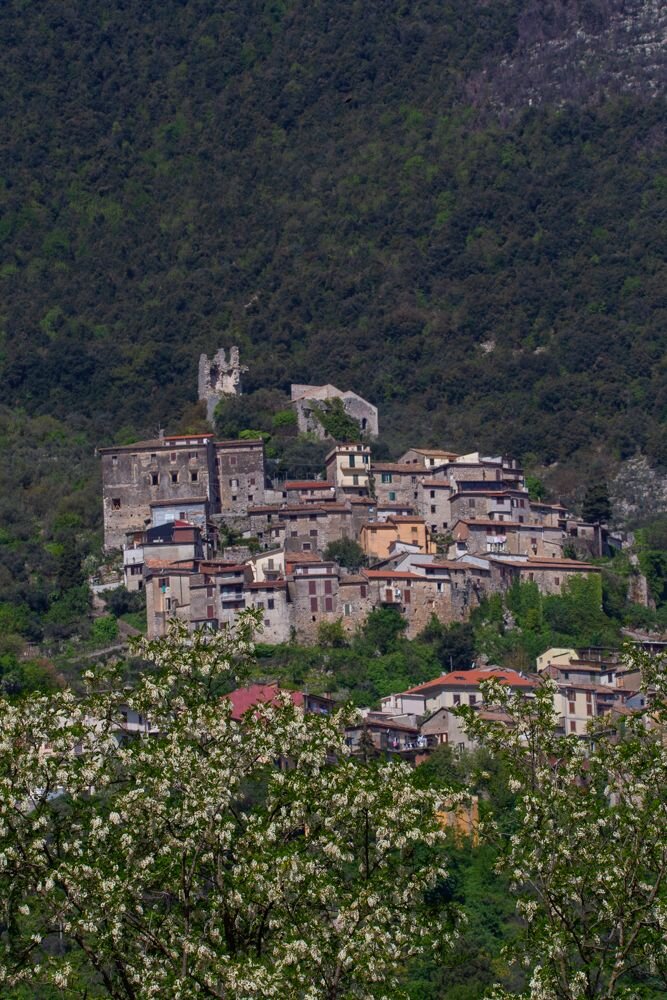
The historic center of Morolo
The historic center of Morolo
That said, discovering these realities by chance was a very pleasant surprise for me.
Coming from Rome or Naples, you cross the plain of Frosinone and head west where the profiles of the Lepini mountains are easily visible. Passing through the large plain where the Sacco river flows, one cannot help but notice how it has been totally debased by disorganized industrial and urban development that today has left degradation and chaos. In many ways, it feels like being in the far outskirts of the large urban centers of Lombardy or Veneto. The first impression is certainly not the best and you are at least disoriented. There is a sense of abandonment and lack of care for the land.
Let's leave this area behind and continue our journey towards the Lepini, whose sight immediately cheers the eye.
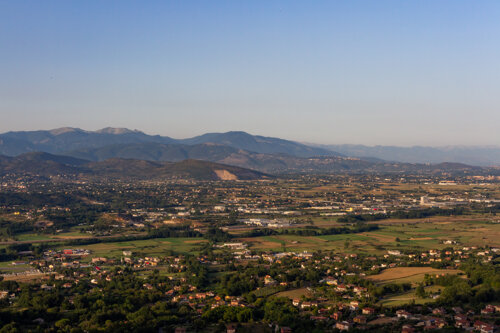
The Sacco river plain seen from Morolo
The plain of the Sacco river seen from Morolo
The Lepini are part of the Volsci Mountains in the Lazio anti-Apennines and can be identified in two sub-chains that run parallel in a longitudinal direction from north to south for about thirty kilometers, from the end of the Alban Hills to the Amaseno valley. The two chains are in turn connected by internal valleys and secondary mountains.
The eastern ridge faces the central Apennines and overlooks the aforementioned bleak Sacco plain, while the western one faces the Pontine plain (no less bleak for other reasons) and looks directly onto the Tyrrhenian Sea. From the highest peaks, which reach a maximum altitude of 1,536 meters at Monte Semprevisa, you can clearly see the dark blue of the sea that borders the coast less than twenty kilometers away as the crow flies. From the heights, on the clearest days, the view extends as far as the Circeo promontory and, even further, to the Pontine Islands.
Formed largely of limestone and dolomite from the Abruzzo-Lazio plate, the Lepini feature significant karst phenomena such as sinkholes, caves, and wells among the most interesting in the central Apennines. The slopes are often interwoven with extensive plateaus, such as that of Santa Serena, and rugged ravines covered by dense thermophilic woods with Mediterranean tree and shrub species and humid mountain forests of the Atlantic area. The limestone soil is characterized by herbaceous vegetation dotted with dozens of species of wild orchids that enrich a varied and interesting plant landscape.
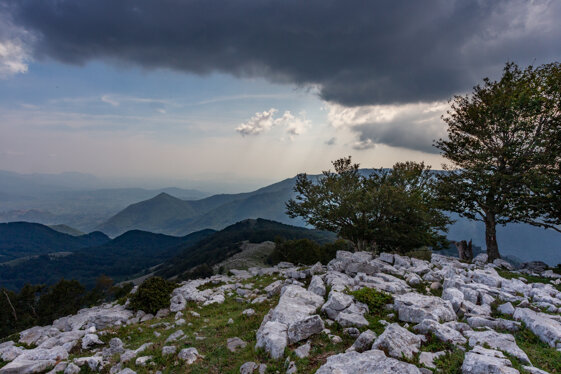
Panorama from a secondary ridge towards the West
Panorama from a secondary ridge towards the West
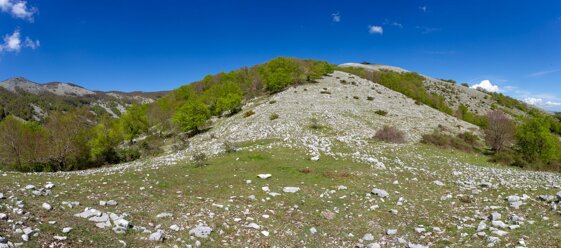
Grasslands on calcareous soil of the Lepini
Grasslands on calcareous soil of the Lepini
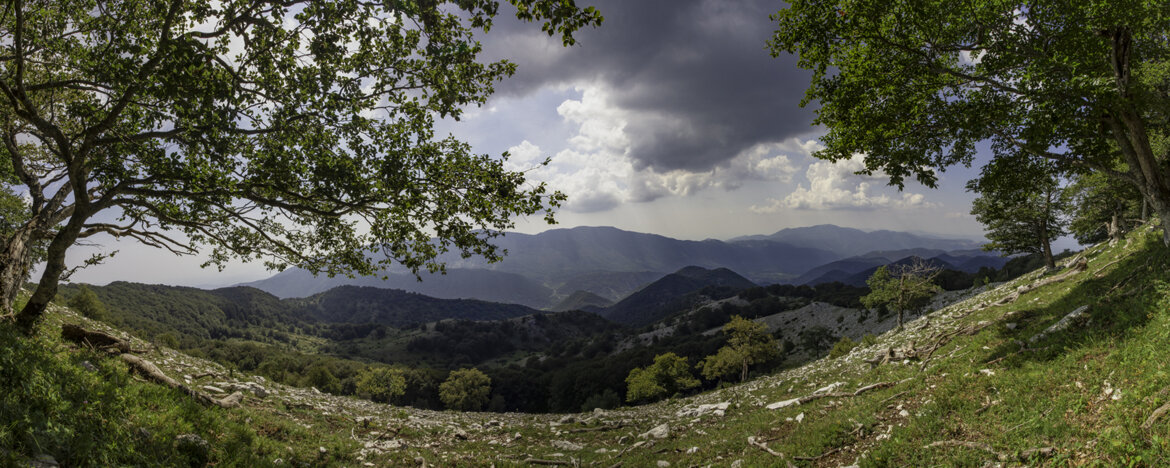
Western slope of the Lepini Mountains
Western slope of the Lepini Mountains
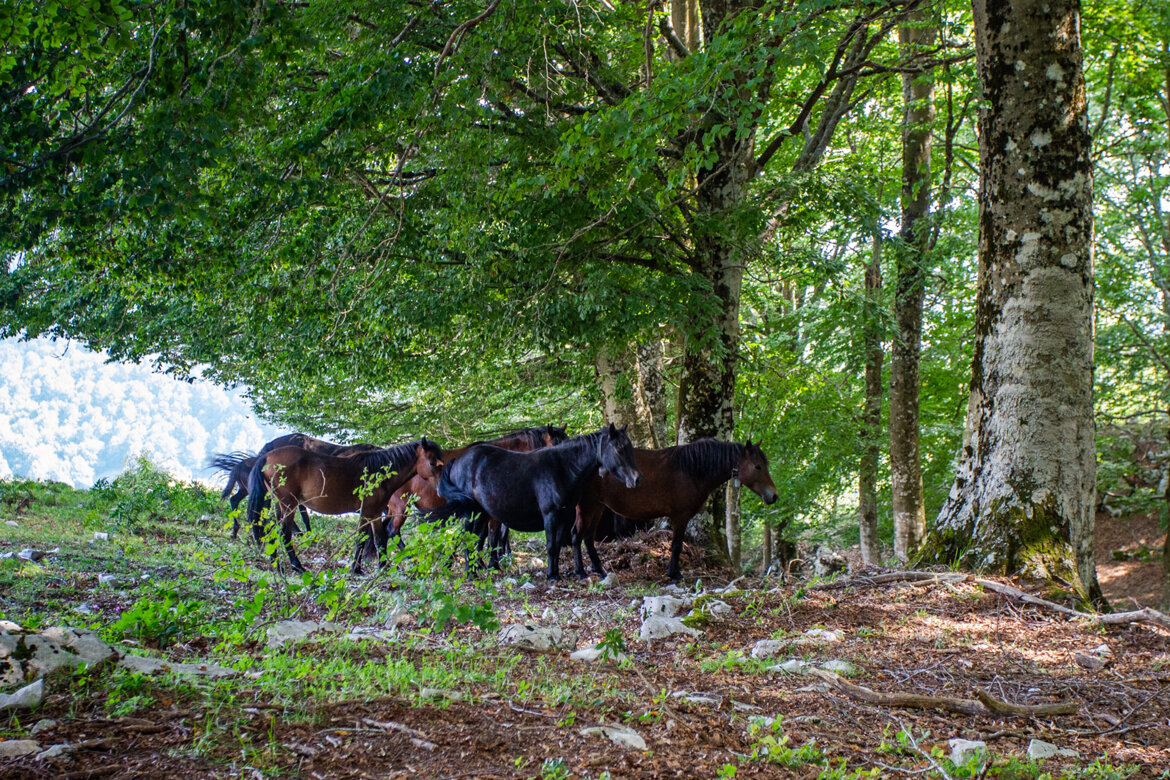
Horses grazing freely
Horses grazing freely
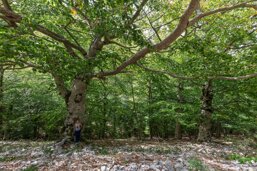
As a nature enthusiast, perhaps the aspect that struck me most about these places is the almost ancestral character of some of the area's features: the still wild herding of horses and Podolica cattle, the forests of gigantic beeches and immense mountain maples, columnar oaks, lindens, centuries-old black hornbeams, and even some rare yew trees (Taxus baccata); the nesting of the golden eagle and the lanner falcon; the presence of the wolf, as well as the presence of extremely rare beetles that live only in the oldest and best-preserved forests, such as the Rosalia alpina. The vegetation also includes dozens of species of wildflowers such as orchids that dot the limestone rock with hundreds of specimens.

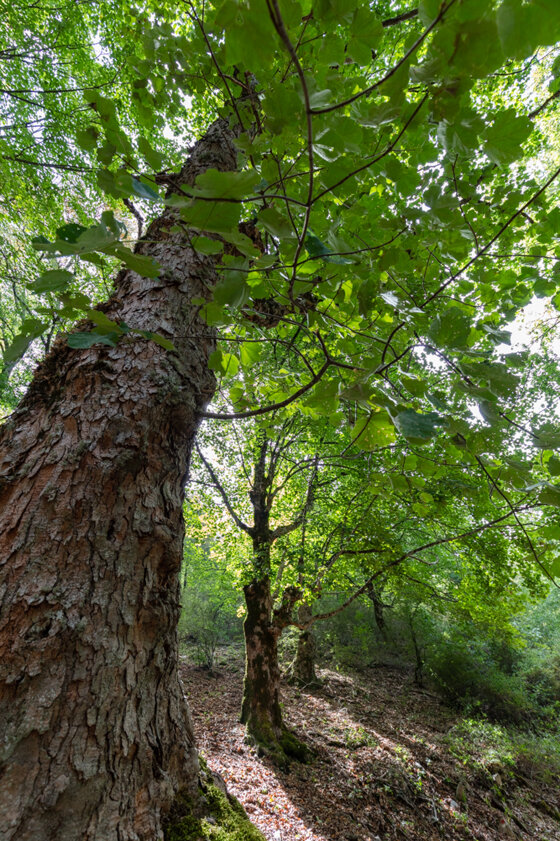
Cerambycid beetle - Rosalia alpina
Cerambycid beetle - Rosalia alpina
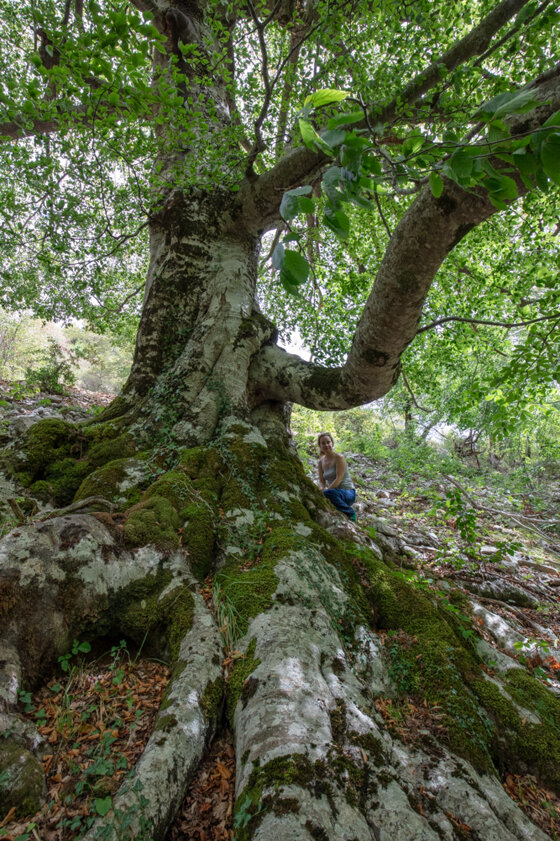
Opal maple - Acer opulifolium neapolitanum
Opal maple - Acer opulifolium neapolitanum
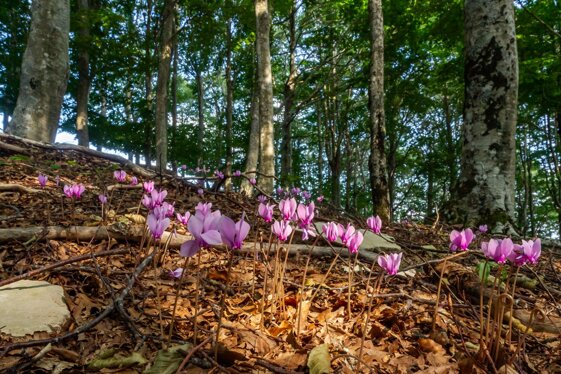
Cyclamen bloom - Cyclamen repandum
Cyclamen bloom - Cyclamen repandum
Centuries-old beech - Fagus sylvatica spp.
Centuries-old beech - Fagus sylvatica spp.
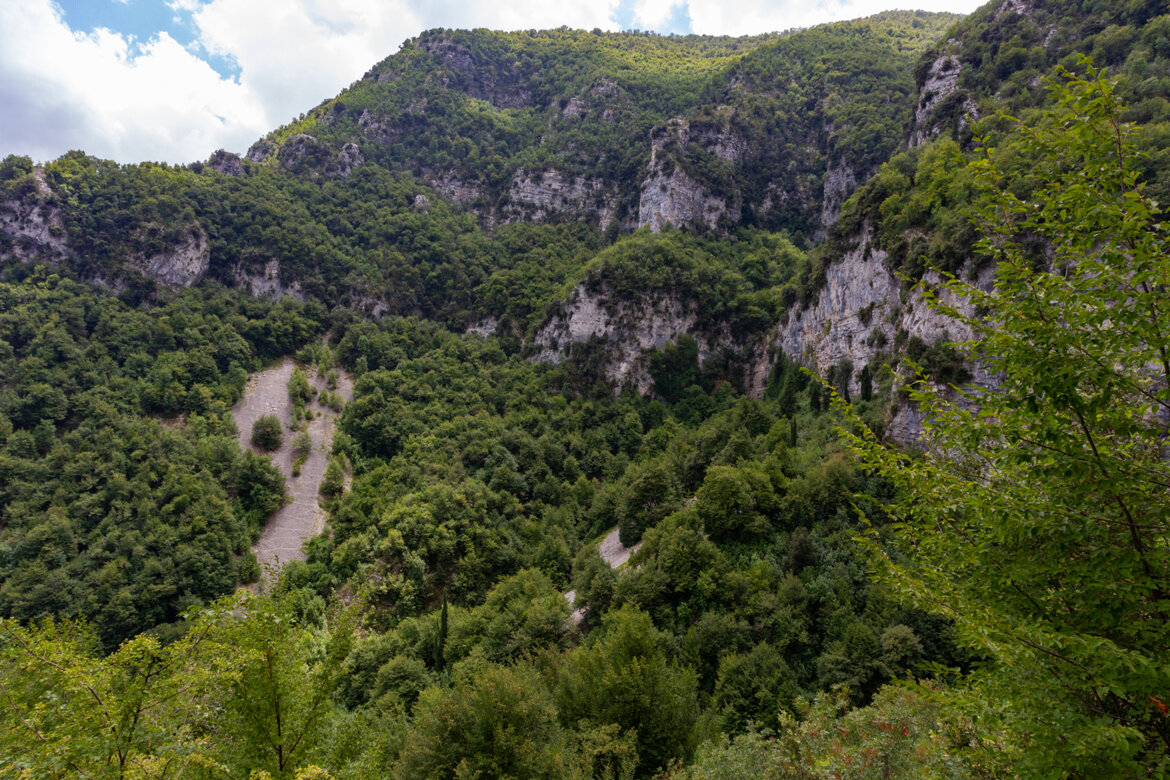
Valley of the Angel
Valley of the Angel
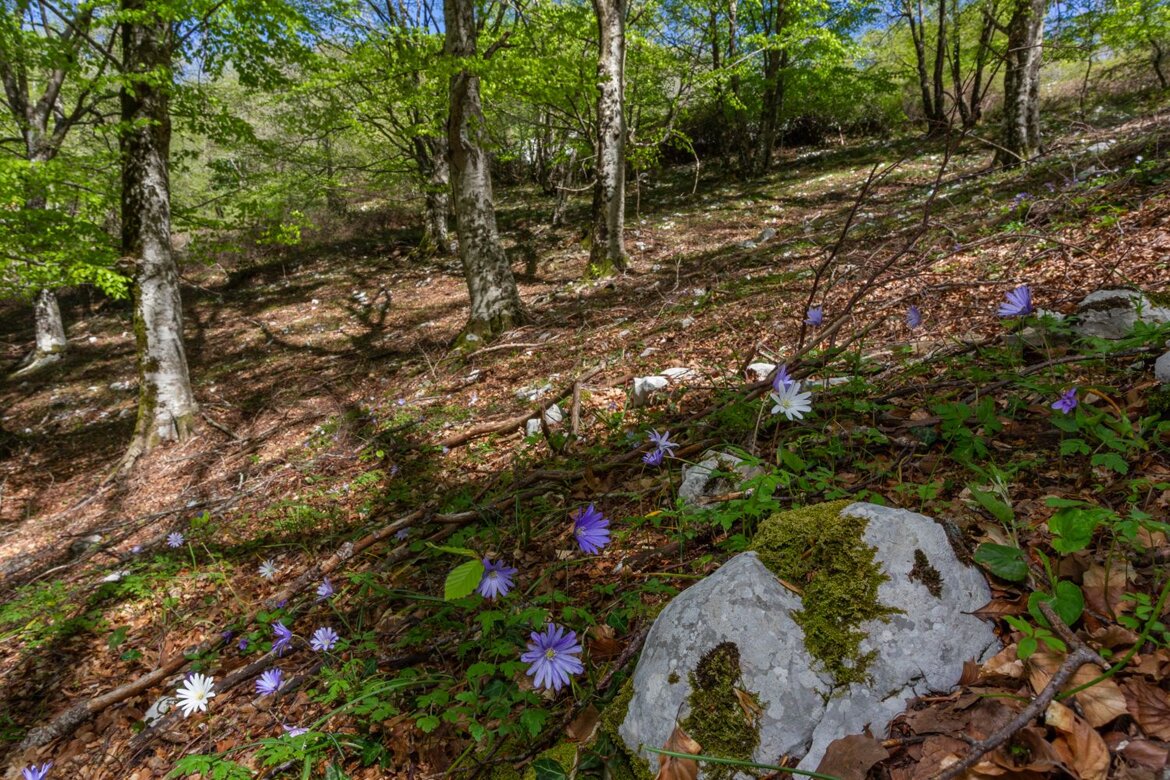
Blooming of Anemone hortensis
Blooming of Anemone hortensis
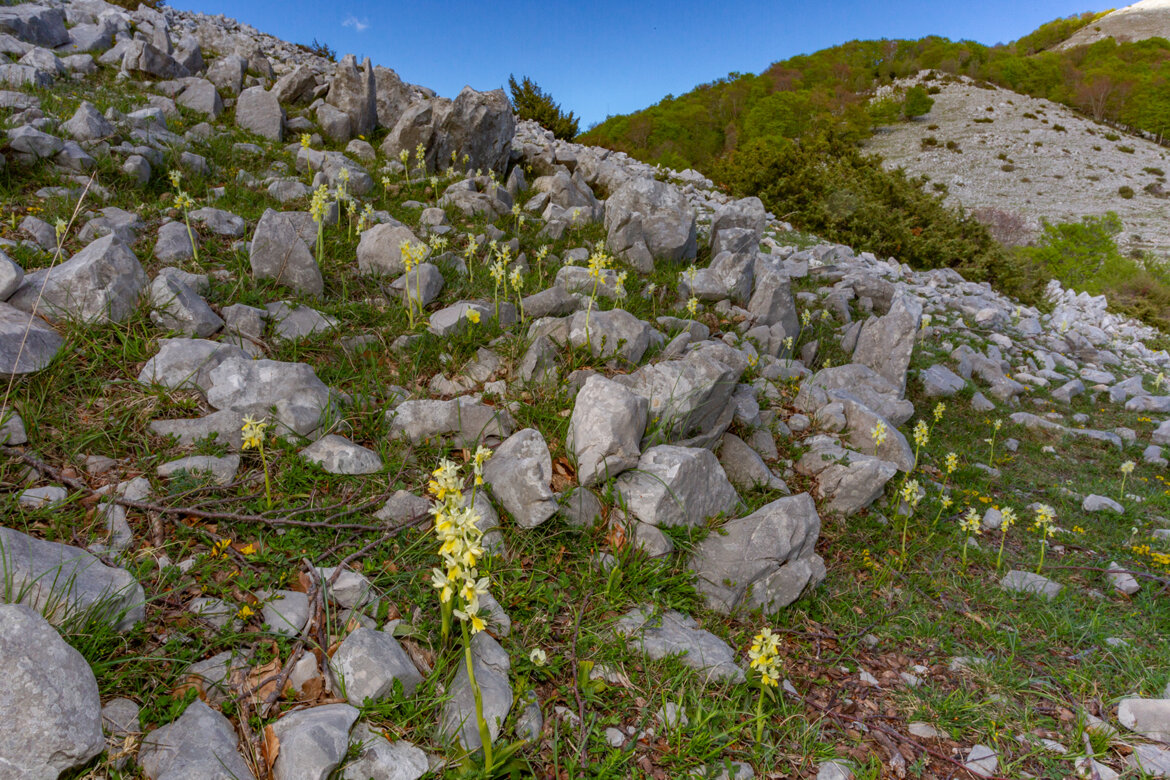
Wild orchid bloomingOrchis provincialis
Wild orchid bloom
Orchis provincialis
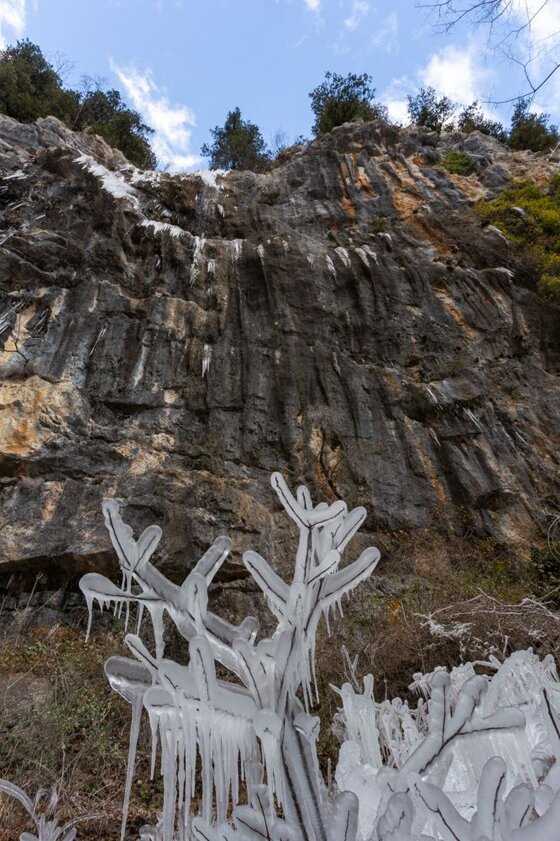
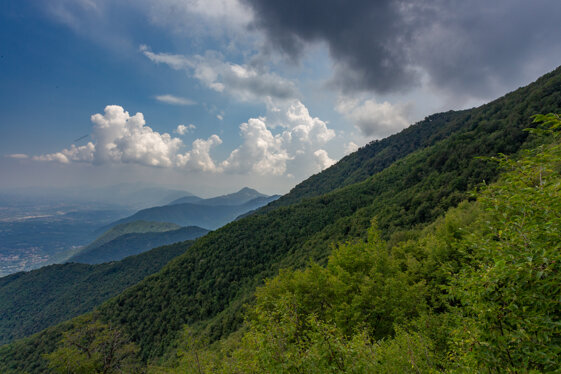
The eastern slope of the Lepini Mountains
The eastern slope of the Lepini Mountains
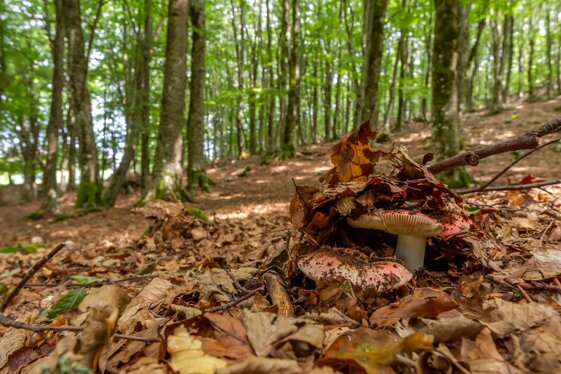
Fungal flora on Mount Sprone Maraoni
Fungal flora on Mount Sprone Maraoni
Valley of the Angel
Valley of the Angel
It was surprising to climb these mountains and find porcupine quills among holm oaks and mastic trees, and then suddenly find ourselves immersed in dark broadleaf forests rich in mushrooms and lichens, imagining that a band of brigands in their typical footwear (the ciocie) might at any moment appear out of the fog.
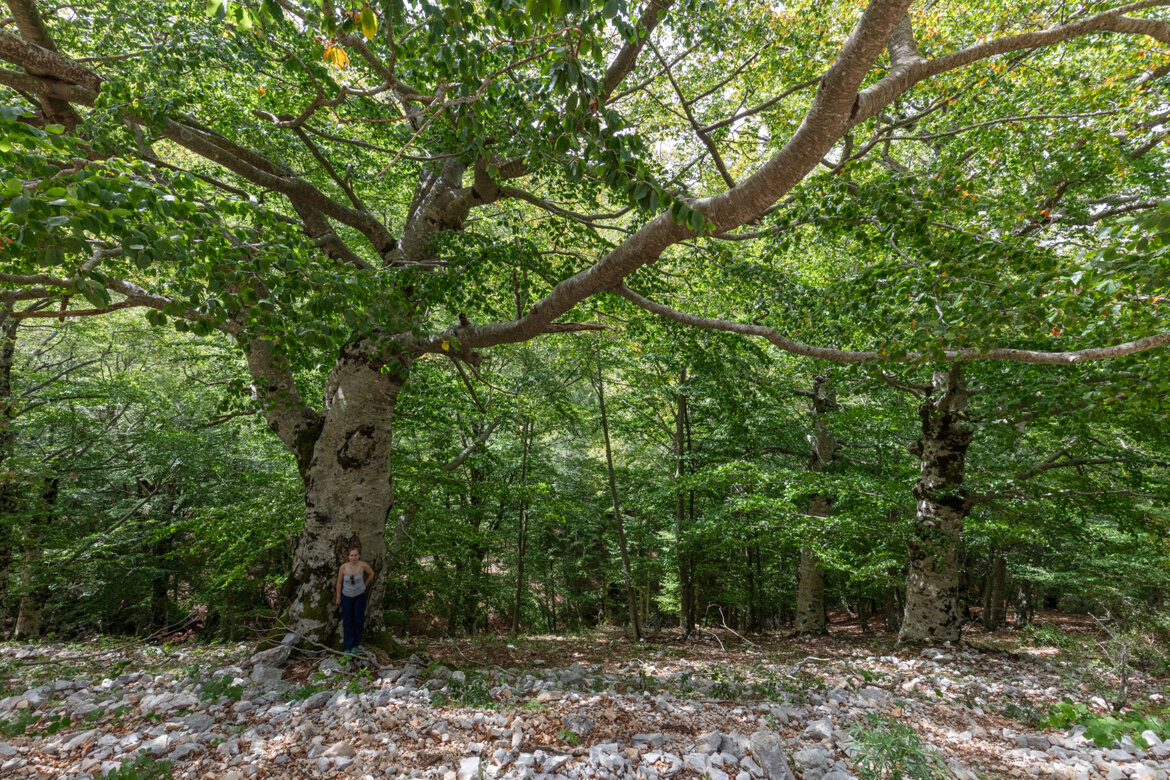
Beech forest
Beech forest
The natural heritage of these mountains is extraordinary and would deserve protection aimed at enriching the area alongside the considerable historical and cultural heritage present throughout the region.
On the first slopes of the Lepini mountain range, as in the rest of central Italy, small medieval villages developed over the past centuries, born around fortified structures and castles of which only a few traces remain today. As far as I know, the only one preserved in almost its entirety is the well-known Caetani Castle in Sermoneta on the western side, a few kilometers from the wonderful Garden of Ninfa and the Abbey of Valvisciolo.
Morolo too, which together with Gorga, Sgurgola, Supino, and Patrica forms the belt of villages on the eastern side of the Lepini Mountains, was born around the castle that belonged to the Colonna, a powerful feudal family whose name has appeared in chronicles since the 1400s. Today, a small portion of the fortress remains, restored to consolidate its remains, while of the annexed tower only the ruins are left, colonized by figs, ivy, and brambles.
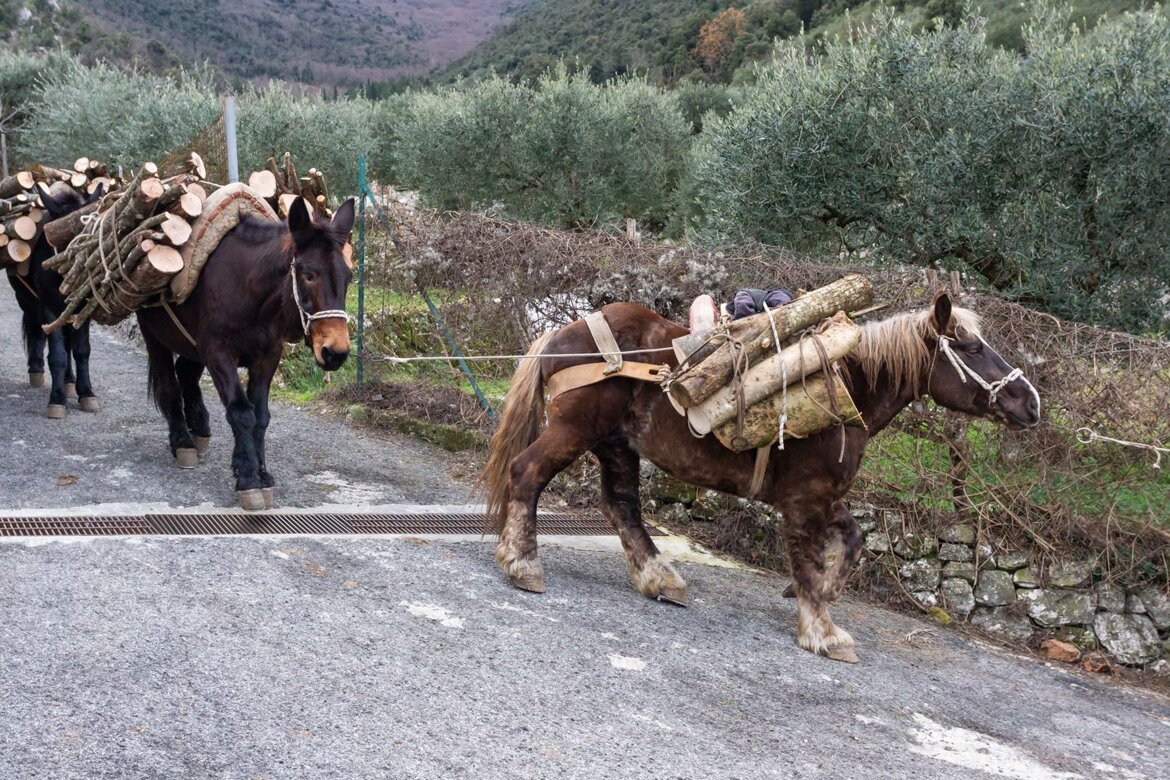
Logging done with mules
The logging done with mules
In the alleys of the old town, one reads a story of emigration and abandonment that was common throughout Ciociaria and, more generally, with different nuances, in all economically depressed mountain and sub-mountain areas. In the memories of some now elderly people I have had the chance to meet, there often appear stories of boys and girls sent to the mountains to tend the flocks, of immense hardship and of emigration to seek “fortune” elsewhere.
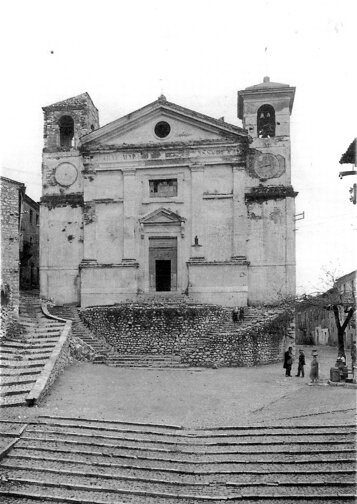
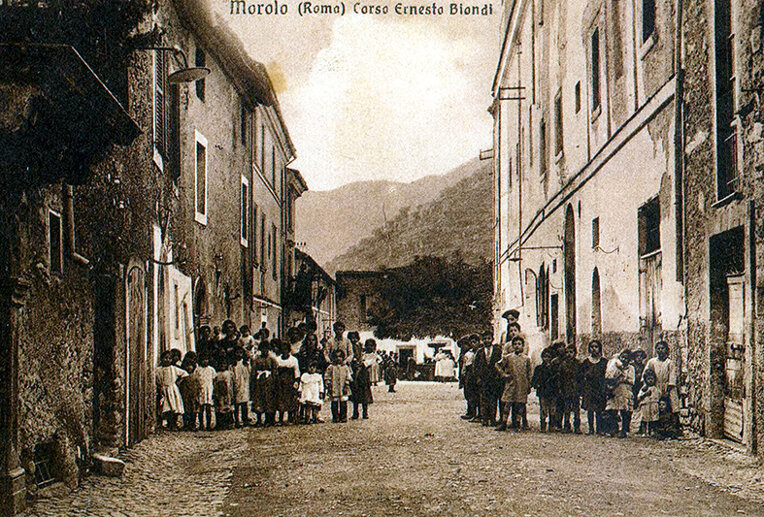
The central square of Morolo at the beginning of the 1900s
The central square of Morolo at the beginning of the 1900s
Early 1900s
Early 1900s
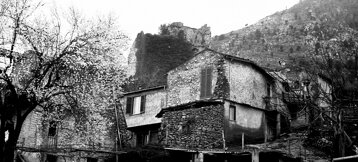
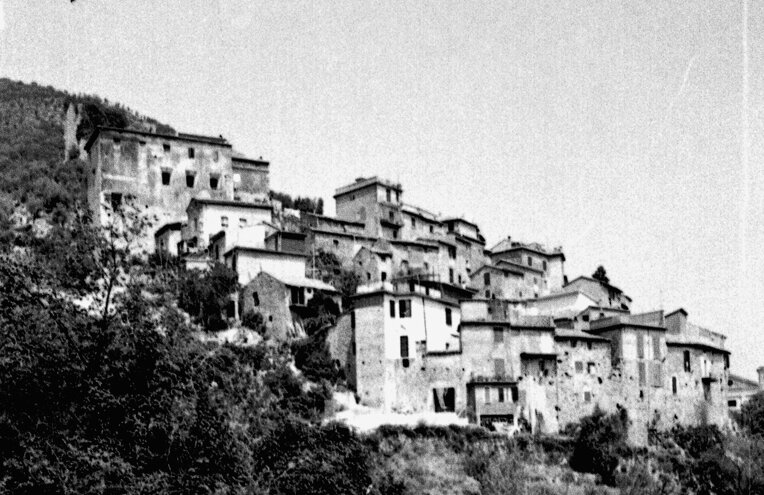
Morolo in the early postwar periodPhoto from the personal archive of Luigi Bauco
Morolo in the first postwar period
Photo from the personal archive of Luigi Bauco
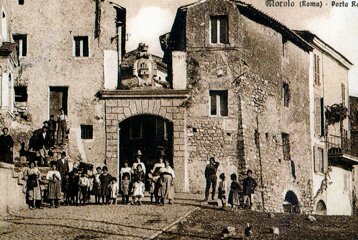
Morolo in the early 1900sPhoto from the personal archive of Luigi Bauco
Morolo in the early 1900s
Morolo in the early 1900sPhoto from the personal archive of Luigi Bauco
Morolo in the early 1900s
Photo from the personal archive of Luigi Bauco
Photo from the personal archive of Luigi Bauco
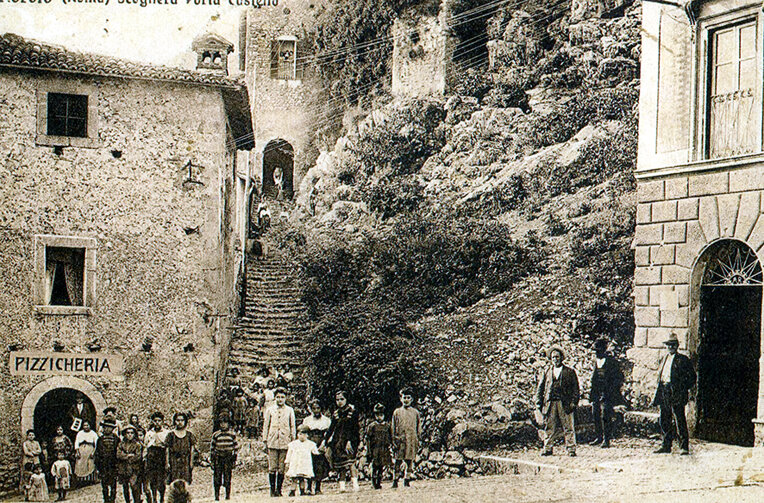
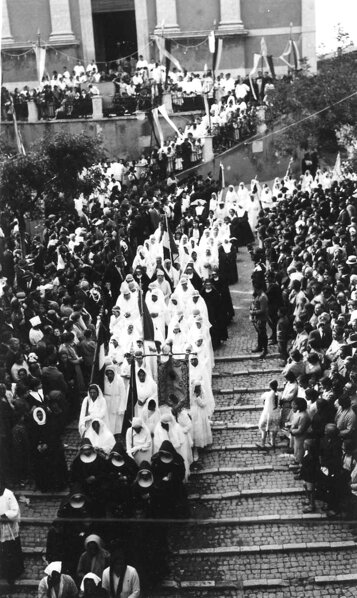
Morolo in the early 1900sPhoto from the personal archive of Luigi Bauco
Morolo in the early 1900s
Photo from the personal archive of Luigi Bauco
Morolo in the 1930sPhoto from the personal archive of Luigi Bauco
Morolo in the 1930s
Photo from the personal archive of Luigi Bauco
The industrialization carried out during the years of the economic boom through the Cassa del Mezzogiorno, which brought chemical, pharmaceutical, and automotive companies (e.g., Fiat in Cassino) to this area, completed the depopulation of the mountains and then of the lowlands, a process already underway since the early 1900s. The “chimney culture” was very strong in those years, and only in that system was an alternative for socio-economic progress seen.
Thus, in a changed economic context, the towns of the area, including Morolo, have gradually been dying out. Walking through the alleys, you lose count of the “for sale” signs that abound in the hope of attracting some unlikely buyer. Many new houses, on the other hand, have sprung up like wildfire across the plain and at the foot of the old town, in what was once a poor but thriving countryside.
Despite the difficulties, the ties of the people of Morolo to their traditions and history remain strong. In fact, they continue to perpetuate religious festivals and fairs that keep alive what remains of the community’s social fabric.
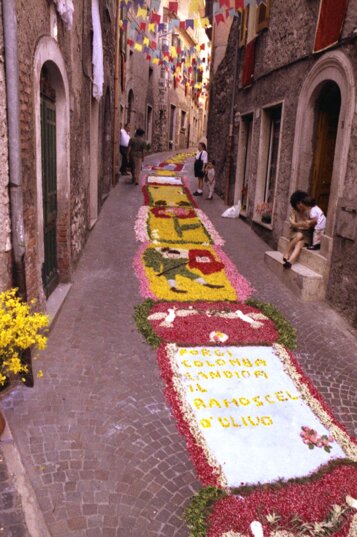
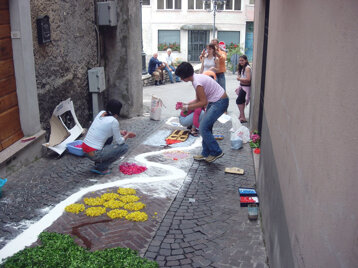
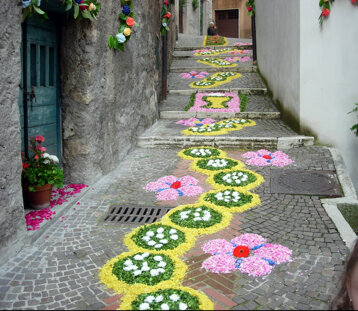
The preparation of the InfioratePhoto by Luigi Bauco
The preparation of the Infiorate
Photo by Luigi Bauco
The Flower Carpets through the alleys of MoroloPhoto by Luigi Bauco
The Flower Carpets through the alleys of Morolo
Photo by Luigi Bauco
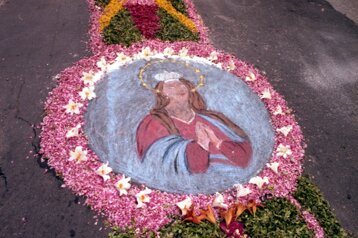
The Flower Carpets through the alleys of MoroloPhoto by Luigi Bauco
The Flower Carpets through the alleys of Morolo
Photo by Luigi Bauco
Details of the flower carpetsPhoto by Luigi Bauco
Details of the flower carpets
Photo by Luigi Bauco
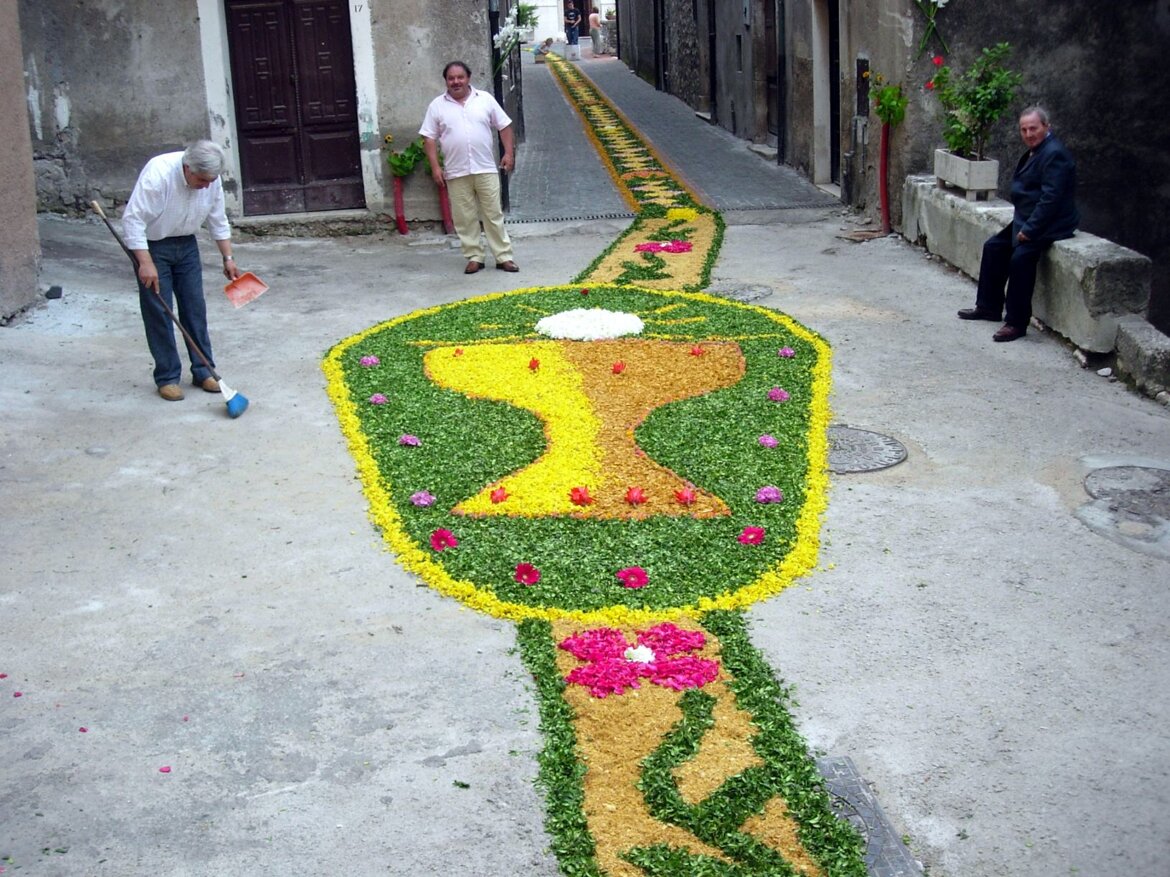
Final touches to the flower carpetsPhoto by Luigi Bauco
Final touches to the flower carpets
Photo by Luigi Bauco
Morolo still preserves many interesting glimpses, especially for those like me who come from the city and find an extremely human dimension both in relationships with others and in urban planning. In Morolo, greeting even among strangers is customary and the inhabitants are usually friendly and fun. Morolo is a place that I find authentic, even from an architectural point of view, with its alleys inaccessible to cars, stairways, churches (the open ones), votive chapels, flowers hanging outside the houses, abandoned houses, and the murals that decorate the main square.
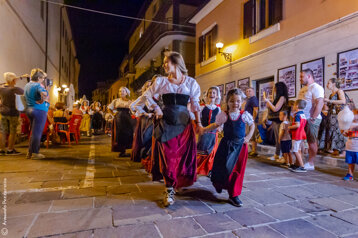
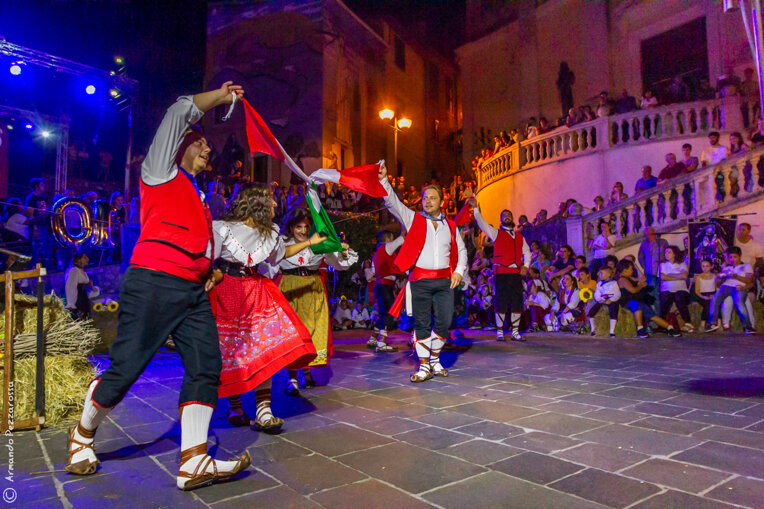
Ciociaria folk festivals - August 2019
Ciociaria folk festivals - August 2019
Popular Ciociarian dances - August 2019Note the typical footwear: the ciocie - from which the name Ciociaria comes
Ciociarian folk dances - August 2019
Notice the typical footwear: the ciocie - from which the name Ciociaria comes
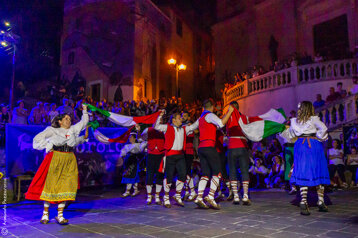
Popular Ciociarian dances - August 2019
Ciociarian folk dances - August 2019
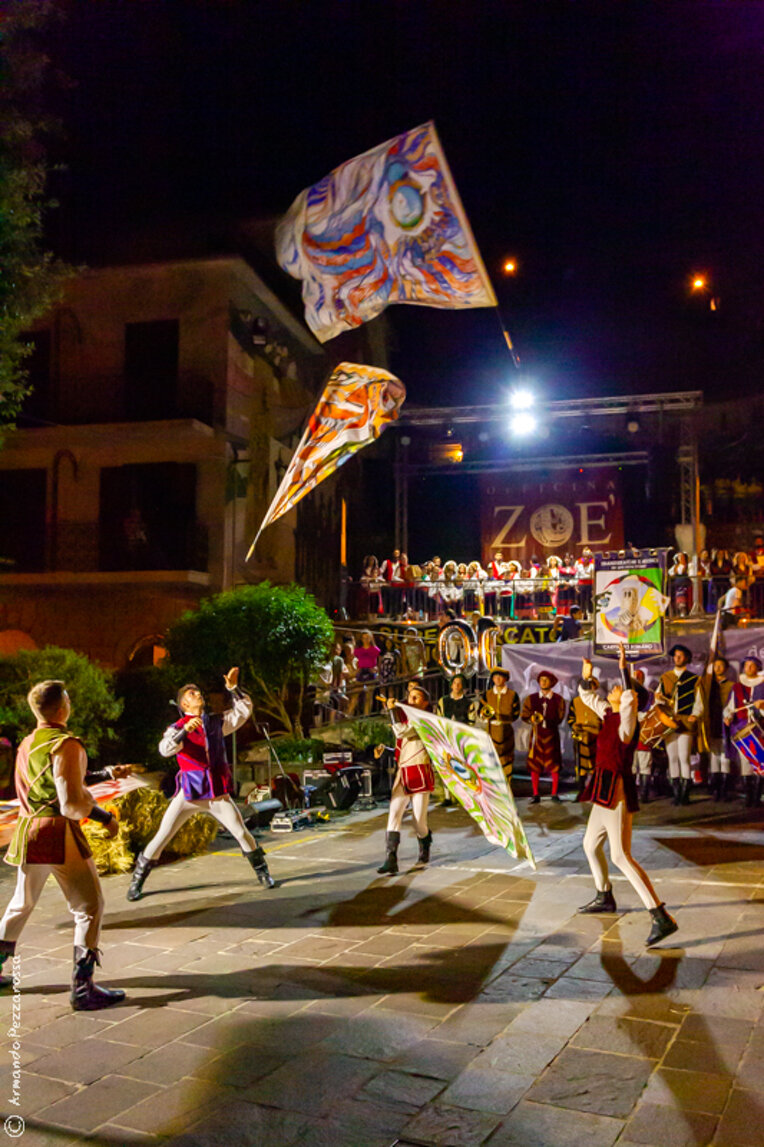
Flag-wavers of Carpineto Romano in Morolo 2019
Flag throwers of Carpineto Romano in Morolo 2019
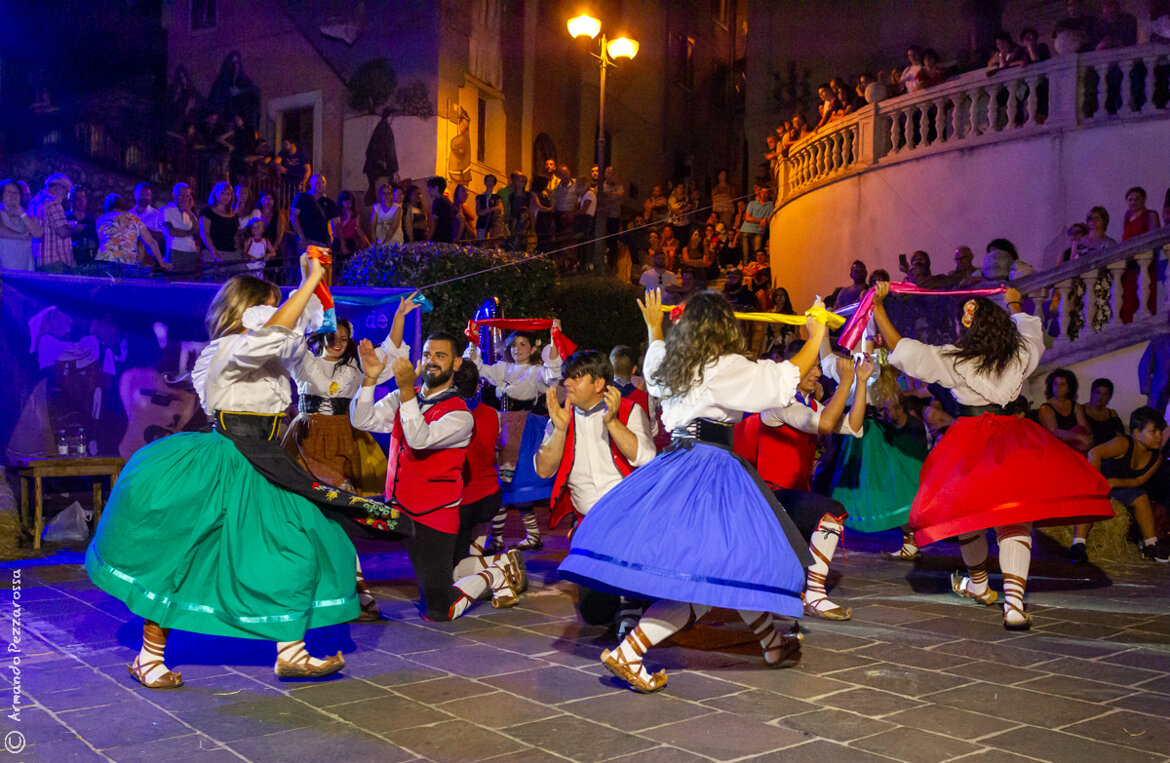
Popular Ciociarian dances - August 2019
Ciociarian folk dances - August 2019
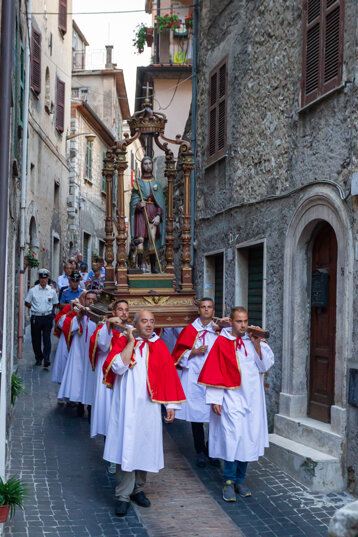
The procession of San Rocco - August 2019
The procession of San Rocco - August 2019
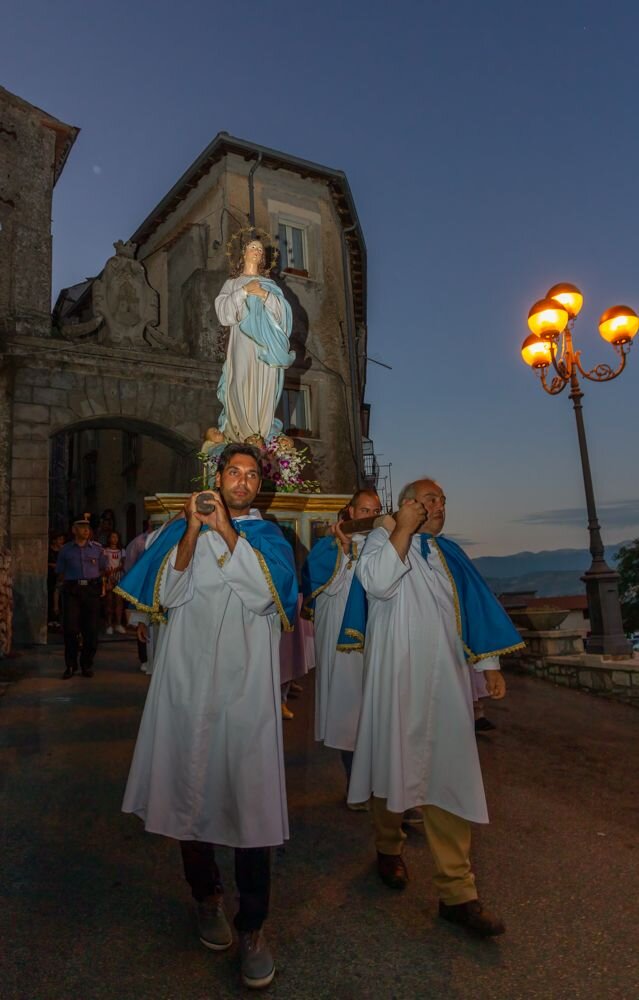
The Assumption procession - August 2019
The Assumption procession - August 2019
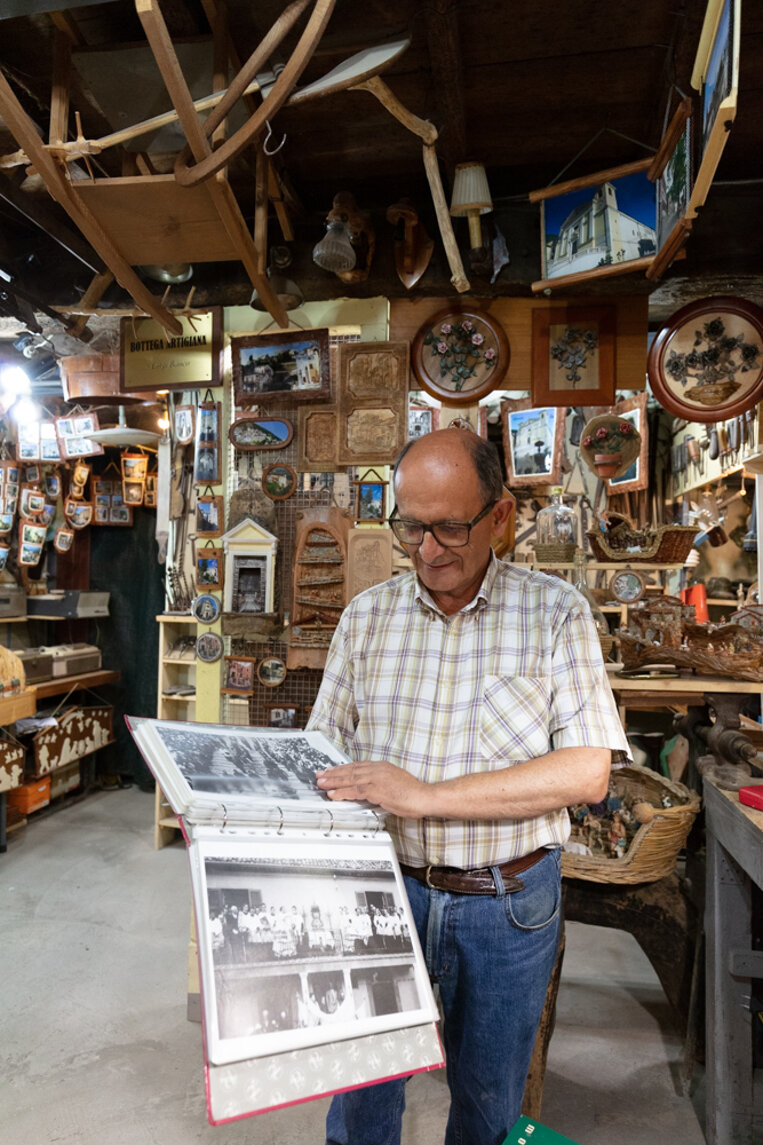
Lastly, but certainly at the top of the list of reasons for interest I found in Morolo, is the “workshop-refuge” (forgive me the term) of Mr. Bauco. Luigi is a kind gentleman, a great walker and nature lover who has in fact built a historical archive of the town in his workshop. He keeps a splendid collection of black and white photos (which he kindly lent me to accompany this article), ranging from the beginning of the last century to the present day, as well as a collection of work tools, including photographic ones, and many photos of new and old views of Morolo set in frames and little frames of the most varied shapes, mostly made from recycled materials. Not to mention the Christmas nativity scenes built in a thousand ways and just as many proportions. But Luigi’s manual skill doesn’t stop there. The workshop houses a model of the central square with the Church of Santa Maria, the Town Hall with its offices, and the perfectly reconstructed fountain. What is surprising is not only the precision of the details, but the idea of mounting on scale models the photographs of the town’s public figures, such as the mayor, the councilor, the postman, the local police officer, the parish priest... A sort of virtual theater, where the life, especially the political life of the town, is cleverly observed and commented on with the help of signs that are removed or added depending on the changing script, that is, the current political phase. In short, every time I go to Morolo, having a chat with Luigi in his workshop of memories is truly a pleasure.
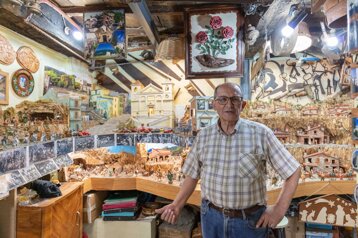
Mr. Luigi Bauco in his workshop
Mr. Luigi Bauco in his workshop
Mr. Luigi with his archive
Mr. Luigi with his archive
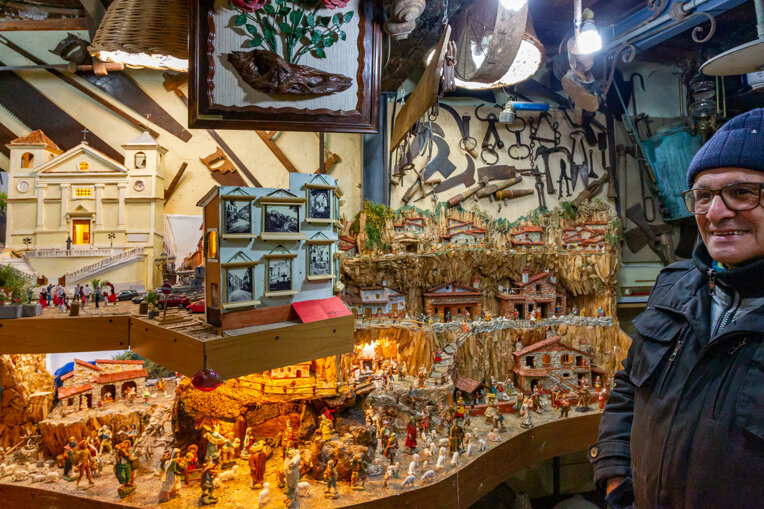
Mr. Luigi and his nativity scenes
Mr. Luigi and his nativity scenes
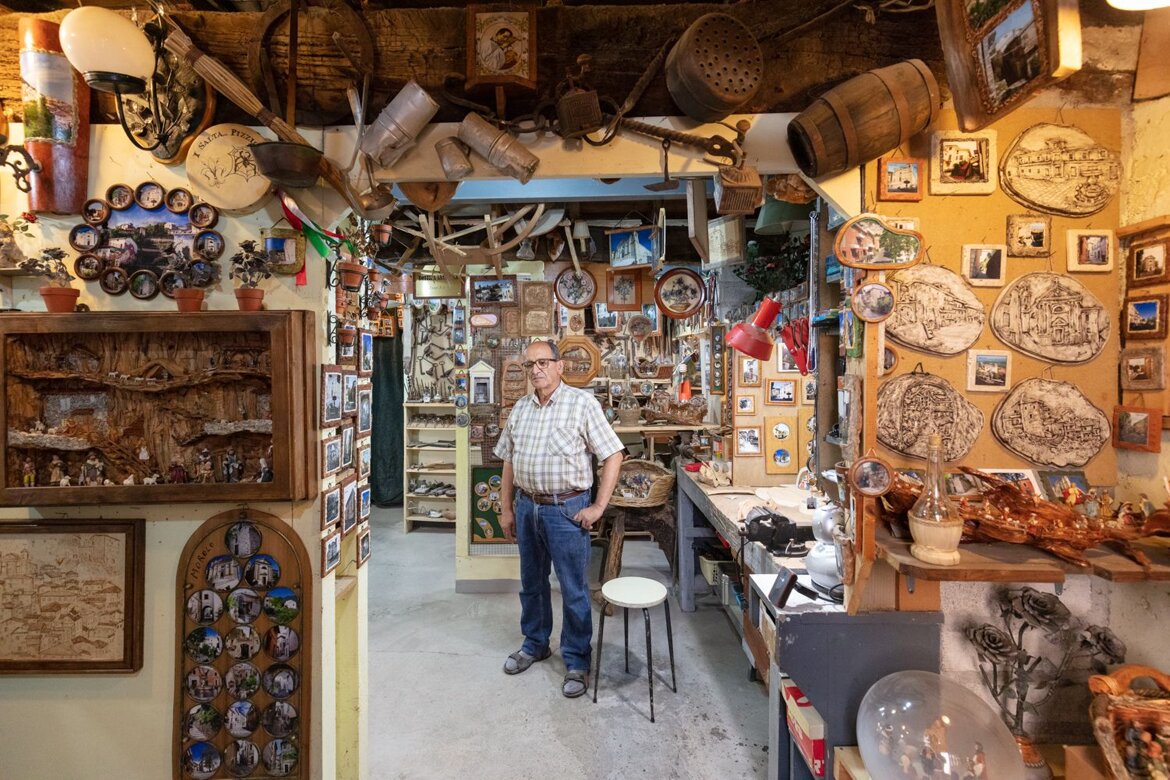
Mr. Luigi Bauco in his workshop
Mr. Luigi Bauco in his workshop
SOCIAL
CONTACT
LOCATION
via Boscovich 14, Milan
20145
Italy
© 2020 C.FISC. 97871390155 - VAT 13672380964