
SOCIAL
CONTACT
LOCATION
via Boscovich 14, Milan
20145
Italy
Travels
© 2020 C.FISC. 97871390155 - VAT 13672380964

VISIONS OF TODI
by Claudio Peri
Visions of Todi by Claudio Peri
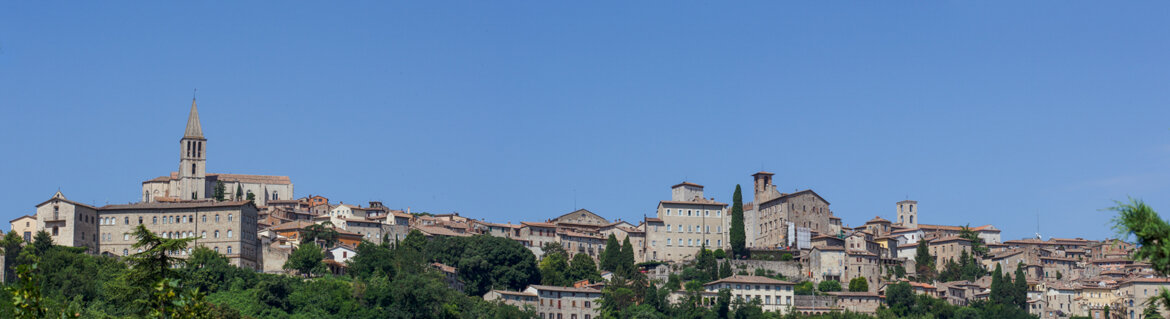
Todi seen from below
Todi seen from below
In July 2018, Armando and Laura, on their holiday journey from Milan to Morolo (province of Frosinone), stopped in Todi to spend some time with their friend Adele, who, together with her husband Alessandro and their son Elie, had recently moved from Milan to Todi. Adele is my daughter. Laura and Adele had known each other since high school and were now meeting on a journey towards the origins of their respective families, Laura's in Morolo (Lazio) and Adele's in Todi (Umbria). I know well the charm of these returns to the past because I too returned after 50 years from Milan, the city of my professional life, to Todi, my and my wife Teresa's hometown: we are both true-born Todi natives: the controversy over the name of Todi's inhabitants is ongoing and there is no chance it will be resolved.
That’s how I met Laura and Armando, who is an art photographer. With the two of them and Adele, we set off to visit the city: I talked and told stories, they looked and asked questions, but while Laura, Adele, and I stayed together as a group, Armando kept breaking away from us, lagging behind or going ahead, then coming back, asking me something, and then wandering off again. It was amusing: I realized that an artist photographer needs to take an exaggerated number of photos, as if reality revealed to him through the camera lens variations that are not visible to the naked eye. My storytelling merely served as a provocation for Armando’s observations, which he then continued on his own with visions unknown to me. At the end of the visit, we discussed a bit of everything, but especially Jacopone, the great poet and mystic of the 13th century. An intriguing coincidence: Morolo became a city under the rule of the Colonna family, who had been Jacopone’s protectors and by the will of Pope Benedict XI, the Pope who absolved Jacopone from the excommunication of Boniface VIII. There should therefore be a certain sympathy between Morolo and Todi.
We finally parted with great cordiality while I wondered what Armando might have seen with his constant breaking away from the group and darting right and left, approaching something or moving away from it. After a few weeks, he sent me a selection of his photos of Todi and I was stunned: in just over two hours, Armando had seen all the essentials and more. His photos tell the story of Todi as no guidebook can. I will try to briefly share some of the reflections his photos inspired in me.
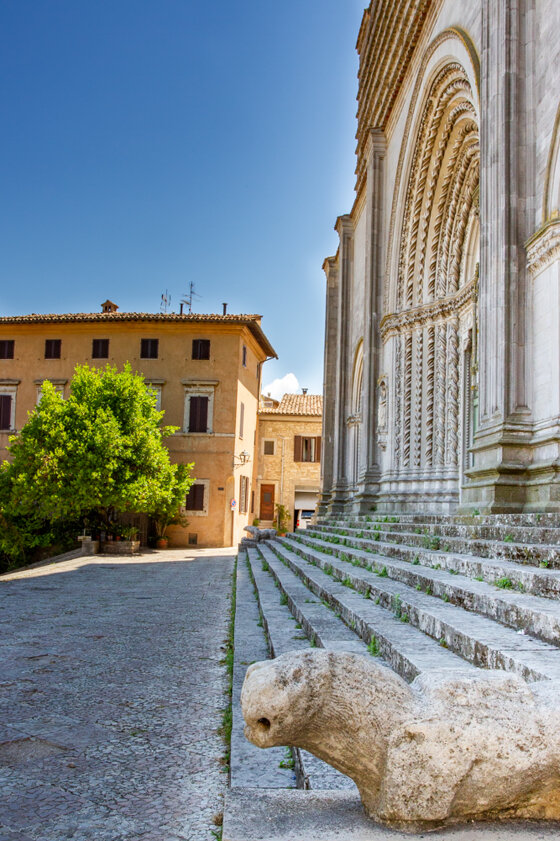
"Sideways" view of the church of San Fortunato
"Sideways" view of the church of San Fortunato
First reflection: the dominant role of the temple of San Fortunato
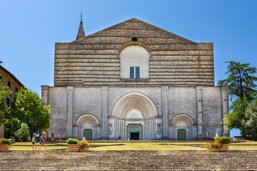
Armando was drawn to the temple of San Fortunato, to which he devoted special attention.
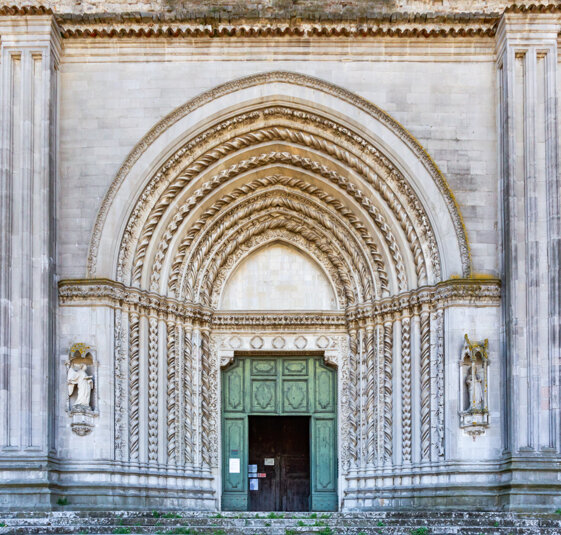
He sensed that this church was the city's identity monument. He investigated its soul by capturing the imposing and austere facade and then focusing in one image on the marvelous portal and then, from the center of the churchyard, looking east and west at the two 16th-century palaces, which appear small at the sides of the great church, like two altar boys assisting the Bishop at a solemn celebration.
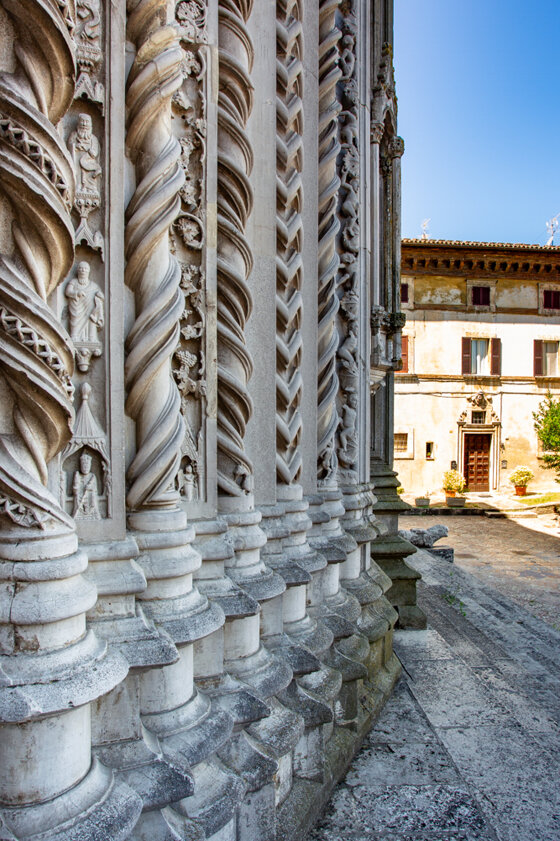
Two tangential views, “askew” as they would say in Todi, to emphasize the immense size of the temple compared to that of the two small Renaissance palaces. Finally, there is the photo taken from below towards the bell tower of San Fortunato—beautiful, imposing, and very simple—which characterizes the skyline of Todi, no matter the orientation or distance from which you look at the city. With much regret, we gave up seeing the inside of the temple because it was closed.
Another "sideways" view of the church of San Fortunato
Another "sideways" view of the church of San Fortunato
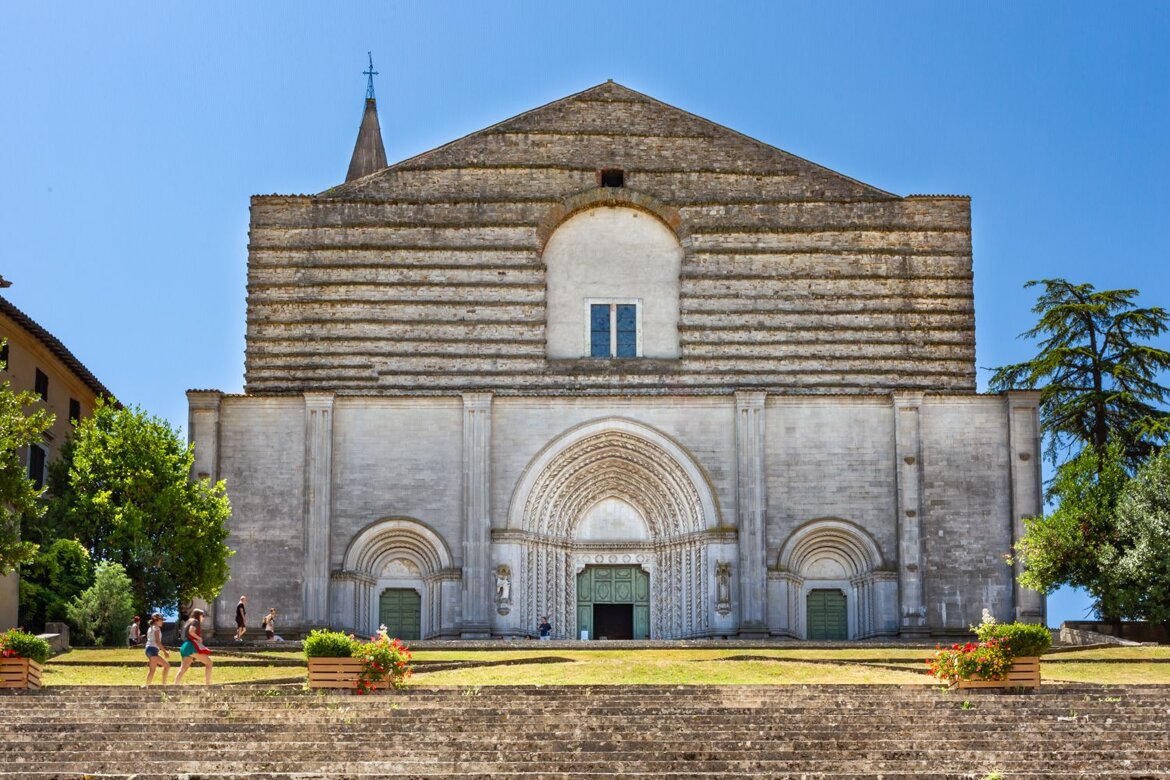
The façade of San Fortunato
The façade of San Fortunato
Second reflection: the subtle irony of Armando's "divergent thinking"
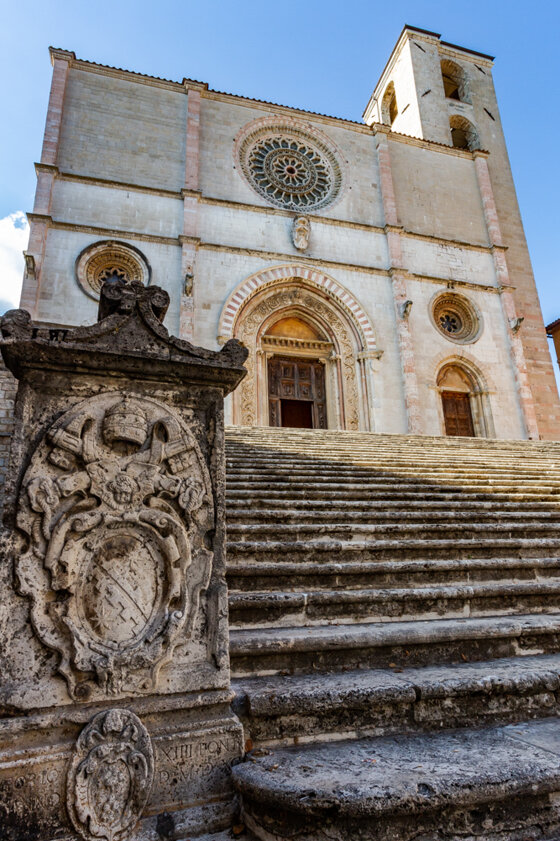
Armando uses photography to sometimes express a subtle irony. I realized this by observing his photos of the other two monumental churches of Todi: the temple of Santa Maria della Consolazione and the Cathedral. These two photos are an exemplary model of Armando's "divergent thinking." They offer unusual perspectives.
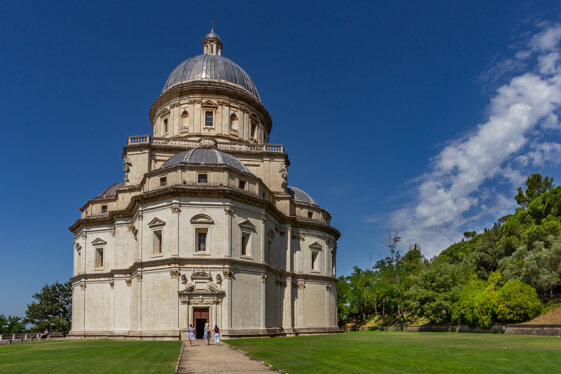
The Temple of Santa Maria della Consolazione
The temple of Santa Maria della Consolazione
La Consolazione, a Bramantesque temple from the 16th century, is depicted in a frontal view that distorts its proportions, and the Cathedral is presented in a mischievous “sideways” view in which the foreground is occupied by the coat of arms of a noble family or a Pope, at the expense of the view of the church’s façade.
The cathedral of Todi
The cathedral of Todi
I couldn't resist the idea of considering this photo as the visual representation of Jacopone's protests against the temporal power of the Church. He puts it this way:
"I see poverty banished,
no one cares except for power..."
[I see poverty banished, no one cares except for power... ]
In the comparison between San Fortunato and the other two great churches of Todi, Armando's photos sparked a thought within me of which I was not aware. San Fortunato is, in its bare essentiality, the ideal model of a Franciscan church, while the other two suggest a more elaborate and complicated architecture—and religion—perhaps less evangelical.
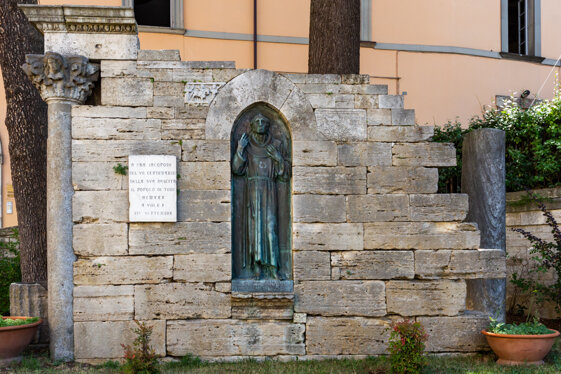
Bronze statue of Jacopone da Todi
Bronze statue of Jacopone da Todi
Third reflection: the symmetries of Armando’s “convergent thinking”
Alongside the lateral or “sideways glance” view, Armando likes the opposite view, the frontal and symmetrical one, millimetrically centered. Some of his photos represent a model of “convergent thinking” on an exactly defined focal center; they are almost a model of rational geometry: the perfectly framed photo of the portal of San Fortunato, that of the cloister of the Liceo, the partial and frontal view of the Scannabecco fountains. For the latter, see the comparison with the lateral view of the same fountains, to understand how these two ways, the asymmetric tangential and the frontal symmetrical, are two fundamental ways to represent the beauty of an architectural structure.
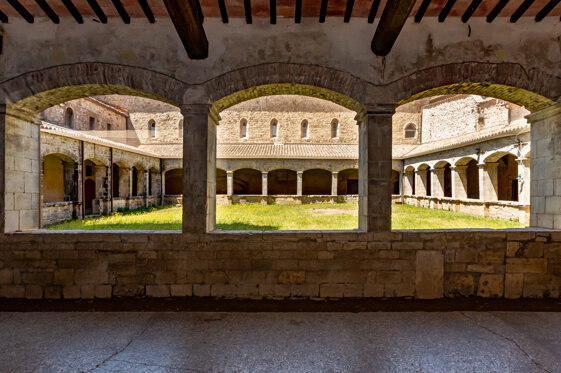
The cloister of the High School
The cloister of the High School
The façade of San Fortunato
The façade of San Fortunato
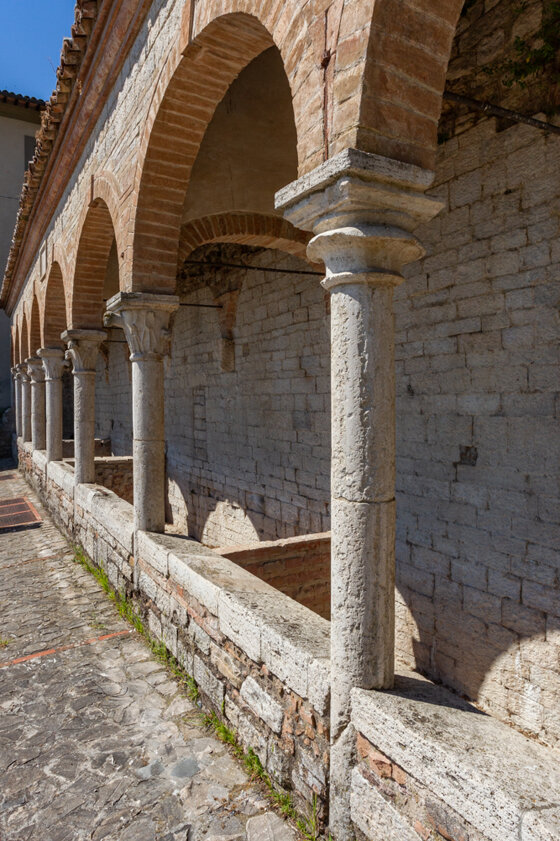
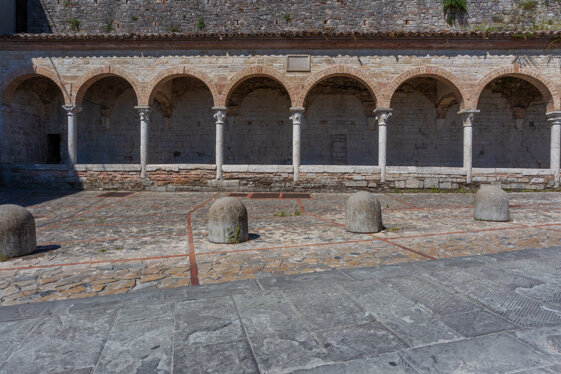
Scannabecco Spring
Fonte Scannabecco
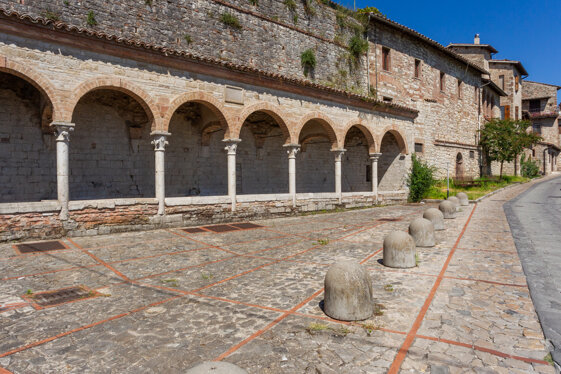
Perspective view of the Scannabecco spring
Perspective view of the Scannabecco spring
"Side view" of the Scannabecco spring
"Side view" of the Scannabecco spring
Fourth reflection: the secret gardens
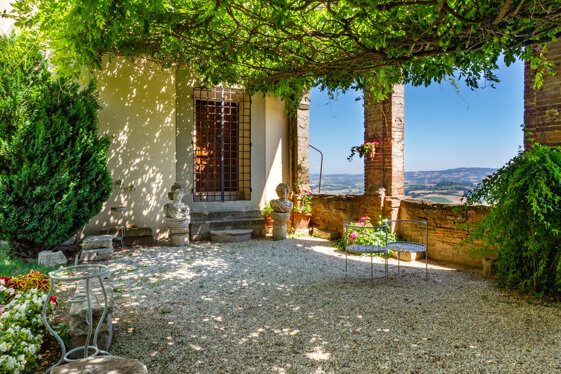
The hill of Todi has a particular structure: it is a pyramid with a triangular base that rises at the center of a gigantic natural amphitheater that extends to the mountains on the horizon. Todi is surrounded 360 degrees by this view. From any window or terrace or garden in the city, you can enjoy a panorama that rises through green hills up to the mountains on the horizon, blue from the distance. Todi has many views of this kind, but, in the short time available to us, Armando was only able to record one example: it is the horizon of the Martani Mountains glimpsed through the arches of a hanging garden of a Renaissance palace (Pongelli Palace). We also went to another secret garden with a breathtaking view to the West towards the Amerini Mountains. But there, the attention to the panoramas was interrupted because Armando was attracted by a detail and this is the
The "secret" garden of Palazzo Pongelli
The "secret" garden of Palazzo Pongelli
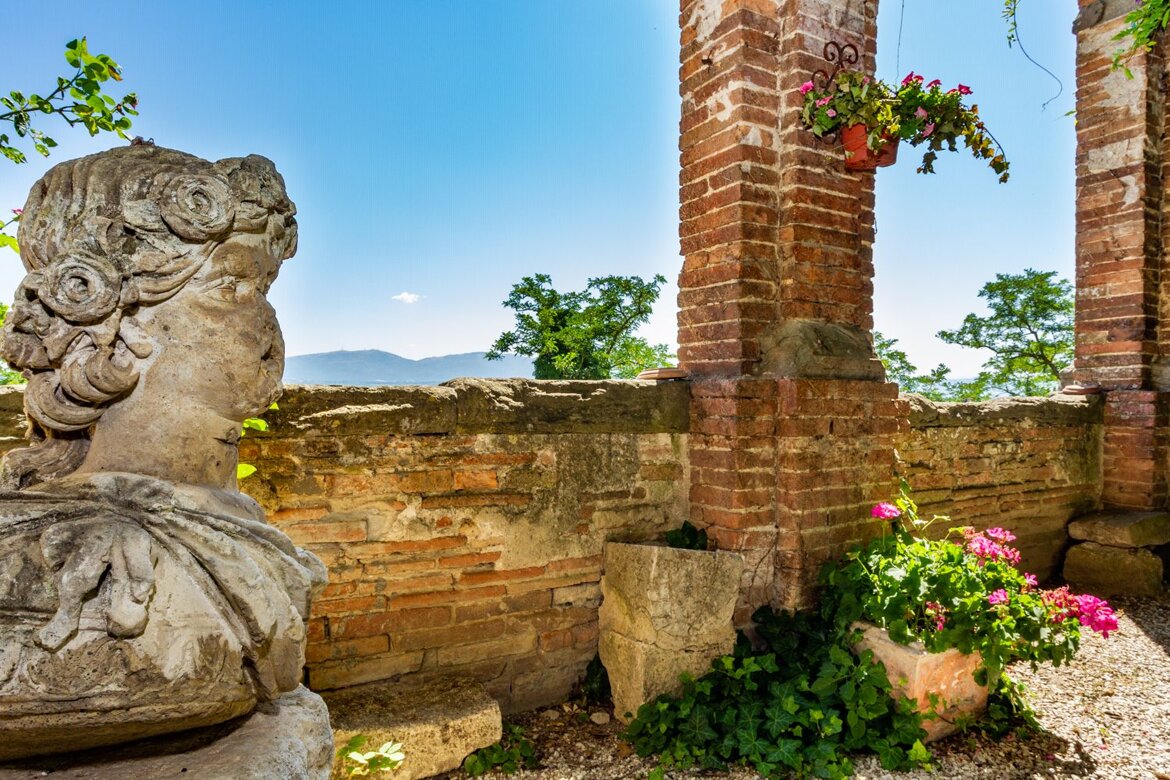
Detail of the garden of Palazzo Pongelli
Detail of the garden of Palazzo Pongelli
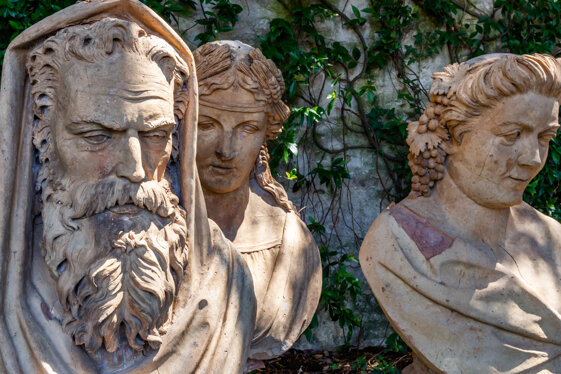
Fifth reflection: the three ages?
We were in the garden facing west, when all of Armando's attention was drawn to the three centuries-old terracotta busts that were watching us from a corner of the garden. No one knows what they represent, perhaps the three ages of life: the bearded old man could represent the wisdom of old age. The smiling young woman could represent the beauty of youth. And the winking, slightly tipsy gentleman could represent the ambiguity of middle age. One could discuss it for hours.
SOCIAL
CONTACT
LOCATION
via Boscovich 14, Milan
20145
Italy
© 2020 C.FISC. 97871390155 - VAT 13672380964