
SOCIAL
CONTACT
LOCATION
via Boscovich 14, Milan
20145
Italy
Travels
© 2020 C.FISC. 97871390155 - VAT 13672380964
Valle Sant'Angelo - Morolo
Monti Lepini by Armando Pezzarossa
This story is an example of how sometimes beautiful things can happen when people are moved by goodwill. By the desire to do things, even small ones, that are little or not at all profitable, regardless of politics, economic situations, etc. And this, in my opinion, is even more significant when trying to carry out, as in this case, actions aimed at conserving natural heritage, landscape, and biodiversity, that is, creating a "cultural and human" profit for which large financial investors are not needed, as in the case of defending the natural habitat and its silent and non-voting inhabitants.
In the previous article on Morolo and the Lepini Mountains I expressed my perplexity about the lack of a project to enhance the beauty and richness of this mountain range, so close to the sea and, at the same time, so distant from it. Well, I was immediately proven wrong (or rather, I got what I wished for): just a few weeks ago, news came out that, by decree of the President of the Lazio Region (D.P.R.L. January 29, 2021, no. T00228), pursuant to Article 6 of Regional Law October 6, 1997, no. 29, the “Valle Sant’Angelo Natural Monument” of 139.6 hectares located in the Municipality of Morolo has been established, and its management has been entrusted to the municipality itself.
It is probably a sign of changing times. If more than fifty years ago the culture of the smokestack and second homes prevailed, today, at least in this case, the decision has been made to focus on the local natural heritage to look towards the future, especially for young people. 139 hectares are not many, considering the size of the Lepini Mountains range and the many natural emergencies present, but it is certainly a very important step that I hope can serve as a driving force for the neighboring municipalities. The architect of this very important result was the mayor of Morolo, Dr. Gino Molinari, who has always been committed to enhancing the area and bringing Morolo and its village out of anonymity. A difficult and complex operation that would have discouraged most people.
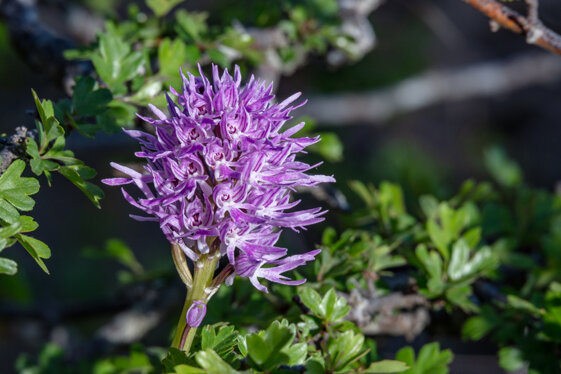
Orchis simia
Orchis simia
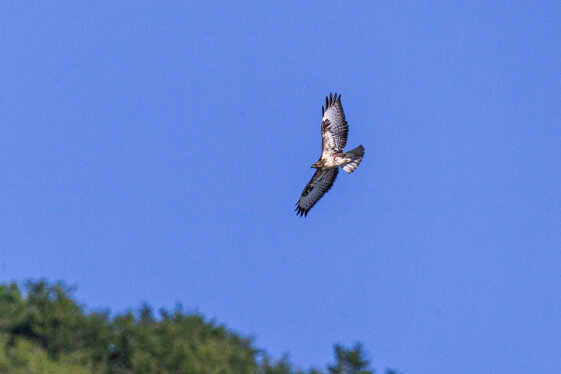
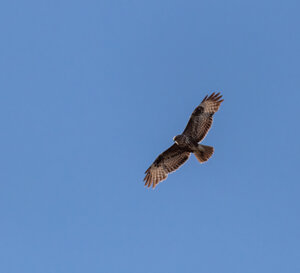
Buzzard - Buteo buteo
Buzzard - Buteo buteo
I asked him some questions during a brief interview.
Mr. Mayor, how did the idea of creating the Valle Sant’Angelo Natural Monument come about?
“The idea was born from the fact that our administration has focused greatly on enhancing the historical and natural heritage, so that it could become a driving force for tourism. Our mountain already offered excellent opportunities to be included in our project and the establishment of the Natural Monument represents an important first step for the complete enhancement and conservation of the plant and animal species present on site.”
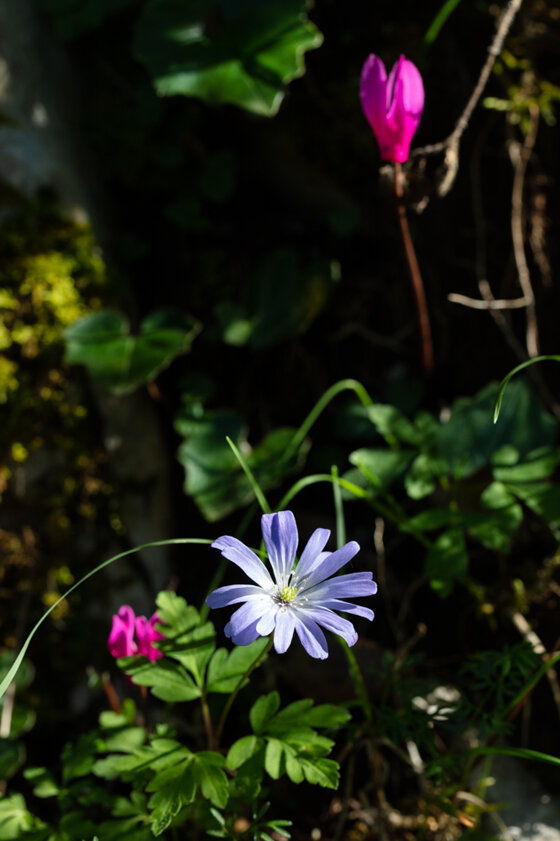
Anemone appenninica
Anemone appenninica
Why is the Valle Sant’Angelo so important that it deserves to be included among the 22 natural monuments of the Lazio Region?
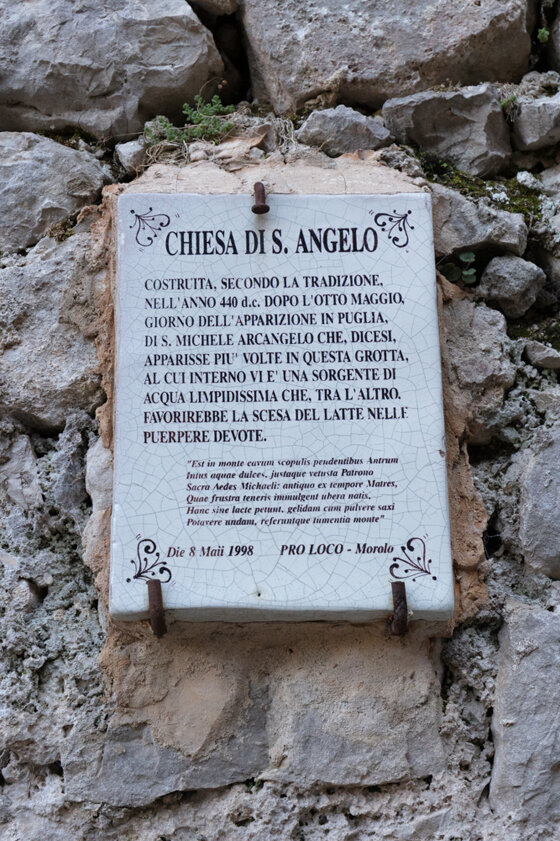
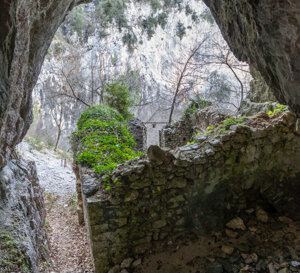
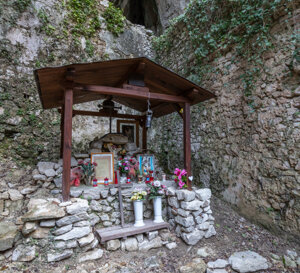
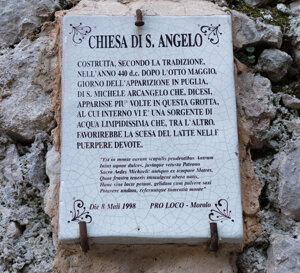
“Valle Sant’Angelo was admitted among the 22 natural monuments of Lazio thanks to its biodiversity: in fact, in this territory, largely covered by forests of holm oak, black hornbeam and ash, rare species such as the peregrine falcon and, most likely, the raven live. After many years, the golden eagle has returned here to nest. Furthermore, within this area is the hermitage of Sant’Angelo, consisting of a medieval rock church and the cave inside which there is a very clear water spring, and it is said that this helps the flow of milk in nursing mothers. There are also watering places such as Pozzo Paoluccio and Cesa de Vena. Also within this area is the Sant’Antone aqueduct, which supplies drinking water to the whole village and the fountain in Piazza E. Biondi.”
The Municipality of Morolo has also been appointed as the managing body. What are the next steps that the local authority will have to take to fulfill such a delicate assignment?
“The first steps to take, with the support of the Lazio Region, will be to mark out and properly signpost the path that starts from the town and reaches the hermitage of Sant’Angelo. Afterwards, initiatives will be organized to promote our mountain at the regional and national level.”
Have there been any positive results after the establishment of the Natural Monument?
"Yes, we are already seeing a fair increase in hikers and nature enthusiasts from neighboring towns who are intrigued by the precious floristic and faunal biodiversity that characterizes the Lepini mountains."
Valle Sant'Angelo is an extremely delicate environment. Its environmental balance is more fragile than ever, as are the flora and fauna we mentioned in the article. In order for this little treasure to continue enriching the whole community, a further effort is needed for careful and guided management of the protected area, making its use—essential—an element of enhancement and not of mortification of nature.
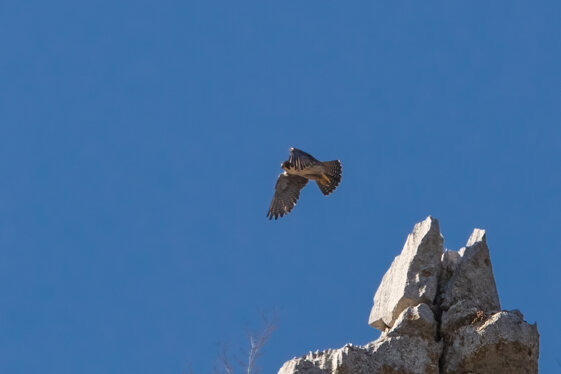
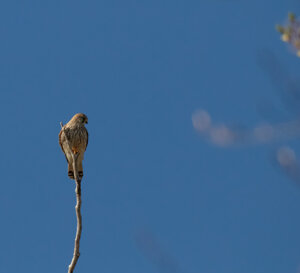
Peregrine falcon - Falcus peregrinus
Peregrine falcon - Falcus peregrinus
Naturalistic notes on Valle Sant'Angelo
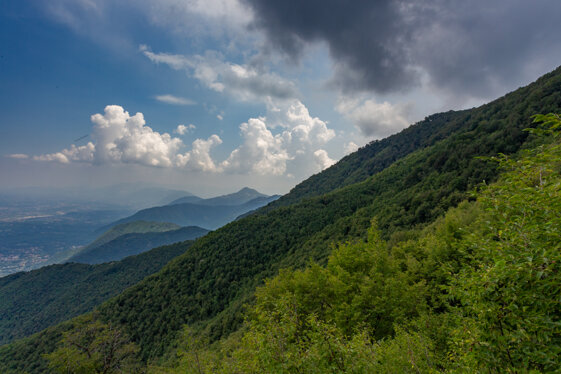
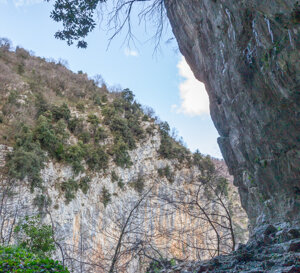
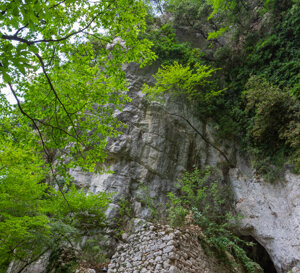
The Valle Sant’Angelo Natural Monument appears as a rugged valley crossed by the S. Angelo stream, a torrential tributary of the Sacco river. The valley, initially wide and bright, gradually narrows, closed in by high limestone walls that form a theatrical backdrop to a nature that puts on a spectacular show.
Climbing up from Morolo on the south-facing slopes, you pass through a band of vegetation characterized by evergreen Mediterranean woods, where the holm oak – Quercus ilex - creates the densest tree cover with infiltrations of shrub species typical of the Mediterranean vegetation horizon. As the exposure of the slopes changes, at the same altitudes the downy oak, manna ash, and black hornbeam replace the holm oak. At slightly higher elevations, in areas with greater average humidity, more mesophilic species such as cherry and maple appear. Even higher up, the beech regains dominance of the space together with maples and a few scattered yews clinging to the shadier rock faces.
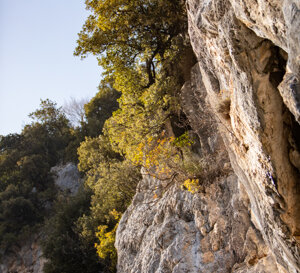
As you climb through the woods, you encounter outcrops of eroded and friable limestone and large cones of debris from the same rock, which, slowly but inexorably, are swallowed up by the hardiest and most resilient vegetation such as the manna ash and the frugal black hornbeam.
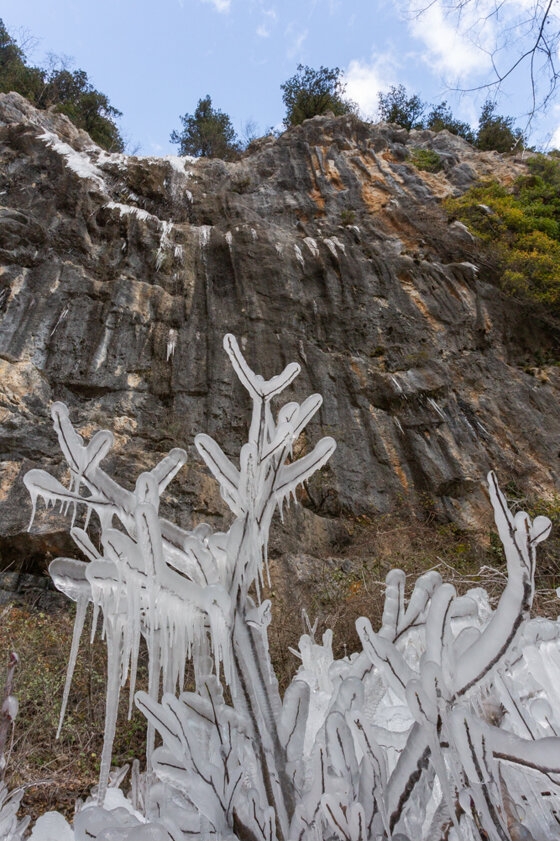
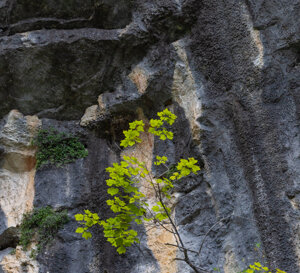
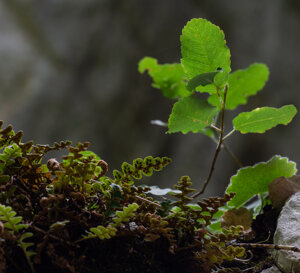
However, it is the rock walls that attract the observer's attention. On the imposing cliffs rich in cavities, the flow of surface water sometimes forms layers of travertine, as in the case of the beautiful waterfall that can be seen just before reaching the cave of the Sant’Angelo hermitage. This rock formation is the result of the deposition of calcium carbonate present in the water combined with carbon dioxide. Where there are small cracks or fissures, evergreen shrubs manage to develop their roots and grow on almost vertical surfaces, as if they were plant free-climbers.
Moreover, the lanner falcon – Falco biarmicus, one of the rarest birds of prey in the Mediterranean basin, seems to survive on these rock faces. The presence of the peregrine falcon – Falco peregrinus, on the other hand, is certain, as it uses the inaccessible cavities of the valley to build its nest. Easier to spot and hear is the noisy raven – Corvus corax. On the increasingly narrow path that passes under the great rock walls, it is not uncommon to find the quills of the porcupine – Hystrix cristata, locally called “spinosa”.
In spring, along the climb that leads to the top of the valley, it is quite normal to be accompanied by the calls of the vociferous jay – Garrulus glandarius, by the cooing of wood pigeons – Columba palumbus and by an endless array of passerines typical of thermophilic woods such as the subalpine warbler – Sylvia cantillans, the blackcap – Sylvia atricapilla and the Sardinian warbler – Sylvia melanocephala, just to name a few.
Photo gallery
SOCIAL
CONTACT
LOCATION
via Boscovich 14, Milan
20145
Italy
© 2020 C.FISC. 97871390155 - VAT 13672380964