
SOCIAL
CONTACT
LOCATION
via Boscovich 14, Milan
20145
Italy
INSIGHTS: THE FOREST AND THE PLANTS
Brief historical notes on the forests around Carvignone
The vegetation of Carvignone
The vegetation history of the Adamello Park, and consequently that of the Carvignone forest, is long and complex. It is a story originally marked by natural evolution and later by the settlement of humans in the Alpine valleys and everything that followed, from the Neolithic to the Republic of Venice, from the Austrian presence to the Napoleonic one, up to the two world wars, and to the present day.
Already at the beginning of the 1900s, the slopes for the most part, except for the steepest ones, were almost devoid of forest vegetation. Similarly, the entire mountain that includes Carvignone was a vast pasture in total absence of tree cover. Historical records testify to the destruction of the green heritage and give us an idea of the woods that once covered the Alpine mountains and, more specifically, the Rhaetian Alps in which the Adamello Park is located. Contrary to what one might imagine, hydrogeological instability at that time had reached extreme levels. The mountain, no longer protected by the forest cover, was prey to soil washout and landslides and surface erosion, which led to a substantial impoverishment of the topsoil with serious repercussions that are still ongoing.
In this regard, the texts taken from the series “Quaderni del Parco” n. 6* Forest management models for the Adamello Park", reported below, are particularly significant:
“Altitudinal limits of vegetation in the Stubai Alps and the Adamello group (Hermann Reishauer, Leipzig, 1904):
(…) The forest of the Tonale saddle has greatly suffered under the blows of man's axe. Some remnants bear witness to the very dense forest that enveloped the saddle of the mountain until the Middle Ages, making it unusable for traffic. Today the pass is a marshy plateau, almost without trees, on which only twisted shrubs grow abundantly. The forests of the side valleys present a very sad picture. For the most part, we find dense forests only at the entrances, but the further one goes into the valleys, the more the forests become fragmented. Water veins, fallen boulders and scree penetrate them from above and divide them into numerous tongues.
At the edge of the first step, the denser forest usually ends; on the second step, the eye sees only less dense and regular vertical columns, marking the slope of the area. Even in the longest valley of the area, the Avio Valley, the second step of the valley presents only discontinuous tongues of forest, although its basin is located at only 1584 m altitude. (…) The widespread discontinuity of the forest can be explained by the geological structure of the rear portions of the valleys, completely lying on tonalite. The disintegration of tonalite is different from that of slate: it breaks up, splits into large debris and gigantic blocks, often as big as a house. This is the effect of frost, caused by water entering the cracks. At the foot of the steep steps of the valleys and at the edges of the basins, there are true expanses of blocks of gigantic extent, which stubbornly resist disintegration. These have shattered the forest, marking the remaining remnants with the traces of their gigantic falling force. Often entire bands of trees are deprived of their crowns; many trees on the sides of the mountain have lost all their branches; their bark is torn and badly wounded, their appearance, due to the violence of spring avalanches and falling rocks, bent and deformed.
Due to the strong washout, humus forms only in a few places in the upper areas, more often on the spurs of the imposing rock walls, which form like steps. Only here can seeds, flying upwards, take root, so it is understandable that the strips of forest and trees are interrupted more and more as you go up, as well as the fact that trees grow only in the niches and spurs of the rock. In some places, however, it is man who has eliminated the forest. Above the scree of Lake Avio we still see some imposing trees, but most have been destroyed by fire. The small wood of Pinus cembra and larches near Malga Lavedole (Avio Valley) is very deforested; many trees have been deprived of their branches by the hand of man. Along the stretch of path leading to Rifugio Garibaldi there are numerous tree trunks up to 75 cm in diameter, and not a few of them bear the marks of the axe. Even at 2328 m, I saw in the year 1900 some trunks, remains of a deforestation. Also in Val Paghera the limit of tree vegetation has been lowered due to human intervention. Heading towards Malga Aviolo, at an altitude of 1924 m, numerous trunks can be seen, gathered to form a forest, among which some with a diameter of 75 cm.
Even here, and it is already evident at a superficial glance, the axe and fire have done their work. Here and there young larches are growing again, the largest of which have reached a height of 4 – 5 m. (…)”.
“In the first half of the 1900s the further new needs dictated by the succession of two world wars led to a substantial “return” to the intensive forms of exploitation of the forest heritage already observed in the Napoleonic period; compared to those years, however, a new forest policy was established which, alongside the intensive cutting of the forest, was accompanied by an intense reforestation activity. It is in these years that the multifunctional value of the forest was definitively recognized through the introduction of the Hydrogeological Constraint (Royal Decree no. 3267 of December 30, 1923);”
For those interested in further information, it is possible to download the full publication from this link.
It was around 1923 that massive reforestation operations began in Val Camonica and in the territory that today falls within the Park, carried out mainly with Norway spruce – Picea excelsa – even at lower altitudes than the vegetational optimum for the species. These reforestations had the purpose of saving the mountain slopes from erosion, but also of quickly producing timber for economic supply chains. Thus, a vegetative cover was reconstituted, to which was added the spontaneous reforestation of abandoned meadows and pastures.
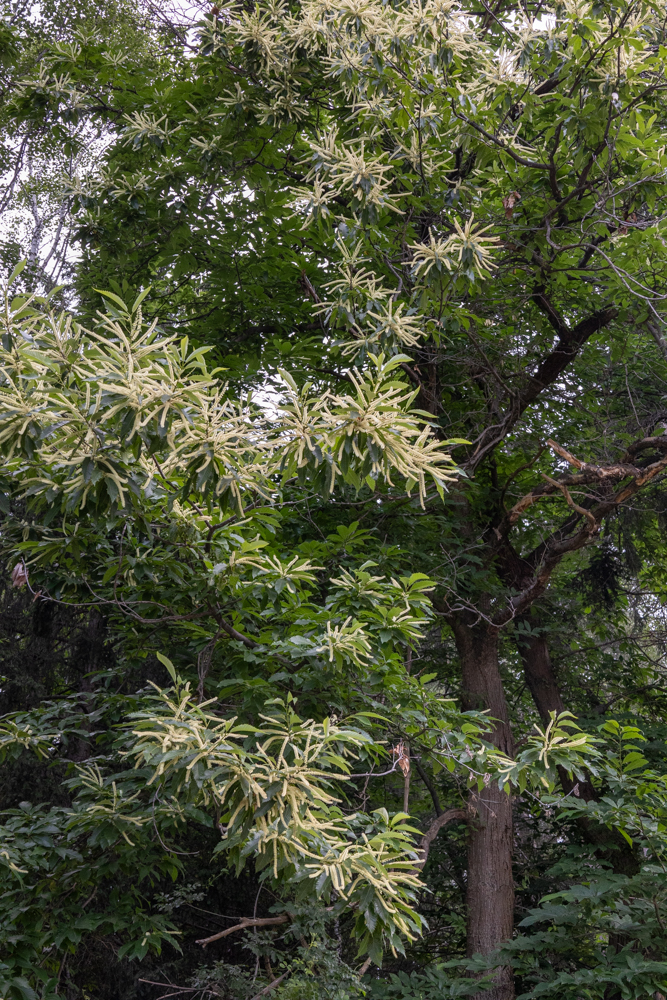
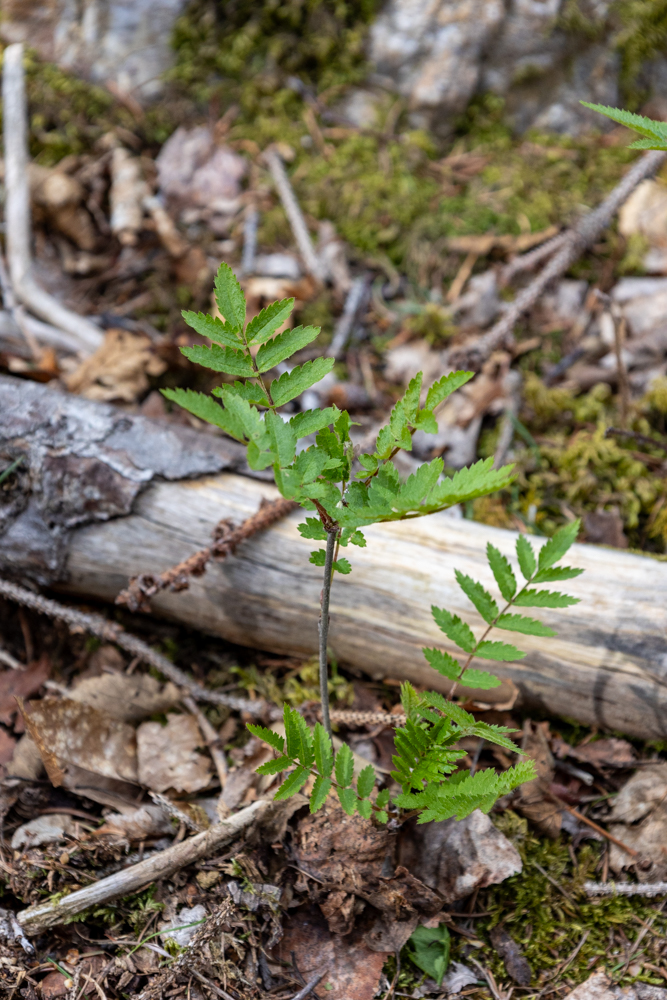
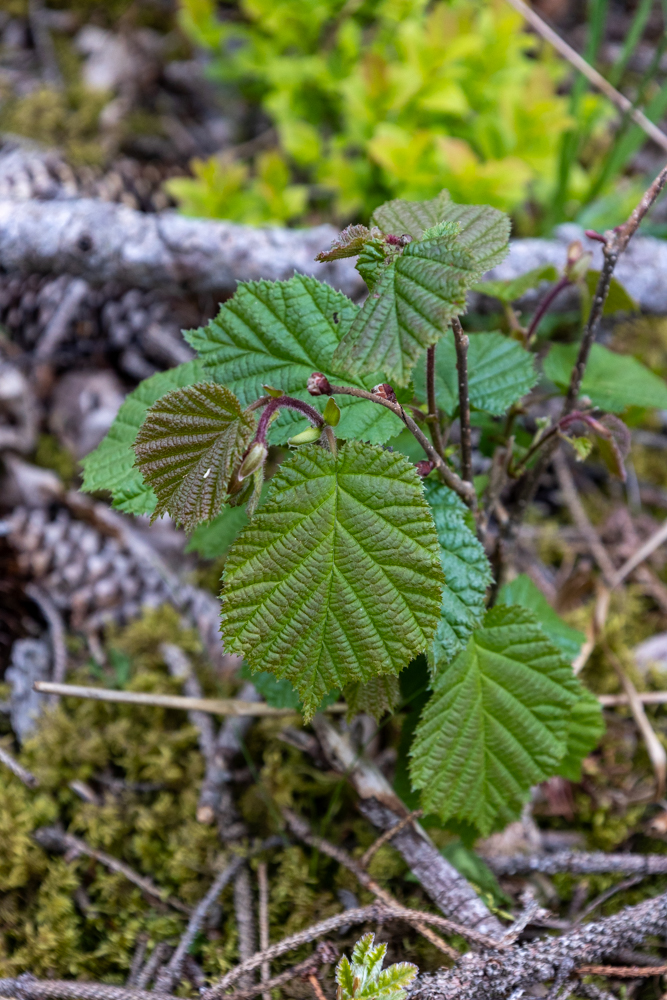
Today Carvignone presents itself with a dense forest cover, composed mostly of Norway spruce and to a lesser extent by larch - Larix decidua - and by birch – Betula pendula. Other broadleaf trees are present where the dense spruce forest is interrupted (e.g. at the edge of a meadow or an uncultivated area, ...), in particular chestnut – Castanea sativa (see photo) -, wild cherry (see photo) – Prunus avium -, aspen – Popolus tremula -, manna ash – Fraxinus ornus -, rowan – Sorbus aucuparia -, downy oak – Quercus pubescens - and hazel – Corylus avellana.
The Carvignone forest is located in a transition zone between two types of forest: the more specifically montane one, ranging from 900 to 1400 meters, and the sub-montane one, found between 600 and 900 meters. The “mixing” of different species, which could result in great natural richness, was “hindered” until a few years ago by the absolute dominance of spruce. The area identified by the project (it is a cadastral parcel of municipal property within the larger forest area enclosed between the Rio dei Valzelli and the Valle del Coppo) was characterized by a very dense, almost suffocating, very “impoverished” spruce forest, without a herbaceous and shrub layer, except at the edges. One of the first phases of the project involved starting an operation to improve the forest environment, consisting mainly of thinning and clearing (see photo) only of the Norway spruces carried out on a small area (less than one hectare in size).
This intervention aimed to encourage a mixing of species in the aforementioned altitudinal band. Today, just four years later, it is possible to observe a strong return of the “original” vegetation composed almost exclusively of trees, deciduous shrubs, and herbaceous plants previously inhibited by the Norway spruce cover.
Given the wildlife observation purposes for which the Carvignone area is intended, it was also decided to “help” the recovery of spontaneous vegetation by planting some wild berry-bearing shrubs (rowan, hawthorn, and blackthorn) functional to the presence of some bird species, especially those of the Turdidae family.
Between 2022 and 2023, the Norway spruces then suffered a massive attack by the bark beetle – Ips typographus – which literally upset the vegetational structure of the spruce forests throughout the area. Many of the Norway spruces, left to maintain adequate forest cover, unfortunately died suddenly even in Carvignone, right in the area of the thinning intervention. In order to accompany the restoration of a natural balance, as spontaneous as possible, and to maintain high levels of biodiversity, we decided to leave the dead trees standing. In this way, they have become or will become useful for all saproxylic fauna, that is, for all those organisms that depend, during some phase of their life cycle, on dead or decaying wood of dead trees (standing or fallen) or still alive and attacked by fungi.
© 2020 C.FISC. 97871390155 - VAT 13672380964


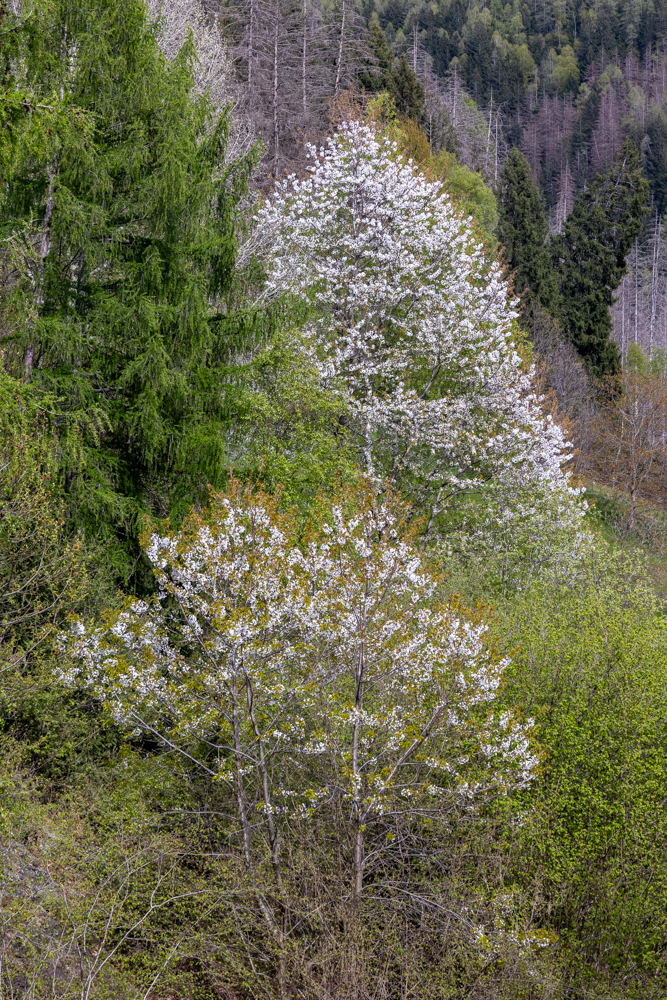
Wild cherry tree in bloom
Chestnut in bloom
The poetic blossoming of the wild cherry tree between March and April
The splendid flowering of the chestnut tree between June and September

The Larch and its buds
The new spring needles of the larch
How the forest renews itself
Fungi that decompose old trunks and thinning of the spruce forest


The young plants


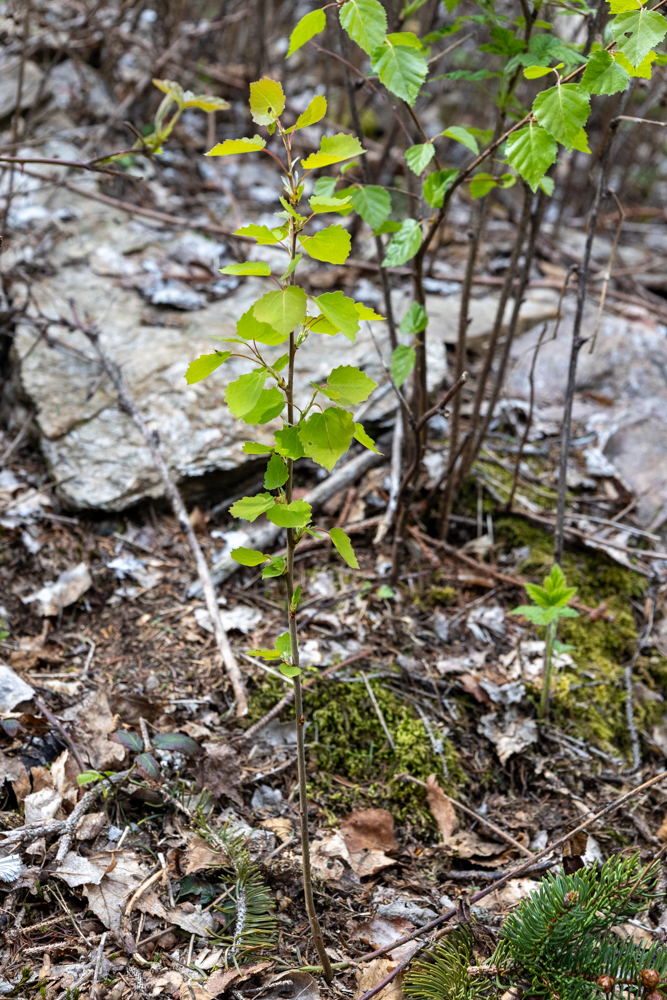
Birch sapling
Seedling of Sorbus aucuparia
Hazel plant
SOCIAL
CONTACT
LOCATION
via Boscovich 14, Milan
20145
Italy
© 2020 C.FISC. 97871390155 - VAT 13672380964