
SOCIAL
CONTACT
LOCATION
via Boscovich 14, Milan
20145
Italy
BIRDS
© 2020 C.FISC. 97871390155 - VAT 13672380964

Carvignone is home to at least 40 species of birds. Of these, about 25 are nesting. The rest of the presence is due to migratory and wintering birds. It is no coincidence that in the past Carvignone had a bird snare, used especially during the spring and autumn migration. The ancient presence of this facility indicated the suitability of the site for the creation of the monitoring center dedicated to observation and nature photography.

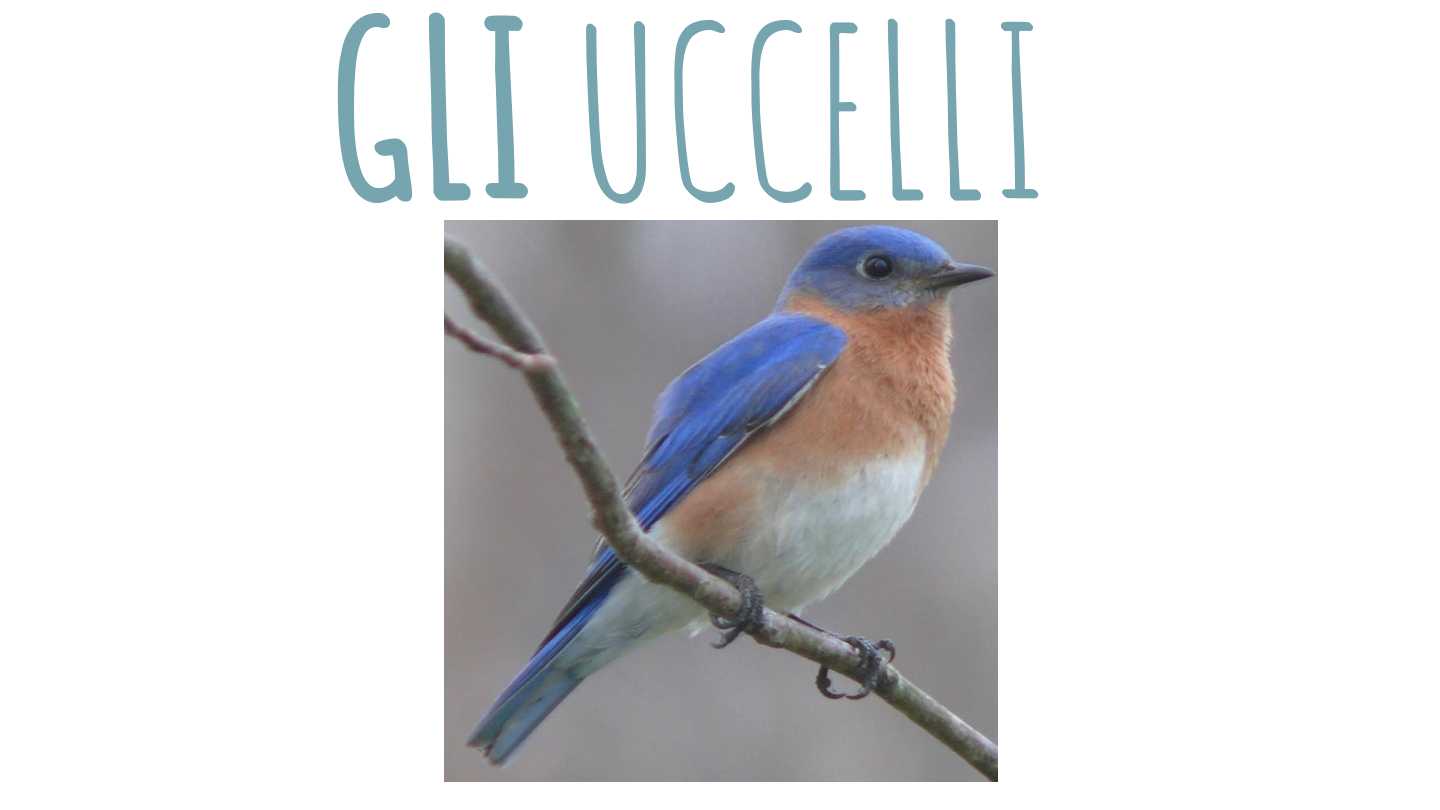
Contribution from our member Beatrice
Beatrice is 13 years old, attends the Via Vivaio Middle School in Milan and, by participating in the Lipu nature activity camps on Lake Massaciuccoli, has become passionate about the world of birds. This is her contribution.
The birds of Beatrice Astori.pdf
RAPTORS
Thediurnal birds of prey (Accipitridae and Falconidae) and nocturnal birds of prey
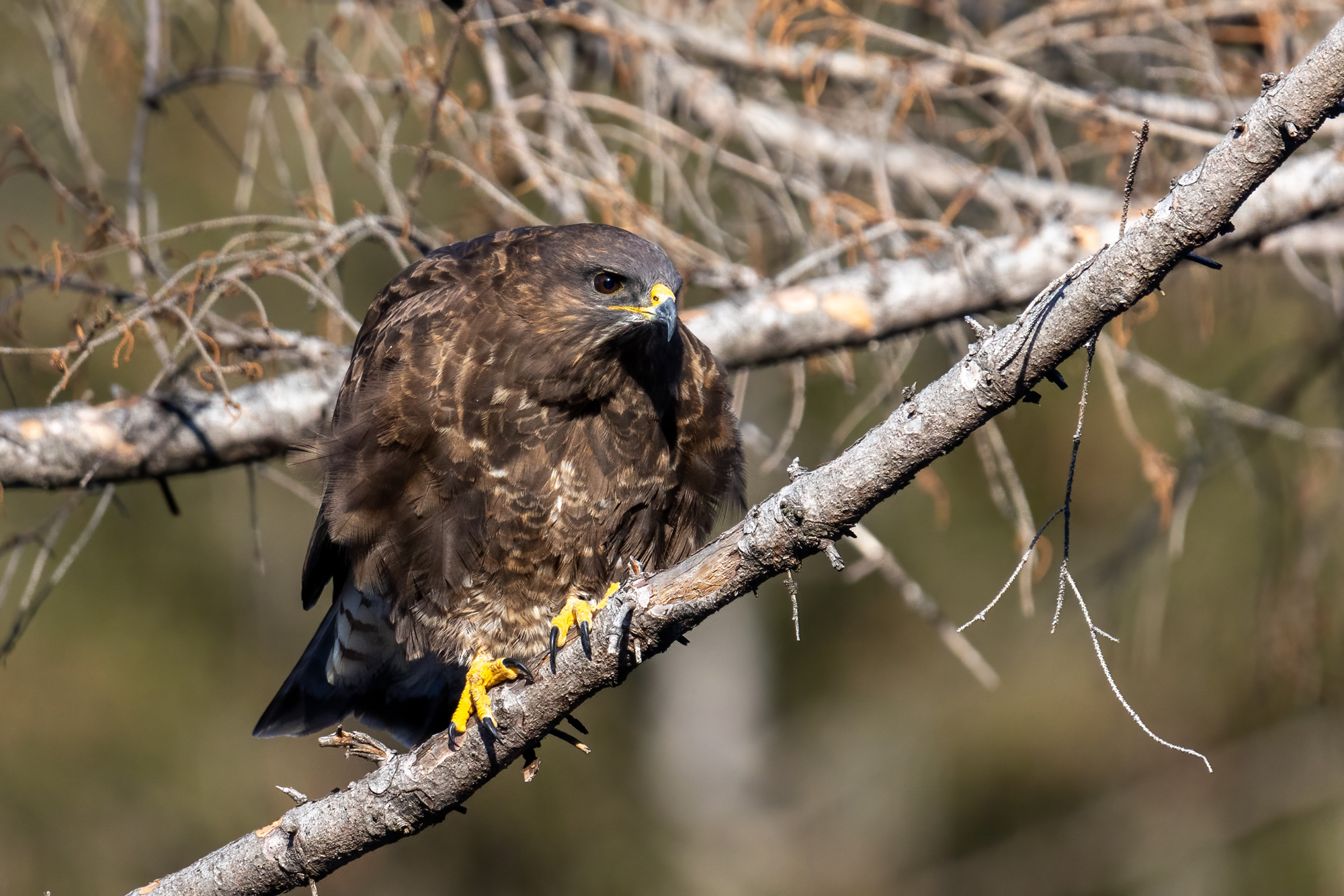
(Strigidae) are present in Carvignone with at least 8 species. Among these, the Goshawk, the Sparrowhawk, the Buzzard, and the Honey Buzzard also nest in the area. It is very likely that both the Little Owl and the Tawny Owl have their breeding areas in the numerous cabins present in the area. The Golden Eagle nests at higher altitudes and prefers to hunt in alpine meadows, while the Kestrel often likes to nest in abandoned human structures. An exception is the Honey Buzzard, which winters in Africa and reaches the alpine breeding sites in spring, as it feeds almost exclusively on honeycombs of bees and wasps, which are naturally absent in winter. All other species of birds of prey are exclusively carnivorous and capture their prey with very diverse techniques, to prevent competition between species. Birds of prey generally build rough nests made of twigs, in isolated places. Natural or artificial cavities can also be used, particularly by the Kestrel and the Tawny Owl. Specially built nest boxes are used by these two species, especially in places where there are no crevices or cavities in large tree trunks. Conservation efforts, the creation of Protected Areas, and the overall increase in prey have allowed the recovery of their populations, which in the past were at risk of extinction due to poaching, the use of chemicals in agriculture, and disturbance at nesting sites.


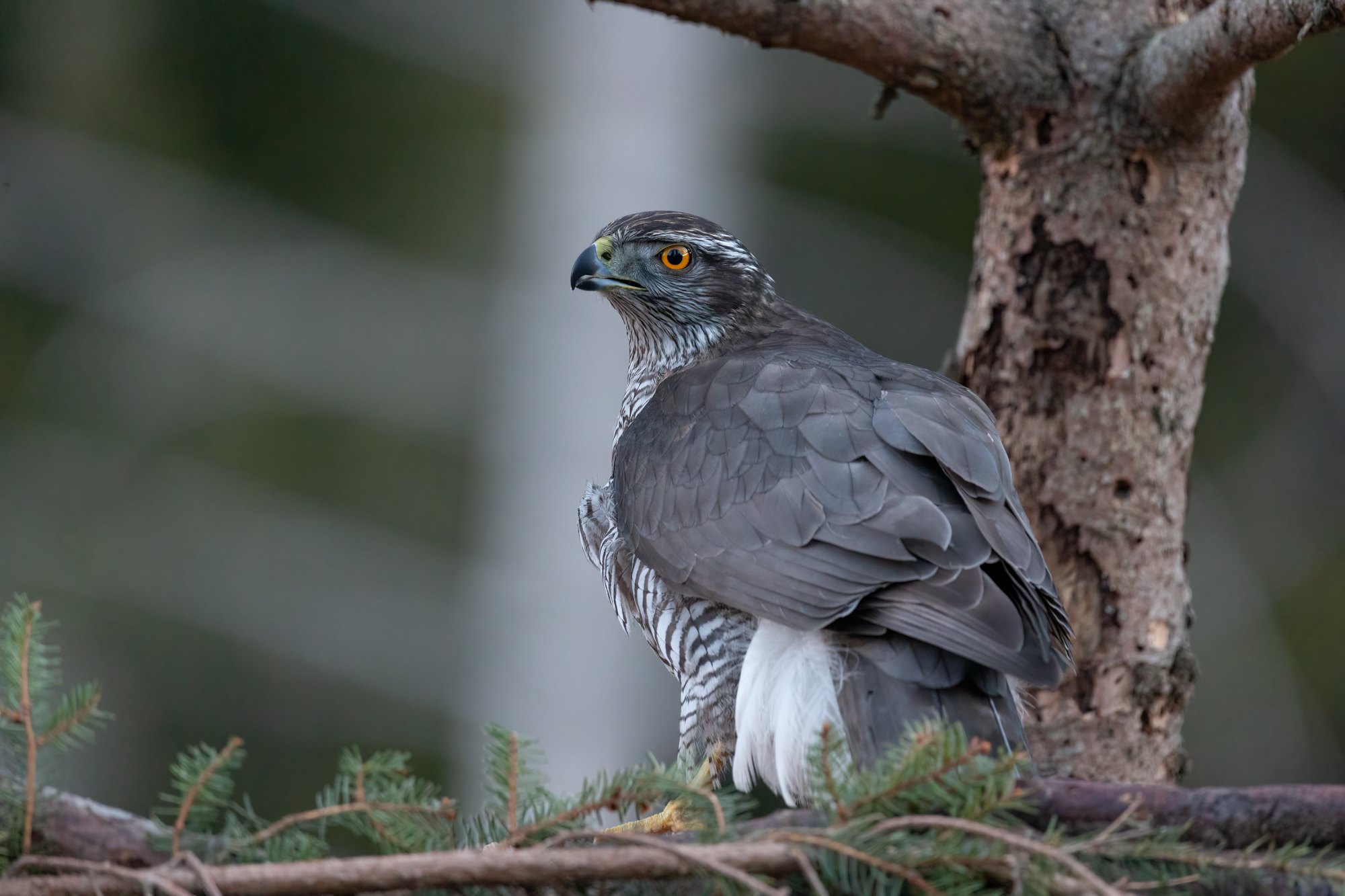
Goshawk/Goshawk
Poiana/Buzzard
PICCHI
Great spotted woodpecker, green woodpecker, and black woodpecker are present in fair numbers both in Carvignone and in the surrounding forest areas, which are rich in mature and partly decaying trees. The most common species is the great spotted woodpecker, which signals its presence with its monotonous chattering. Less common is the green woodpecker, which does not like spruce forests. Rarer still is the black woodpecker, which prefers large mature trees, which are not very common in Carvignone. Woodpeckers are species specialized to live exclusively in the forest, where they find food and nesting sites. Their diet consists mainly of insects and other arthropods, which they catch by hammering and digging into branches and trunks with their sharp beaks and long, sticky tongues. Nests are excavated in healthy trunks, with a deep and well-cleaned nesting chamber, which is used only once. Old abandoned nests are often occupied by other forest dwellers, such as dormice, tawny owls, boreal owls, and pygmy owls. Fortunately, in Italy, woodpeckers are slightly increasing in number and contribute to forest balance, particularly by controlling populations of phytophagous beetle larvae.
The woodpecker family (Picidae) represents the symbol of woods and forests. The


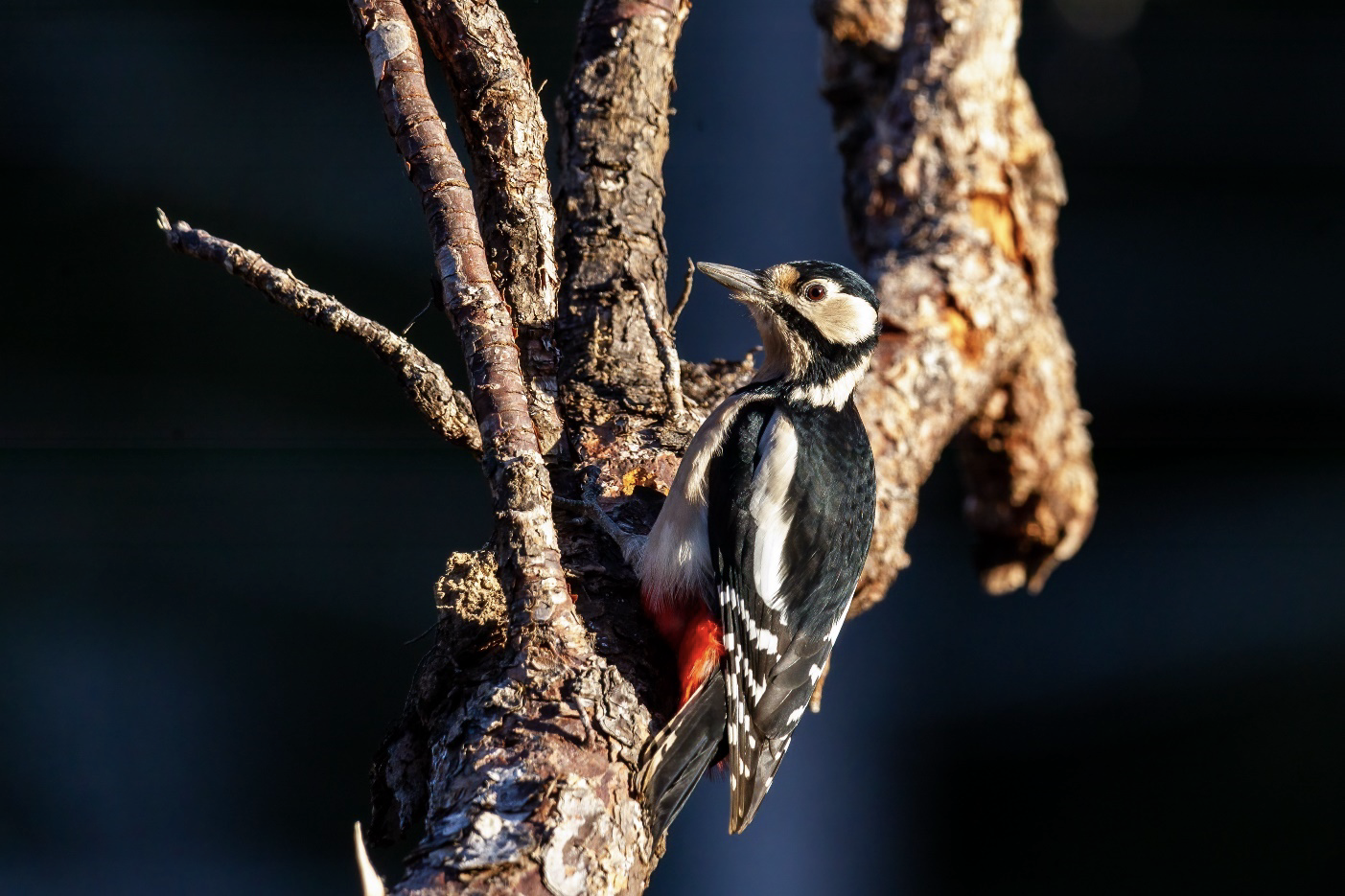
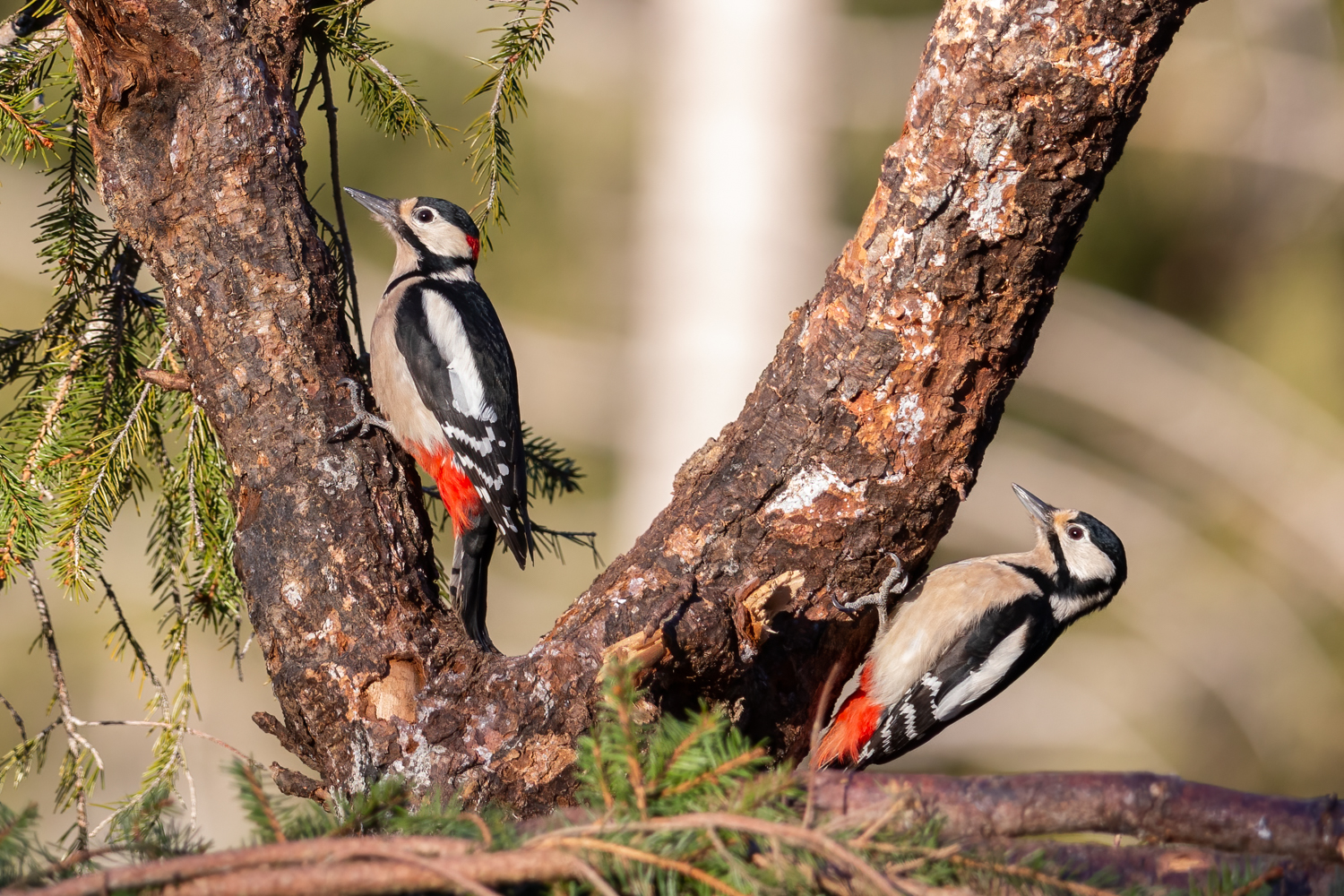
Great Spotted Woodpecker
Pair of Great Spotted Woodpecker
CROWS
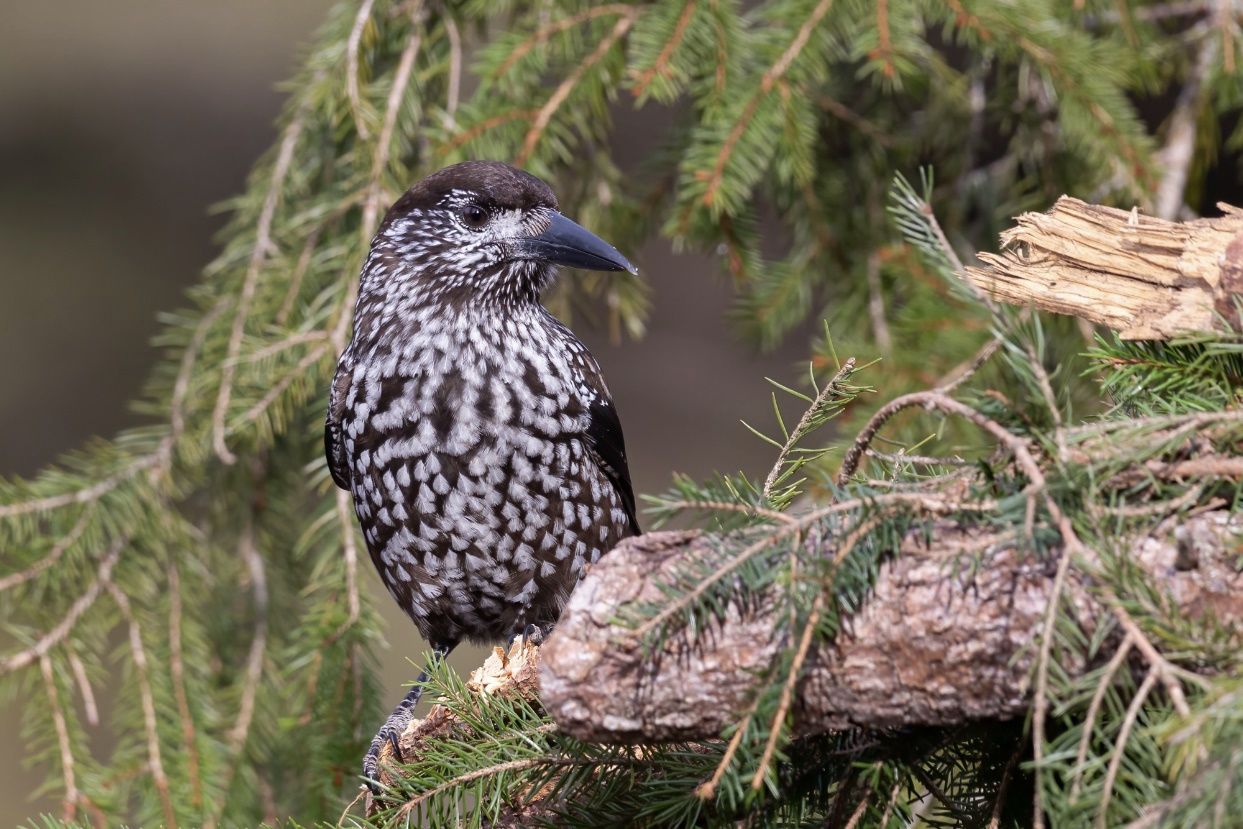
The crow family (Corvidae) is by far the group of birds that has best adapted to the presence of humans. Five species frequent the Carvignone Woods, with varying numbers, staying true to their distinctly exploratory behavior. The Hooded Crow and the Raven are the most frequent and visible species, while the Jay, although present in good numbers, is more elusive, remaining in the thick of the woods and only drawing attention with its unmistakable squawk. The presence of the Nutcracker is interesting, as it generally frequents mature stone pine forests, but occasionally stays for long periods in the woods. The Carrion Crow is rarer and competes with the more exuberant Hooded Crow, with which it often hybridizes in areas where their ranges overlap. All corvids have an omnivorous and opportunistic diet, not disdaining carrion and readily visiting landfills. They build coarse nests of twigs on medium-sized trees, at a fair height. Only the Raven prefers to nest on ledges of rocky cliffs, at higher elevations. Crows and ravens are among the few birds that have benefited from environmental changes, expanding their breeding ranges and becoming increasingly confident and skilled at exploiting the presence of humans.


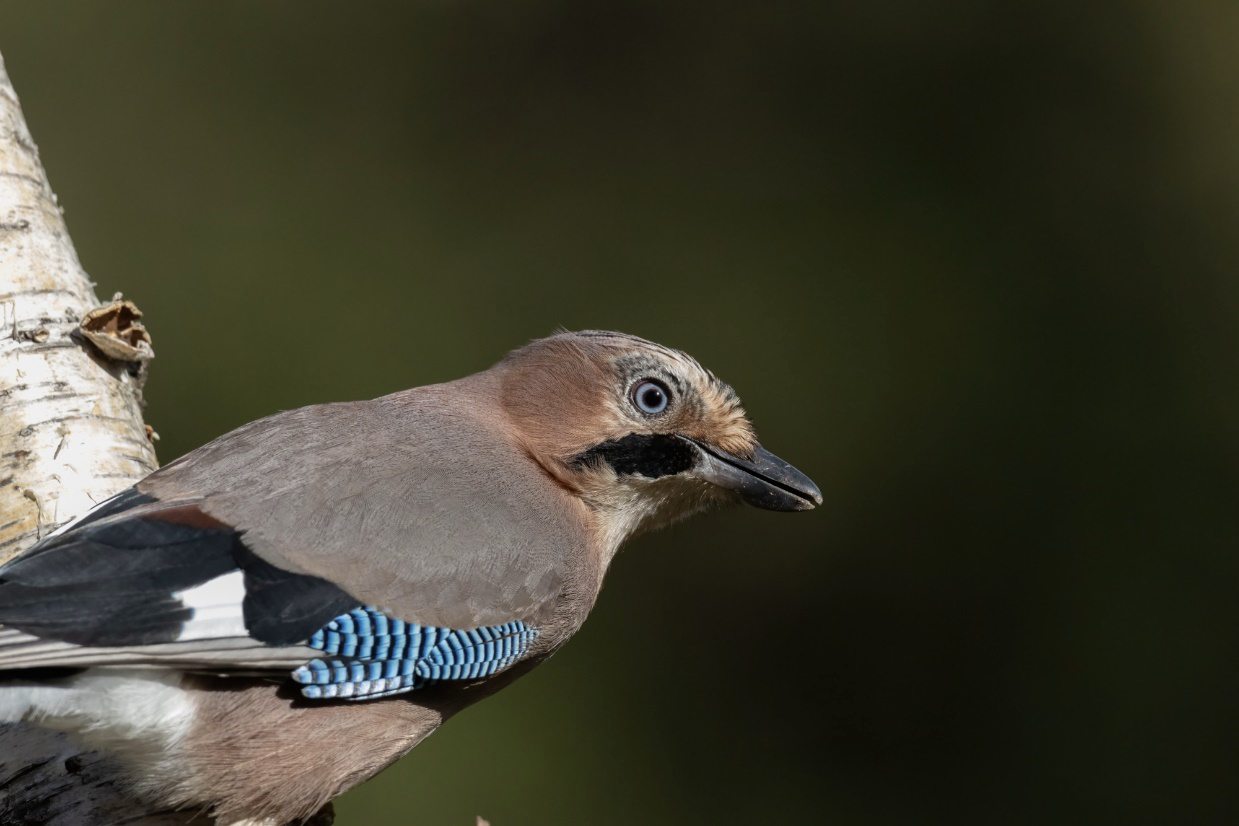
Jay/Jay
Nutcracker
CHAFFINCHES
Among the ten species of finches (Fringillidae) that frequent the woods, the Chaffinch is certainly the most common and its song can be heard throughout the year. Both it and the Greenfinch, the Goldfinch, the Bullfinch, and the Hawfinch nest in the area, while other species are mainly present in winter and during migrations. The Crossbill and the Redpoll, in particular, during the coldest periods with heavy snowfall, descend from higher altitudes to feed more easily. Finches are very eclectic birds and adaptable to different environmental conditions, to the point that they have colonized all land masses except Antarctica. Their diet is exclusively frugivorous and granivorous and often, in times of famine, they gather in large flocks that roam in search of food. The Crossbills and Bramblings, in particular, arriving from northeastern Europe, carry out real "invasions" in Lombardy and northern Italy in general. They generally nest on trees and shrubs, building cup-shaped nests, often covered with soft down. Some species do not disdain placing their nests in rocky crevices and artificial cavities. Their remarkable adaptability allows most finches not to be affected by environmental changes, except for some typically alpine species, which suffer from such causes.


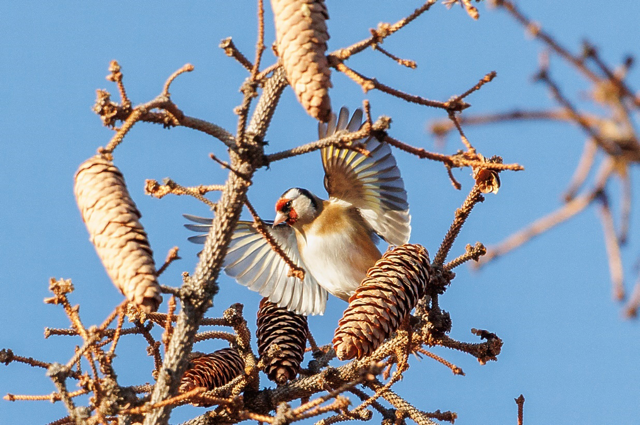
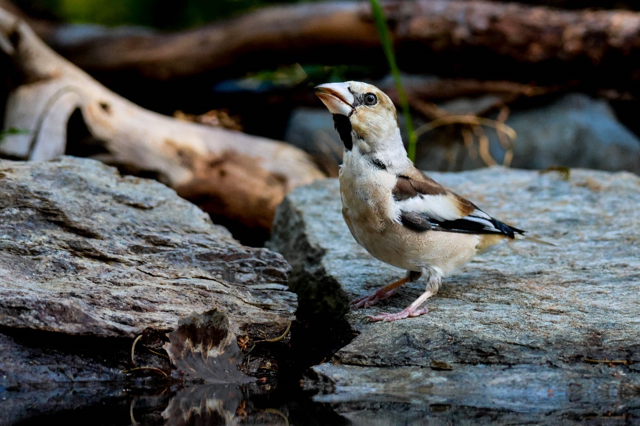
Goldfinch/Hawfinch
Frosone/Goldfinch
TORDI
The thrush family (Turdidae) includes a large number of species worldwide, most of which are characterized by camouflaged plumage and melodious song. Twelve species frequent Carvignone and the surrounding areas. Some species, such as the Blackbird, the Black Redstart, and the Robin, reside there year-round and nest there, while others are present during the breeding season and occasionally during migratory periods and in winter, when they descend from higher elevations to find more suitable conditions for foraging. Fieldfares and Redwings are particularly numerous during the harshest moments of winter, sometimes gathering with other passerines to optimize food search. All thrushes feed on a wide variety of invertebrates, while in winter fruits, berries, and seeds become the main food in their diet. They generally build cup-shaped nests, which they place among the forks of trees and shrubs. Only the Robin and the Black Redstart appreciate prepared nest boxes and become confident even near feeders. Partly for this reason, they are expanding throughout Europe, while Redwings, Song Thrushes, and Fieldfares are significantly declining due to habitat destruction and excessive hunting.


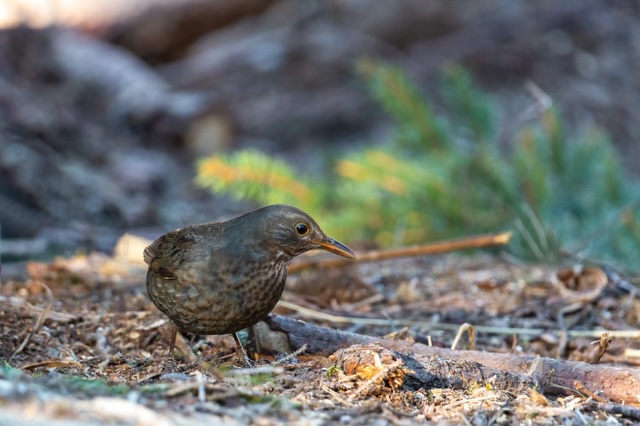
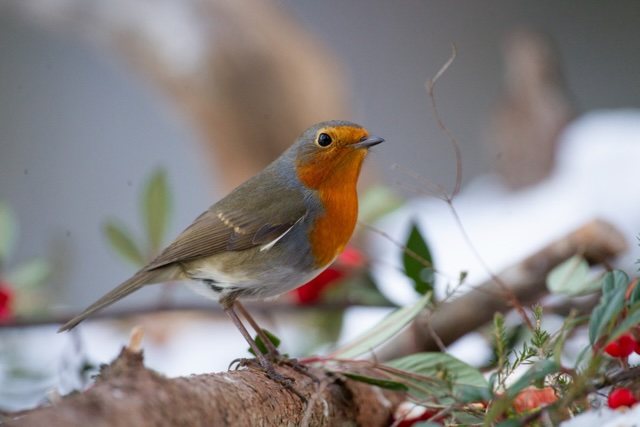
Blackbird/Blackbird
Robin/Robin
CINCE
The tit family (Paridae) is represented in Carvignone by five species (Great Tit, Blue Tit, Coal Tit, Willow Tit, Crested Tit), with a fair presence of breeding pairs, among which the Coal Tit and the Crested Tit stand out for their numbers. Tits live exclusively in forest habitats rich in natural cavities, which are useful for their reproduction. They mainly nest in tree holes, managing to produce a considerable number of eggs during the breeding season (even more than 30 in different clutches), to compensate for a high mortality rate. During the breeding period they are territorial and feed exclusively on eggs, larvae, and adult insects. Only in winter do they become partially granivorous and form mixed flocks with other species to be more effective in searching for food. Their residency and abundance provide a significant contribution to the control of forest pest insects. The presence of tits in our woods and gardens is encouraged by humans who, with feeders and nest boxes, have promoted their expansion, receiving in return their pleasant chirping and the sight of their bright yellow-blue plumage.


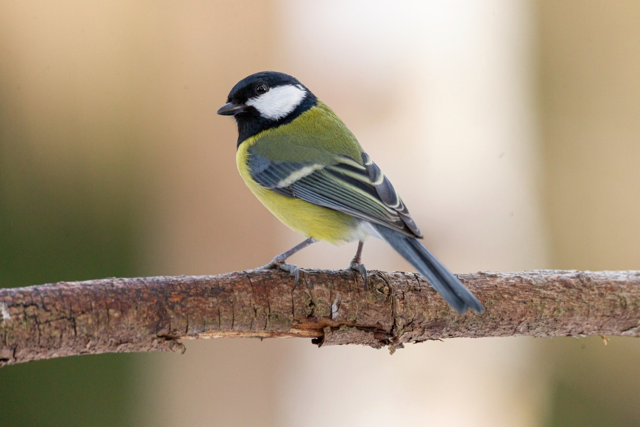
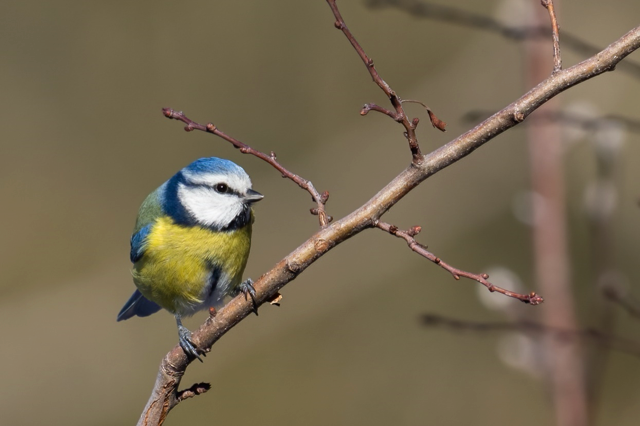
Blue Tit/Blue Tit
Great Tit/Great Tit
SWALLOWS AND SWIFTS
The families of Swallows (Hirundinidae) and Swifts (Apodidae), although systematically separate, have common characteristics that often confuse the casual observer. Of the five species observed in Carvignone, none nest in the area. Four species (Barn Swallow, House Martin, Crag Martin, Common Swift) use the houses of Cevo to establish their breeding colonies. Between the tiles and under the eaves or in other crevices, they build their mud nests (House Martin and Barn Swallow) or slip between some loose tiles (Common Swift and Crag Martin). Only the Alpine Swift does not nest in the village, preferring rocky walls at higher altitudes. A characteristic of the two families is their great flying ability, which allows them to feed exclusively on flying insects (aeroplankton) during the summer period. For this reason, they are great African migrants, except for the Crag Martin, which migrates short distances, moving from the Alps to central and southern Italy. Swifts are, among birds, the most efficient fliers of all, to the point of sleeping in flight during long migratory journeys and not landing on the ground, since their long sickle-shaped wings and extremely weak legs would prevent them from taking off again. Unfortunately, the use of insecticides and the abandonment of rural buildings for new agricultural methods have contributed to a general decline in all populations, particularly the Barn Swallow.


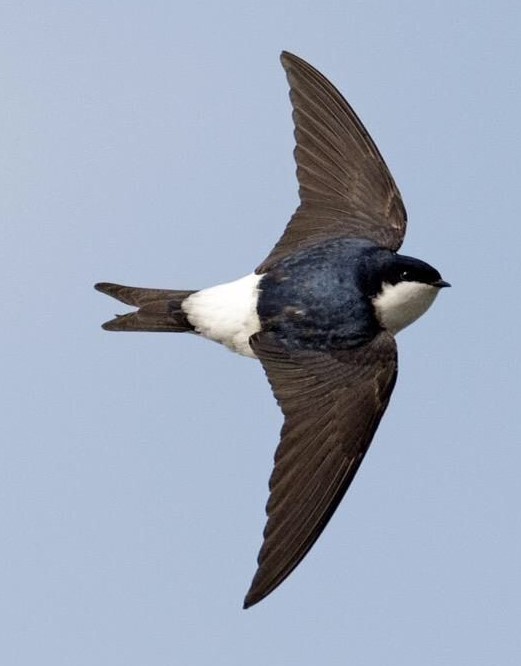
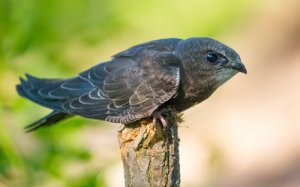
Rondone/Swift
House Martin
FOR FURTHER INFORMATION:
–“Atlas of the Birds of the Italian Alps” P: Brichetti – Ed. Ramperto (BS)
–“Guide to the Birds of Europe, North Africa and the Middle East” - L. Svensson – Ed. Ricca
BRIEF GUIDE TO SPECIES RECOGNITION
Species recognition is essential to understand what we are observing. Knowledge of a bird's topography is therefore fundamental in order to achieve correct identification. The maps shown below are intended as a tool to help deepen our knowledge in a simple way.


Examples of nest boxes to encourage the presence of certain species


SCHEDA 1.pdf
SCHEDA 2.pdf
SCHEDA 3.pdf
SOCIAL
CONTACT
LOCATION
via Boscovich 14, Milan
20145
Italy
© 2020 C.FISC. 97871390155 - VAT 13672380964