
SOCIAL
CONTACT
LOCATION
via Boscovich 14, Milan
20145
Italy
Travels
© 2020 C.FISC. 97871390155 - VAT 13672380964
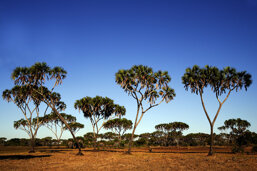


KENYA TANA RIVER
by Lorenzo Marchetti
Kenya: RISALENDO IL TANA RIVER by Lorenzo Marchetti
Kenya is an extraordinary country in many ways, where more than 50 different ethnicities and cultural groups live together peacefully. It is one of the few places in the world where religions that elsewhere clash or suffer from violent friction, peacefully coexist, offering comfort and spirituality to a heterogeneous population that does not know racism. All this happens, not without difficulties, poverty, and serious shortcomings, in a territory made up of dozens of vast environments among the most diverse and spectacular on the globe, many of which are unspoiled and with almost no human presence. In Kenya, you can find everything a nature enthusiast could wish for, from the marine coast to the savannah, from marshy areas to highlands, from forests to snow-capped peaks, deserts, lakes, rivers, volcanoes, and much more. So, even after many years spent exploring this wonderful country, there is always time to be amazed, with new sensations and new experiences. Thus, during one of my trips, a dear Italian friend offered me the opportunity for a unique excursion, to go up the Tana River from its mouth, with a boat on which we traveled about 35 unforgettable miles.
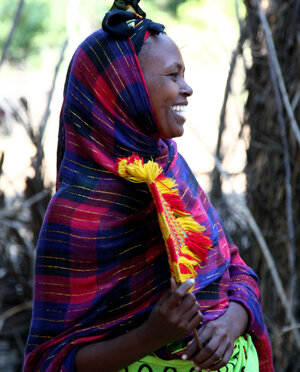
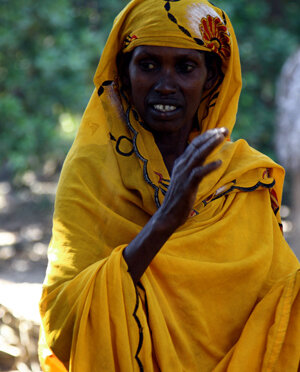
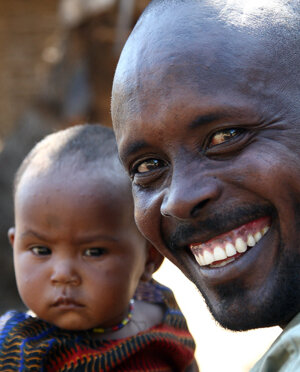
The Tana River is one of the most important rivers in equatorial Africa, the longest in Kenya with its more than 800 km. It rises on the slopes of Mount Kenya and flows into the Indian Ocean, in Ungwana Bay. Along its course, very different populations have found refuge, coming even from very distant places, who have settled near its banks due to the reassuring presence of fresh water in all seasons of the year. Among these are the Orma (http://en.wikipedia.org/wiki/Orma_people) and the Pokomo (http://www.tribes.co.uk/countries/kenya/indigenous/pokomo), who today live in close contact in the area of the river mouth, and whom we had the chance to meet, although unfortunately only superficially. But let's start from the beginning...

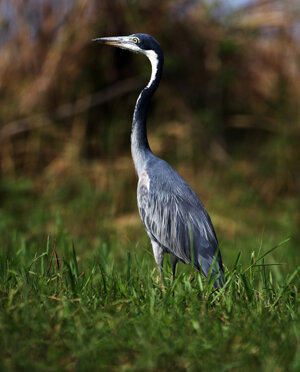
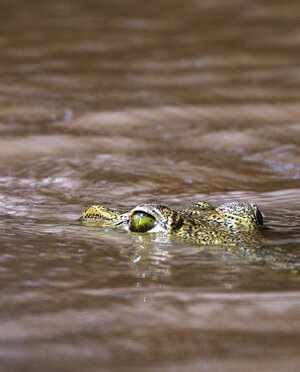
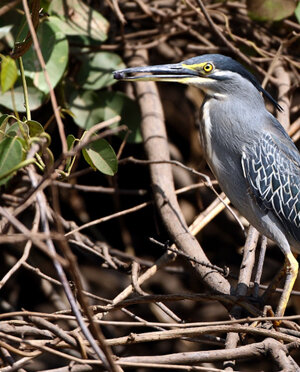
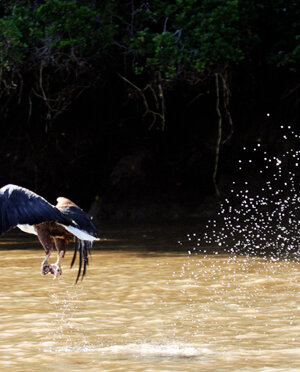
Kenya Tana River
FIRST DAY
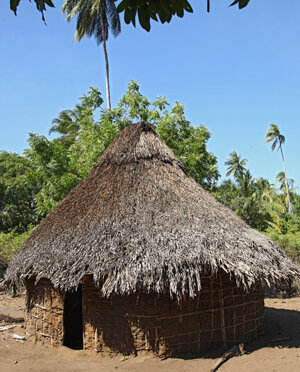
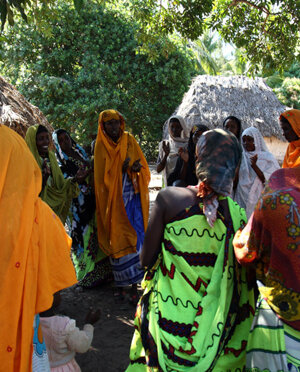
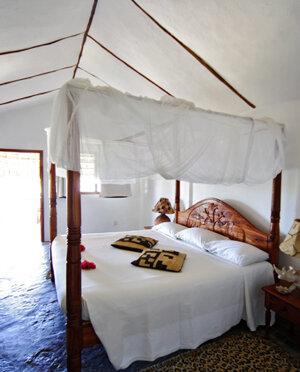
With my friend and travel companion Luigi, after staying a couple of days in Malindi to rest from an exciting six-day safari in the Tsavo East and West parks, we were joined by Federico and Laura, wonderful (and very experienced!) people who have been living in Kenya for several years now. Another friend, Sarah, who works in Malindi in the tourism sector, joined the small group, so we set off early in the morning with a Land Cruiser (a 4x4 is necessary for some sandy stretches). The road follows the coast, going up from Mombasa towards the Arab island-city of Lamu, then continuing north towards Somalia. Paved for a good stretch, but with some potholes with a “Bermuda Triangle” effect, we reached the river in just over an hour and a half. From there, a good track starts, crossing some small villages and reaching the dunes that surround the river mouth, where we were welcomed in a small but charming lodge, almost completely invisible because it is immersed in the environment, but equipped with every comfort and the typical warm local hospitality, the “Kipini lodge”. We are on the verge of the rainy season, the humid heat is palpable and there is an immediate strong sense of anticipation, as if all of nature, animals, and even people are preparing for this fundamental moment of “periodic rebirth”. After admiring the bay with the sandy tongues of the last river bends from the shaded verandas of the lodge bungalows, we had lunch and set off by car for a tour of the surroundings, with a visit to a small Orma village, accompanied by a young man from their ethnic group who acted as our guide. The encounter was cordial, in the village there were almost only women, as all the men were busy herding livestock between the river and the last distant pastures awaiting the regenerating rain.
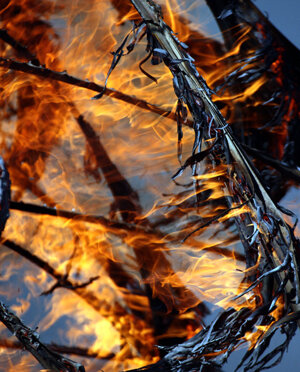
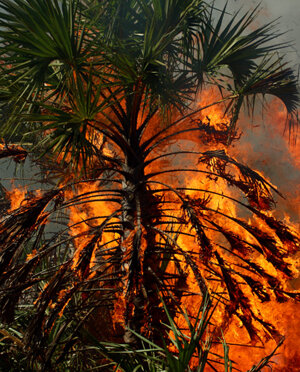
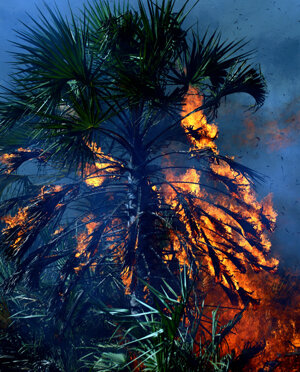
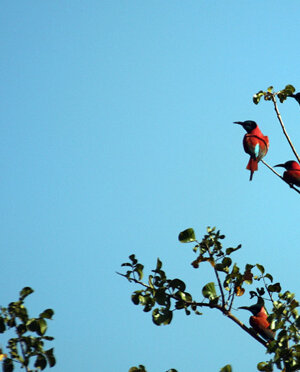
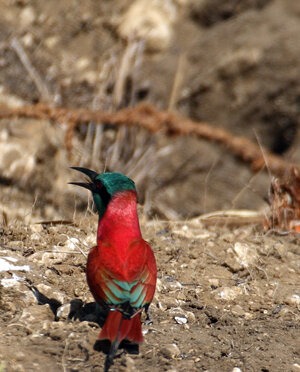
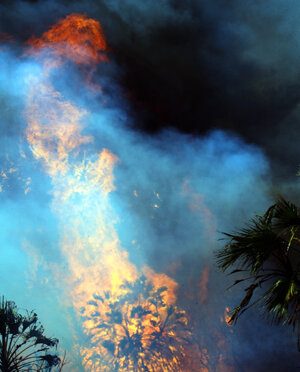
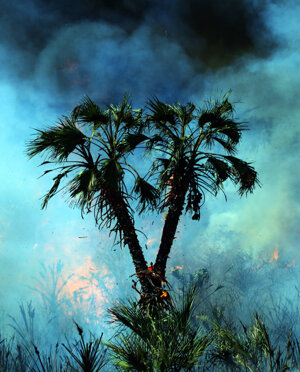
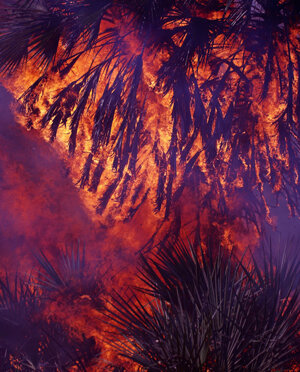
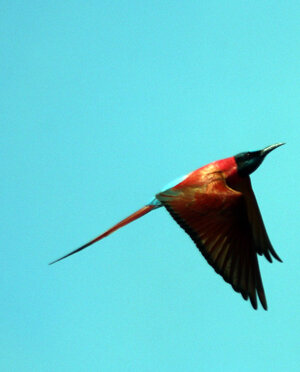
In the middle of the plain, surrounded by palm thickets, was a large group of zebras and topi (Damaliscus lunatus). Around us, more fleeting glimpses of other mammals, clear and recent traces of elephants and, a constant of our journey, a spectacular number of birds, dozens and dozens of species. The environment is unique and certainly worth a visit, but it was along the road that we experienced a truly unique and unforgettable moment. While waiting for the rains, the local populations, especially the herders with their livestock, deliberately set many fires. The dry vegetation burns with incredible force and speed, and usually the fires self-limit, as they encounter areas so arid that they can no longer feed the flames. One of these fires was right on the edge of the track, and to our surprise, numerous birds, especially the stunning carmine bee-eaters (Merops nubicus, http://en.wikipedia.org/wiki/Northern_Carmine_Bee-eater ), were swooping in and around the smoke, catching the many fleeing insects. What a spectacle! We stopped and tried to take some photos to capture the atmosphere, but all the birds were busy darting about, in a feeding frenzy, extremely difficult to frame.
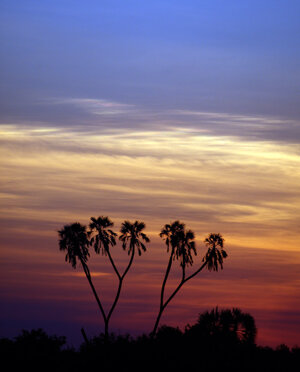
Meanwhile, the flames, whenever they reached a bush or a palm, would immediately and violently shoot up to 30 meters high, forcing us to keep moving (to be honest, they should be called “escapes”...) from an unbearable and dangerous heat. We stayed on site for about half an hour, until the fire apparently died down, with truly impressive images in our minds and some even on the camera sensor. In the evening, back at camp, we enjoyed the sunset, an excellent quality Italian dinner, and had the chance to share our feelings around the fire.
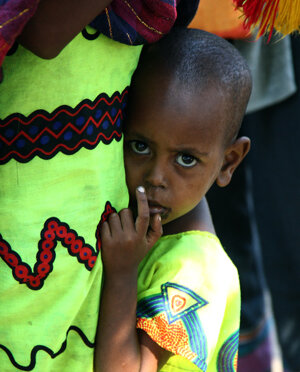
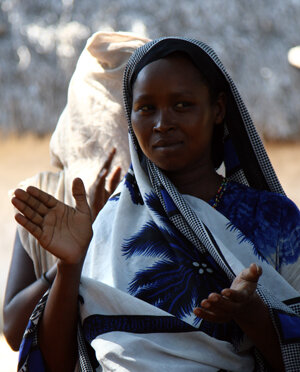
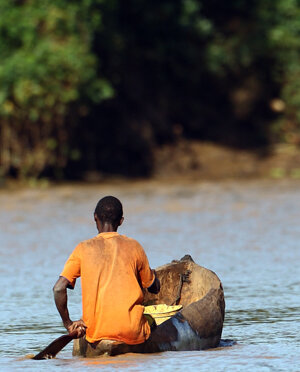
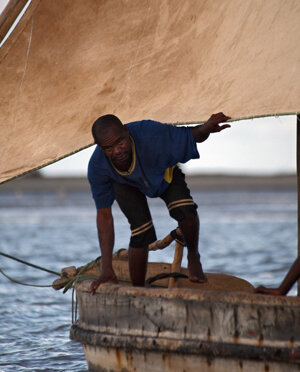
Kenya Tana River
SECOND DAY
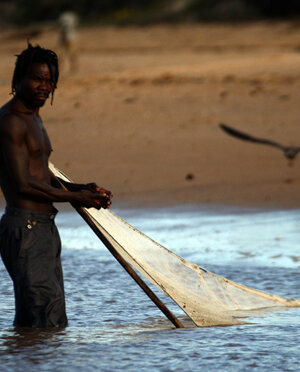
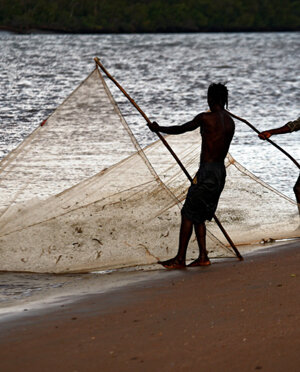
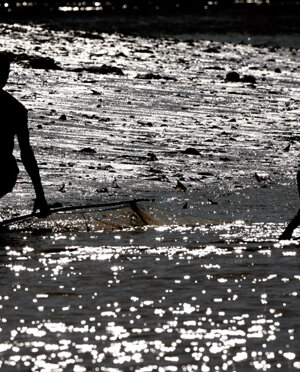
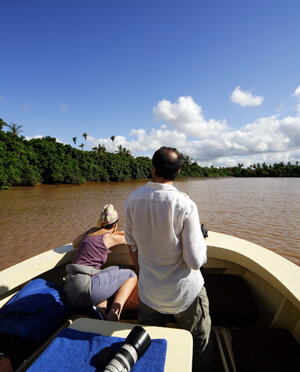
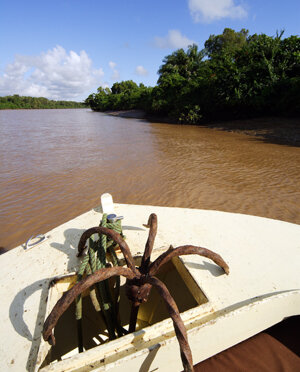
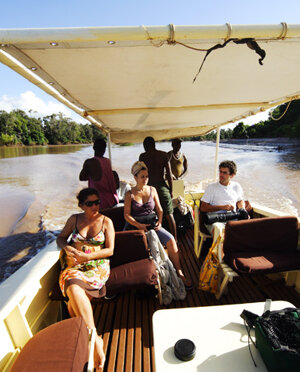
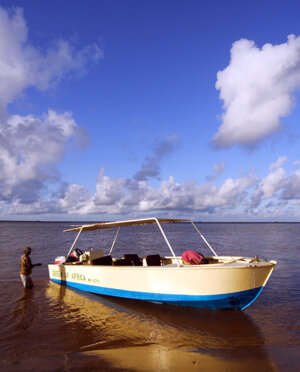
The Queen of Africa is the name of the boat that will take us along the river all day. Flat, stable, suitable for shallow waters and with a 55 hp outboard, the boat was loaded early in the morning with supplies, and three guys come aboard with us who will lovingly take care of our meal. The entrance to the river is majestic, in contrast to the tiny and unsafe dugout canoes carved from a single piece of palm trunk, which we spot along the banks. There is a bit of activity, a few fishermen, unconcerned about the crocodiles, make a meager catch of small fish with the classic shore net, pulled at the sides with the help of two sticks.
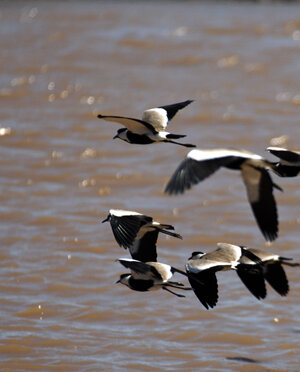
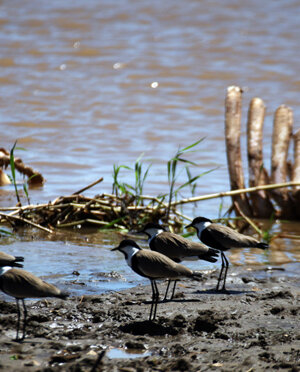
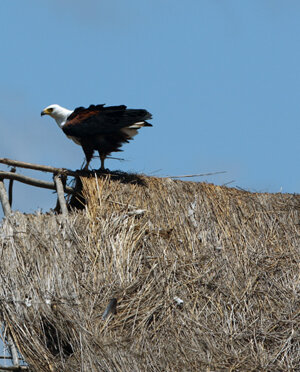
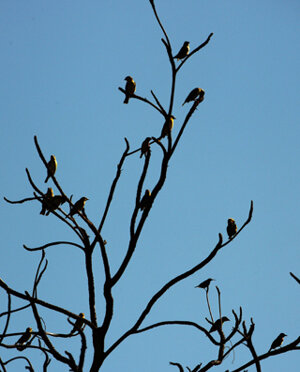
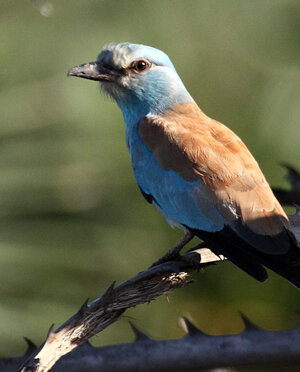
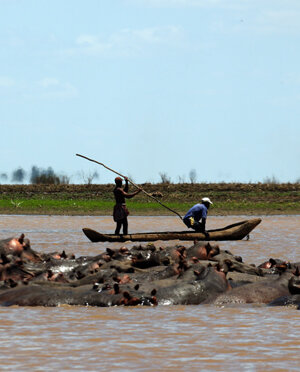
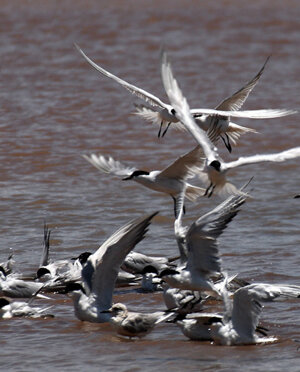
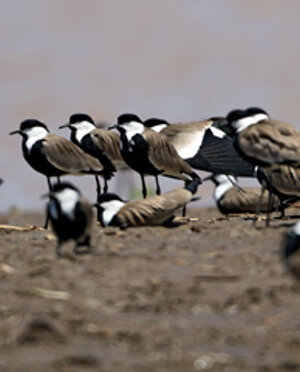
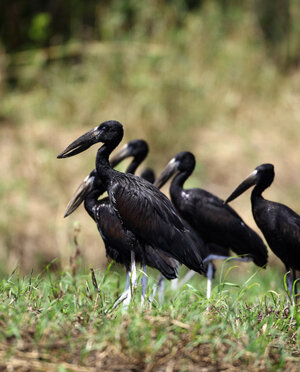
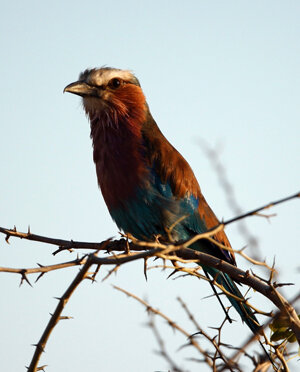
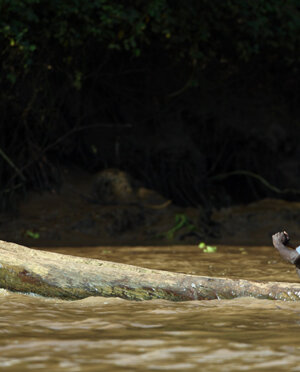
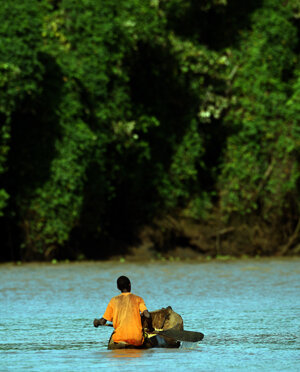
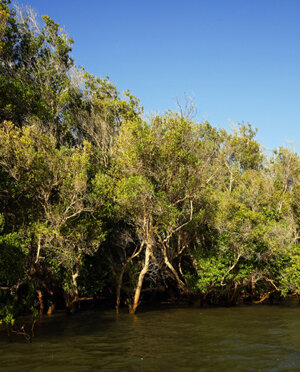
Very soon, however, we are alone, in a spectacular setting of mangroves and forest that surround the river on both sides. The engine runs quietly, and the speed is minimal and constant; we are sailing with the rising tide but against the river current. The sun is still low, the light is good even though only one bank remains illuminated; later, the awning stretched above our heads will prove truly precious. Right from the start, we began to spot an impressive number of birds, with an extraordinary concentration of fish eagles (Haliaeetus vocifer, http://en.wikipedia.org/wiki/African_Fish-eagle )—basically a pair at every bend. Even though Luigi and I have been traveling and photographing for many years, we certainly can't consider ourselves expert bird-watchers; fortunately, Federico, who is very knowledgeable, came to our aid, and even so, we all regretted not having the "bible" (Birds of Kenya and Northern Tanzania) with us. The sightings are truly extraordinary in both quality and quantity; by the end of the day, we had counted approximately 120 species, surely an underestimate! In the photos, I have included some of the most striking encounters, but I won't make a chronicle of them so as not to bore. The landscape is constantly changing: on the bank, it shifts from forest to mangroves, from meadows to sand, from bush to land burned by fires I have already mentioned. And, as in an "orderly" nature trail, with every even small change in habitat, the bird species change, with only the eagles and the equally majestic goliath herons (Ardea goliath, http://it.wikipedia.org/wiki/Ardea_goliath ) as constants, also present along the entire route, each guarding a section of the river. We spot the first hippos, while there are numerous crocodiles that, when we approach, silently slip into the muddy waters, and this sight reminds and warns us that in those waters "you are never alone"... The hours pass quickly and the sun is already high when we reach a large clearing; near a hut we drop off the guys who organize lunch, not without causing slight annoyance to the eagle that was using the hut's roof as a perch. We, on the other hand, continue for another ten minutes, just enough time to reach another spectacular scene: hundreds of hippos, pressed together in homogeneous groups as I had never seen before. The compactness of these groups led us to think of an effective defense mechanism against the crocodiles, which in the area are truly enormous. The groups do not even break up at the very close passage of a canoe with two herders, who seemed to know well the gentle behavior of the hippos. It's lunchtime, the solid ground seems to sway a bit after so many hours on the water, and a bit of rest without the engine noise is truly welcome. Soon, however, it's time to return; we pick up every little trace of our passage and set off again, this time with the current, towards the sea. It's afternoon, the time when the herders, returning from the sparse and dry pastures, bring the cattle to drink.
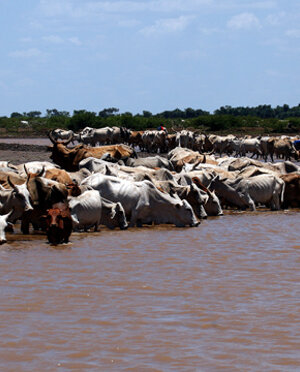
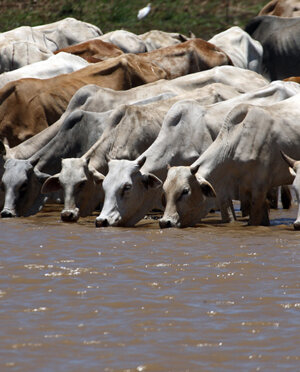
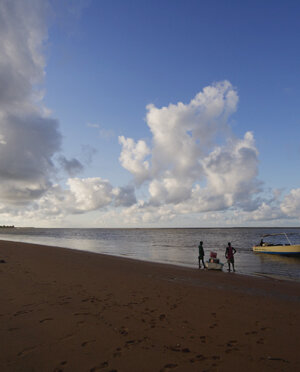
So we see remarkable herds of cows approaching the river, the herders go ahead to check for crocodiles, even entering the water first... It didn't seem like a brilliant idea to us, but evidently they feel safe (and those less sure don't tell anyone...). The cattle do not enter the river haphazardly, but form long lines, all the animals very close to the bank—they really know what they're doing... The descent towards the sea is faster with the current, harder to slow down and stop to photograph the continuous succession of birds along the banks and flying above us: terns, waders, herons, falcons and other birds of prey, bee-eaters, swallows, storks, geese, weavers, and, truly, you name it. The arrival at the mouth is spectacular, the warm light of sunset is forming and the sea opens up beautifully before us; a light breeze has picked up, a few splashes pleasantly wet us and around us some fishing boats, the characteristic dhows (Arab boats with lateen sails), are getting ready to move. We land on the beach in front of the lodge, and with a short walk we reach the only point in Kenya where, due to a particular geographical arrangement of the large bay, you can admire the sunset over the sea (we are on the east coast of Africa!). A "vital" shower awaits us, then around a fire with a mix of mango juice and white wine (delicious but enough to knock out a rhinoceros...) and finally an unexpected and most welcome dinner of exquisite shellfish. We thanked the cook but above all Laura, who, being intolerant to shellfish, gave us her share of lobster. Needless to say, for a travel companion you make these sacrifices without a word... I don't remember well how I got to bed, I know that when I lifted my head I thought for a moment I could touch the Milky Way, it was so close, but maybe I was a bit tired...
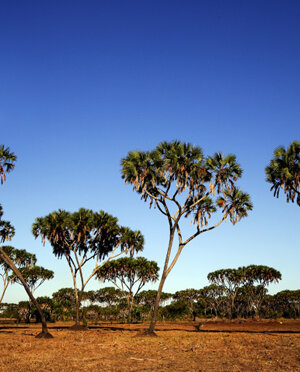
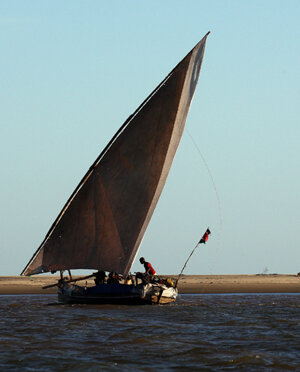
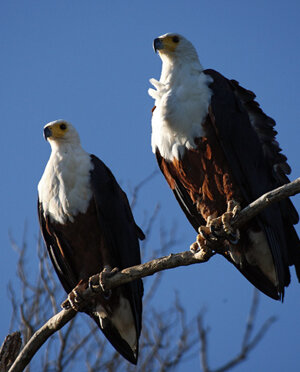
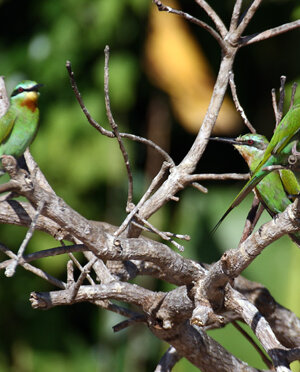
Kenya Tana River
THIRD DAY
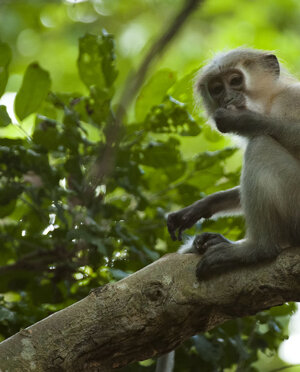
It's time to return to Malindi, we could take it easy but we decide to leave in the morning and make a detour. Once we reach the paved road we find a fork, left to Mombasa, right to Garissa, a city in the interior of Kenya, also on the Tana River. About fifty km. (alas, the asphalt lasted too little) and we reach the Tana River Primate National Reserve, home of the red colobus and the crested mangabey, two very rare and endangered monkeys. At the reserve they are so used to tourist visits that... they have to call the central office in Mombasa to find out how much to charge us for the entrance fee and they don't even have a receipt book! We are actually beyond the border of "tourist Kenya", and here we become more aware that even the last two days spent were just as "exclusive". After overcoming the bureaucratic difficulties (Laura was extremely helpful, always with her very kind and patient manners, even just letting it be understood that she spoke perfect Swahili earned points for the whole group) we venture into an increasingly dense (and humid!) bush until we reach the bank of the Tana River again, about 90 km upstream from the mouth. There remained only one small problem... 36 degrees Celsius with humidity around 90%... Here honestly there were two clear positions: Federico and Luigi raised their cameras hunting for the friendly primates flying around us on the highest branches of the trees, while I raised... the white flag! What heat! Or rather, Tana how hot!
The return in the open-sided off-road vehicle refreshed us until a providential rest stop (a little mud and straw shack along the road but, believe it or not... with a fridge and drinks!). In Malindi just enough time for a quick goodbye, Federico and Laura rushing off to enjoy the remaining days of their vacation, Sarah a bit worried about what awaited her at the office the next day, and my friend Luigi and I already thinking about the flight that in two days would take us back to Italy. But, unlike what was regretted by the replicant Roy Batty..., none of these memories will be lost.
SOCIAL
CONTACT
LOCATION
via Boscovich 14, Milan
20145
Italy
© 2020 C.FISC. 97871390155 - VAT 13672380964